

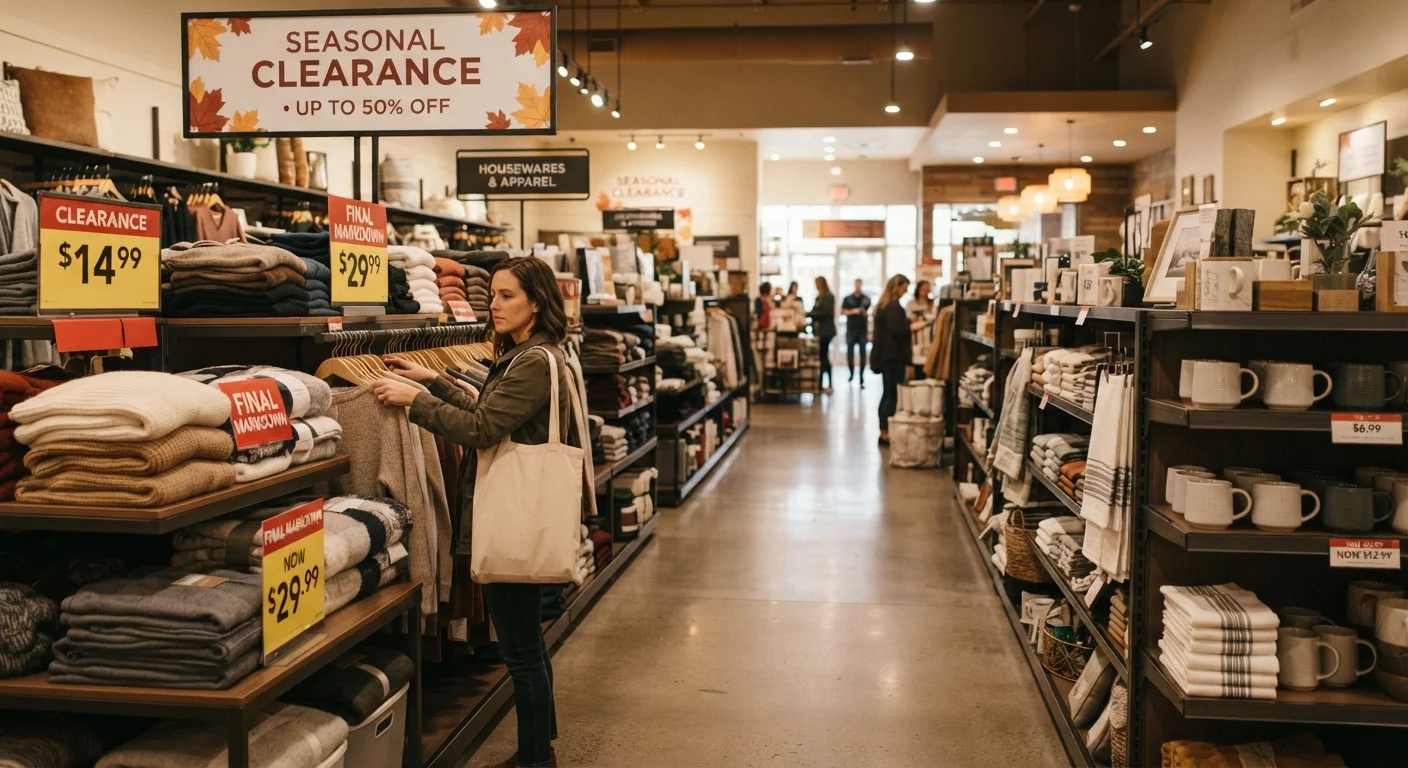
| Apparel markdown window | Late January-February (winter) and late July-August (summer) |
| Electronics new model announcements | Often Q1 or major trade events; prior models discounted after |
| Appliance/furniture discount timing | Labor Day weekend and post-holiday periods |
| Outdoor/garden price drop | August through October as seasonal inventory clears |
| Primary driver of markdowns | Inventory pressure - retailers need space for incoming stock |
| Key consumer tool | Price history trackers to verify whether a sale price is a true low |
The Mechanics Behind Seasonal Price Swings
Retail prices are not random. Most product categories follow predictable cycles driven by inventory management, demand forecasting, and the retail calendar. Retailers order merchandise months in advance, and their pricing strategy reflects the need to move that inventory within a window - before the next season's goods arrive.
The core dynamic is simple: when demand is high relative to supply, prices stay firm or climb. When demand softens or supply exceeds what shoppers are buying, prices drop to clear shelf and warehouse space. That shift happens at recognizable points in the year, category by category.
Understanding this rhythm does not guarantee you will always find a lower price - other factors, including supply chain disruptions, inflation, and retailer-specific promotions, can alter typical patterns. But knowing the general cycle gives patient shoppers a useful framework for timing discretionary purchases.
| Apparel markdown window | Late January-February (winter) and late July-August (summer) |
| Electronics new model announcements | Often Q1 or major trade events; prior models discounted after |
| Appliance/furniture discount timing | Labor Day weekend and post-holiday periods |
| Outdoor/garden price drop | August through October as seasonal inventory clears |
| Primary driver of markdowns | Inventory pressure - retailers need space for incoming stock |
| Key consumer tool | Price history trackers to verify whether a sale price is a true low |
For a complementary perspective on how retailers create the appearance of savings, see why "sale" pricing doesn't always mean a lower price.
Key Category Cycles to Know
Different product categories peak and trough at different times. Below are the most widely documented patterns across common consumer categories.
Apparel and Footwear
Clothing is marked down most aggressively at the end of each season - late January through February for winter goods, and late July through August for summer items. Retailers need floor space and warehouse capacity for incoming stock. If your need is not urgent, buying a season behind can mean substantially lower prices on identical merchandise. Transitioning your wardrobe seasonally can be a practical opportunity to shop these windows intentionally.
Consumer Electronics
New models in many electronics categories - televisions, laptops, smartphones - are often announced in the first quarter of the year or at major trade events. As new models arrive, prior-generation inventory tends to be discounted. Major shopping events in late fall also drive short-term price reductions, though not always as deep as advertised. It is worth monitoring price history tools before assuming an event price is a true low.
Home Appliances and Furniture
Labor Day weekend and the period just after major holidays are traditionally when appliance and furniture retailers move floor models and overstock. New appliance model cycles often follow the spring home-buying season, meaning prior models see markdowns in late summer and fall.
Outdoor and Garden
Garden furniture, grills, and lawn equipment peak in spring and early summer. Prices drop considerably in August through October as retailers clear seasonal inventory. Buying a grill in September rather than May, if you can wait, typically reflects genuine savings rather than manufactured urgency.
These patterns hold broadly but can vary by retailer and year. They work best as general guidance, not guaranteed forecasts. Also consider how in-store and online pricing can differ for the same item within the same season.
Using Cycles Without Falling Into Traps
Seasonal awareness is useful, but it can also be exploited by retailers. A few principles help separate genuine cycle-driven discounts from manufactured ones.
- Track prices before a sale event. Price history browser extensions can show whether a listed "sale price" is actually lower than the item's typical selling price over the past several months.
- Weigh timing against actual need. Waiting for an off-season discount only makes financial sense if you do not need the item now. Buying a winter coat in February because it is cheaper - when you needed it in November - costs you the value of use, not just money.
- Recognize that urgency signals are often scripted. "Only 3 left" or "Sale ends tonight" are common pressure tactics that may have no connection to actual inventory or pricing constraints. See how retail environments are designed to trigger impulse purchases for more on these tactics.
- Consider total cost, not just unit price. A lower price on an item you would not have otherwise bought is not savings - it is spending. This connects to the broader picture of how small or impulsive purchases accumulate into large annual costs.
Seasonal pricing cycles are a real and documented feature of retail. Incorporating that knowledge into a broader budgeting approach - rather than treating each purchase as an isolated decision - is where the practical benefit is found.