

Key Takeaways
Our Verdict
Neither channel is consistently cheaper - the better price depends on the product category, the retailer's strategy, and the total cost including shipping and fees. Understanding why prices differ by channel is more useful than assuming one channel always wins.
| Best for | Recommended |
|---|---|
| Shoppers prioritizing lowest unit cost on non-urgent purchases | Online purchasing |
| Buyers who need an item immediately or want to avoid shipping variables | In-store purchasing |
| Those shopping during store-specific clearance or regional sales events | In-store purchasing |
| Consumers buying bulky items where shipping costs are significant | In-store purchasing |
Why the Same Item Carries Two Different Price Tags
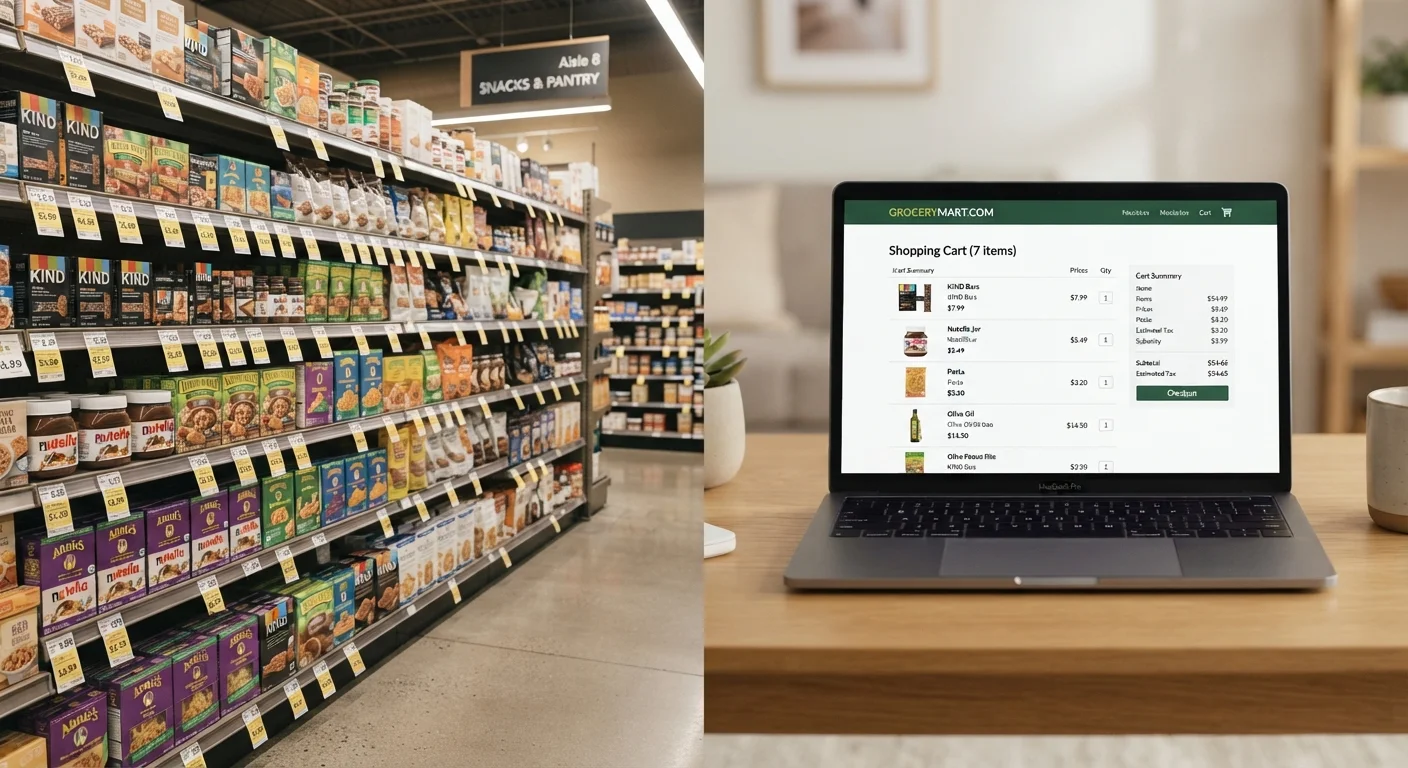
Walk into a retailer, pick up a product, and then check that same product on the store's website - you may find a different price. This isn't a glitch or oversight. Retailers deliberately maintain separate pricing strategies across channels, and the reasons are structural, competitive, and sometimes quite calculated.
Understanding those reasons puts you in a better position to decide where to complete a purchase. It also connects to broader patterns in how retail pricing works - something worth knowing if you're trying to stretch a household budget. For a wider look at retail pricing mechanics, see our piece on why 'sale' pricing doesn't always mean a lower price.
| In-Store | Online | |
|---|---|---|
| Price update frequency | Infrequent (manual changes) | Frequent (often automated) |
| Overhead costs reflected in price | Rent, staffing, utilities | Warehousing, shipping, returns |
| Shipping costs | None - take it home immediately | May be added at checkout |
| Geographic price variation | Common by market/region | Generally uniform nationally |
| Channel-exclusive promotions | Clearance events, floor models | Online-only discounts, bundles |
| Price-match availability | Often can match online price | Varies by retailer policy |
| Return process | Typically immediate in-store | May involve shipping item back |
The Cost Structures Behind Each Channel
Physical stores carry costs that online fulfillment doesn't: commercial leases, in-store staffing, utilities, visual merchandising, and shrink (the industry term for theft and damage losses). These overhead expenses are real and significant, and retail pricing is partly designed to cover them.
Online operations have their own cost structure - warehousing, pick-and-pack labor, last-mile shipping, and higher return rates (online shoppers return items at a much higher rate than in-store buyers). Shipping costs are sometimes absorbed into the listed price, sometimes passed directly to the consumer, and sometimes waived above a purchase threshold. When you see a lower online price, you may actually be seeing a price that excludes costs you'll pay separately at checkout.
This is why unit price thinking applies beyond groceries - evaluating the true landed cost (item price plus all fees) gives you a clearer picture than comparing sticker prices alone.
Competitive Pricing, Algorithms, and Regional Demand
Online prices are frequently updated by automated systems that monitor competitor pricing in near real time. A retailer's website might adjust prices multiple times per day in response to what competitors are charging. In-store shelf tags, by contrast, are updated manually and far less frequently - sometimes weekly, sometimes only during planned promotional cycles.
Geographic factors also play a role in in-store pricing. A retailer may price the same product differently in a high-cost urban market versus a lower-cost suburban area, reflecting local competition, real estate costs, or consumer demand patterns. Online prices are generally uniform nationally, though some retailers do vary online pricing by zip code for certain categories.
Retailers also use channel-specific promotions strategically. A store might run an in-store-only clearance to move floor inventory without disrupting national online pricing. Conversely, online-exclusive discounts are used to drive digital traffic and reduce dependence on physical footprint. Neither pattern means one channel is always cheaper - it means the channels serve different strategic purposes. Seasonal pricing cycles layer on top of this, creating windows where one channel may temporarily offer meaningfully lower prices.
How to Use This Knowledge When You Shop
The most practical takeaway is to check both channels before purchasing, especially for higher-ticket items. Don't assume the website is cheaper, and don't assume the store has the better deal - verify the total cost in both places, including shipping, applicable taxes, and any membership fees required to access the online price.
Many retailers offer price-matching between their own channels. If you find the same item cheaper on the retailer's website while standing in the store, it's worth asking whether the store will match it. Policies vary, so it helps to know the store's practice before you assume this is possible. For broader context on how price tags and advertised prices interact with your rights as a consumer, see why the price tag isn't always the final word.
Also consider what happens after the purchase. Return windows, restocking fees, and dispute processes can differ by channel even at the same retailer - something covered in detail in our guide to how your consumer rights differ when shopping online vs. in-store. The channel you choose affects more than just the price you pay today.