

Key Takeaways
Start here
Why Starting from Scratch Is Actually an Advantage
Understand your needs
Assess Your Life Before You Shop
Build your foundation
The Core Categories Every Wardrobe Needs
Shop smarter
Fit, Fabric, and Longevity: What Actually Makes a Piece Worth Keeping
Keep going
Building Gradually and What to Do Next
Why Starting from Scratch Is Actually an Advantage
Most adults building a wardrobe from zero feel behind. The reality is the opposite. You're not burdened by a closet full of sunk-cost mistakes, inherited habits, or clothes that were bought for a life you no longer live. You have the rare opportunity to build intentionally.
The goal here isn't a Pinterest-perfect closet or a fashion-forward collection. It's a practical set of clothing that gets you through real life — work, weekends, social situations, and everything in between — without unnecessary complexity. That's achievable at almost any budget, and the process is simpler than most style advice suggests.
If you're curious whether a more structured approach like a capsule wardrobe might suit you, our overview of how the capsule wardrobe concept works is worth reading alongside this guide.
Assess Your Life Before You Shop
Before touching a shopping cart, spend ten minutes mapping a realistic picture of your week. Ask yourself: Where do I go most days? What dress code applies at work? What do I do on weekends? Do I attend formal events more than a few times a year?
The answers determine what you actually need. Someone who works remotely and spends weekends outdoors has fundamentally different clothing priorities than someone who commutes to an office and attends occasional dinners out. Neither wardrobe is better — they just look different.
Write down your three or four most frequent contexts and assign rough percentages. If 60% of your life is casual, 60% of your wardrobe should support casual dressing. This exercise prevents the most common wardrobe-building mistake: shopping for the life you imagine rather than the one you're living.
Track Your Week Before You Buy
For one week before shopping, take a quick note each morning of where you're going and what you actually wear. This gives you real data instead of guesses. Most people are surprised how concentrated their daily life actually is — and how few distinct clothing contexts they truly need to cover.
The Core Categories Every Wardrobe Needs
Regardless of lifestyle, most functional wardrobes draw from the same broad categories. The quantities within each category shift — but the categories themselves are consistent.
Wardrobe foundation
The small set of core clothing pieces that covers most of your daily situations and forms the base everything else builds on.
Versatile piece
A garment that pairs easily with multiple other items in your closet, giving you more outfit combinations from fewer clothes.
Cost-per-wear
A practical way to think about clothing value: divide the price by how many times you'll realistically wear it. A pricier piece worn constantly can be a better value than a cheap one worn twice.
Neutral color palette
A range of low-saturation colors — white, grey, navy, black, tan, olive — that mix and match with almost anything, making outfit-building easier.
Layering
Wearing multiple pieces of clothing together to adjust for temperature, formality, or style — typically a base, a mid-layer, and an outer layer.
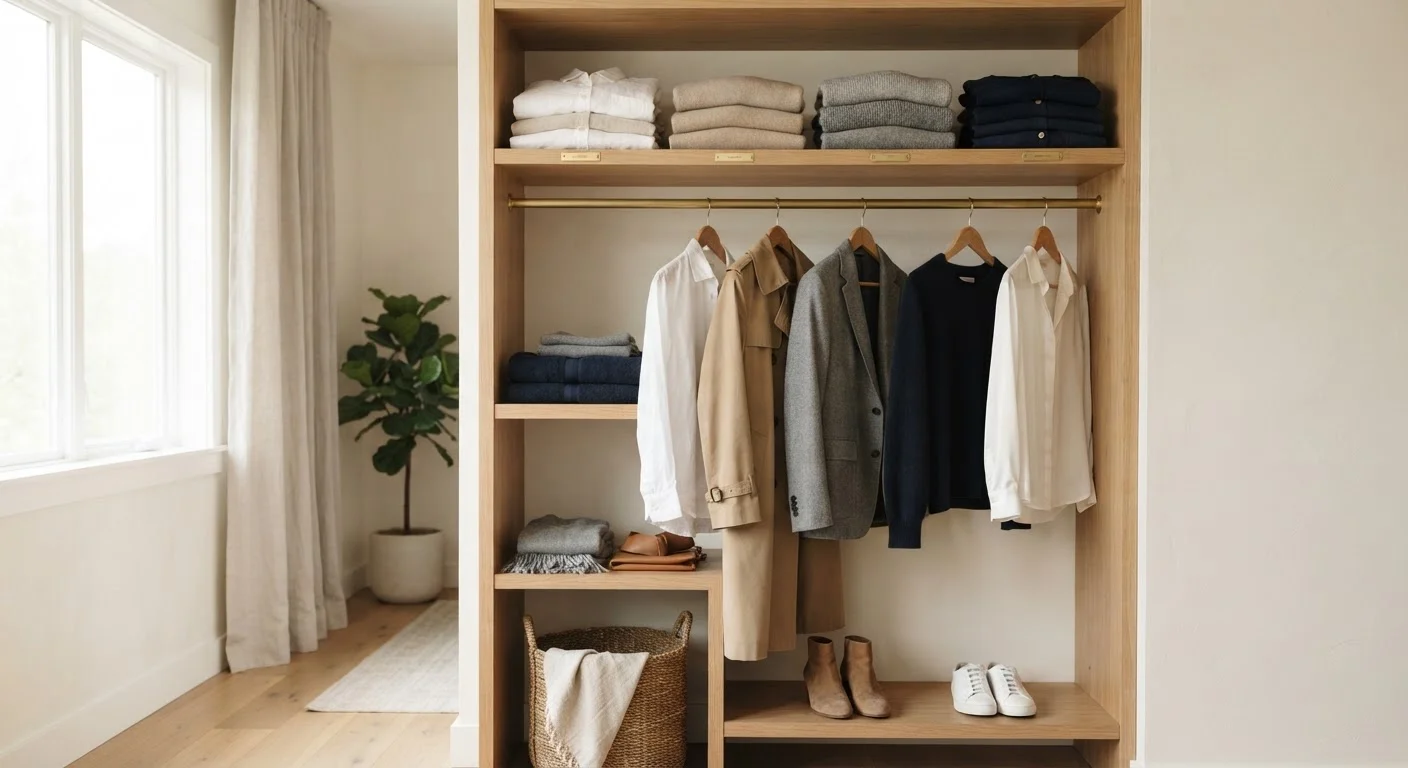
- Bottoms: Two to three pairs of pants or jeans in versatile cuts and neutral colors form the backbone of most outfits. Dark wash denim and a pair of chinos or trousers cover the widest range of contexts.
- Tops: Plain crew-neck or V-neck tees in white, grey, and navy; one or two button-front shirts; a lightweight sweater or pullover. These mix across every bottom in your closet.
- Layering pieces: A structured jacket, cardigan, or zip-front layer that can dress an outfit up or down depending on context.
- Outerwear: One coat suited to your climate. This is a piece worth spending more on — it goes over everything and endures daily use.
- Footwear: A pair of clean, simple sneakers; one shoe that handles slightly more formal situations; boots if your climate warrants them. Three pairs cover most adults adequately.
- Occasion dressing: One outfit — not a full separate wardrobe — for weddings, interviews, or formal events. It should fit properly and require no scramble when the occasion arises.
This structure leaves plenty of room to express personal style through color, cut, and detail once the basics are in place.
Fit, Fabric, and Longevity: What Actually Makes a Piece Worth Keeping
Two factors determine whether clothing earns its place in your wardrobe long-term: fit and fabric. Everything else is secondary.
Fit means the garment works with your actual body — not a size label, not a model on packaging. Shoulders sit at the right point, lengths don't drag or gap, and movement isn't restricted. Poorly fitting clothing stays unworn regardless of how appealing it looked in a store. Simple tailoring adjustments — hemming pants, taking in a waist — are often inexpensive and can transform a nearly-right piece into one you'll reach for constantly.
Fabric affects both comfort and durability. Natural fibers like cotton, wool, and linen generally breathe better and hold their shape over more washes than lower-quality synthetics. That said, fabric blends are common for good reasons — a small percentage of synthetic fiber in a cotton garment can improve stretch or reduce wrinkling. Read care labels before buying; if a piece requires dry cleaning only and that's not realistic for your life, it won't get worn.
Longevity comes from both. A well-fitting piece in durable fabric — even a simple one — tends to look intentional and last years. This is the core logic behind building a smaller, more deliberate wardrobe. As your lifestyle evolves, our guide on how clothing priorities shift over time can help you adapt thoughtfully.
Building Gradually and What to Do Next
Unless circumstances demand otherwise, build your wardrobe in stages. Start with the three or four most pressing gaps — the items you need right now for your most frequent situations — and fill those first. Buying everything at once often leads to rushed decisions and pieces that don't work together.
A practical approach: each time you add something new, confirm it pairs with at least two things already in your closet. If it doesn't, reconsider. Versatility is the metric that matters most when building from scratch.
If budget is a genuine constraint, it may be worth coordinating clothing purchases alongside your broader financial planning. A structured first budget can help you carve out a clothing category without derailing other priorities.
Once your foundation is solid, the next challenge is maintaining it season to season. That process has its own logic — rotating, reassessing what still fits and functions, and identifying real gaps rather than imagined ones. Our guide on seasonal wardrobe transitions walks through that stage in practical detail.
A wardrobe built with intention — even a small one — removes daily friction and frees up real mental energy. Start narrow, fit well, and expand when you have clear reasons to.