

Key Takeaways
Why Seasonal Transitions Feel Harder Than They Should
Most wardrobe overhaul frustration comes from the same source: starting over instead of building forward. If every season feels like a shopping emergency, it's usually a sign that previous transitions didn't produce a clear picture of what was already on hand. The goal of a good seasonal swap isn't a brand-new closet — it's a working one.
Transitions also expose the difference between clothes you own and clothes you actually wear. That gap tends to grow quietly between seasons. Addressing it directly, rather than burying it under new purchases, is what makes each cycle easier than the last. If you're earlier in the process of building out your wardrobe overall, our guide to building a wardrobe from scratch covers the foundational decisions worth making first.
Clear everything out of your closet
Before you can make smart decisions about what stays, you need to see everything at once. Pull out all clothing — including items tucked in drawers, bins, or the back of shelves. A full inventory prevents the common problem of storing things you forgot you owned and repurchasing them later.
Sort into three groups: keep active, store, and let go
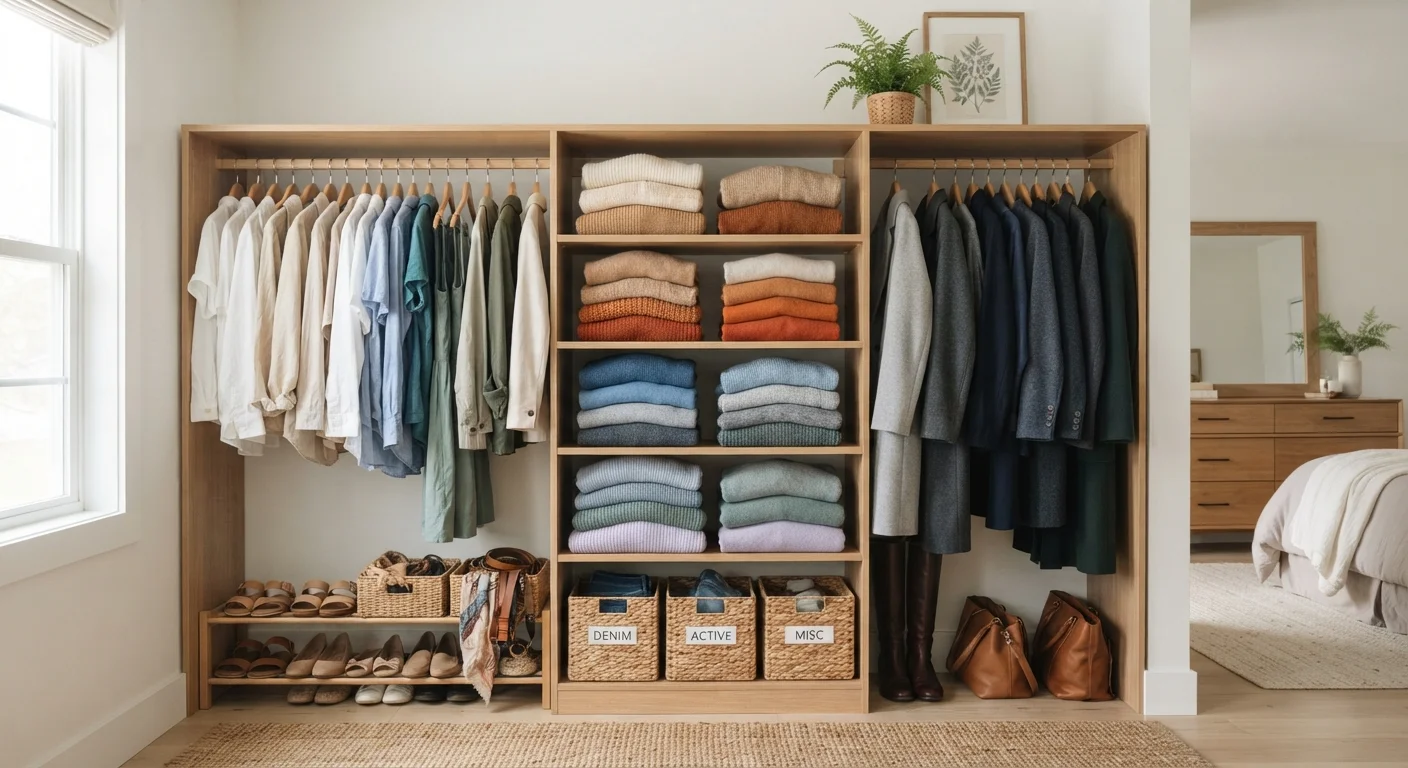
Divide every item into one of three categories. Keep active means it's seasonally appropriate and you genuinely wear it. Store means it belongs to the off-season but is worth keeping. Let go covers anything damaged beyond repair, no longer fitting well, or untouched for two or more full seasons. Be honest — items kept out of guilt don't serve your wardrobe.
Identify and note genuine gaps
Once your active season pile is set, look for functional holes — not stylistic wishes. A genuine gap is something you'll need repeatedly that you don't currently own: a waterproof layer for rainy shoulder seasons, a warm base layer, or a lightweight long-sleeve option. Write these down rather than shopping immediately. Living with the transition for a week or two often reveals whether a perceived gap is real.
Clean and properly store off-season items
Wash or dry-clean everything before it goes into storage — body oils and invisible stains can permanently set over months. Use breathable storage bags or sturdy bins with lids for folded items. Cedar blocks or sachets can deter moths without harsh chemicals. Hang structured garments like blazers and coats rather than folding them to preserve their shape.
Build your active closet around layering
Transition seasons — early fall and late winter especially — are too variable for a single-layer approach. Prioritize pieces that work across a temperature range: lightweight cardigans, denim or chore jackets, long-sleeve tees, and versatile mid-weight trousers. These items earn their closet space by working across multiple weeks of unpredictable weather rather than a single narrow temperature window.
Address any real gaps thoughtfully
Return to your gap list from Step 3. If a need has proven real, address it with specificity — one functional piece that solves the problem rather than multiple speculative options. Understanding how retail pricing cycles work can also help you time a purchase without overpaying. If your gaps suggest a more structural wardrobe problem, the capsule wardrobe concept is worth exploring as a longer-term framework.
Keeping the Transition Manageable Over Time
The more deliberately you handle each seasonal swap, the less work future transitions require. A closet that's been thoughtfully edited twice a year — with honest assessments of fit, condition, and actual use — tends to stabilize into something functional rather than chaotic.
Color and versatility play a role here too. Pieces that pair easily across your existing wardrobe stretch further than highly specific items that only work one way. If color coordination feels like a recurring challenge, practical color-mixing principles can simplify decisions without requiring a complete overhaul.
Finally, keep in mind that wardrobe needs shift with life stages. What fits your lifestyle now may look different in a few years — and that's a reasonable reason to revisit your approach, not start from scratch. How clothing priorities tend to shift over time is a useful read if you're noticing that your current wardrobe no longer feels like an accurate fit for where you are.
Track What You Actually Reach For
During the first two weeks of a new season, pay attention to which pieces you consistently choose and which ones sit untouched. This real-use data is more reliable than your intentions when sorting next season. A simple note on your phone works fine — no special system required.