

Key Takeaways
Unit Price
A unit price is the cost of a product broken down to a standard measure - such as per ounce, per count, per pound, or per sheet. It appears as a small figure on grocery shelf labels and lets you compare products of different sizes or brands on equal footing. Instead of comparing a $3.49 box to a $5.19 box, you compare $0.22 per ounce to $0.17 per ounce.
Many US states require retailers to display unit pricing under state consumer protection laws, though the specific rules - which products qualify and what unit of measure must be used - vary by jurisdiction.
What Unit Pricing Actually Tells You
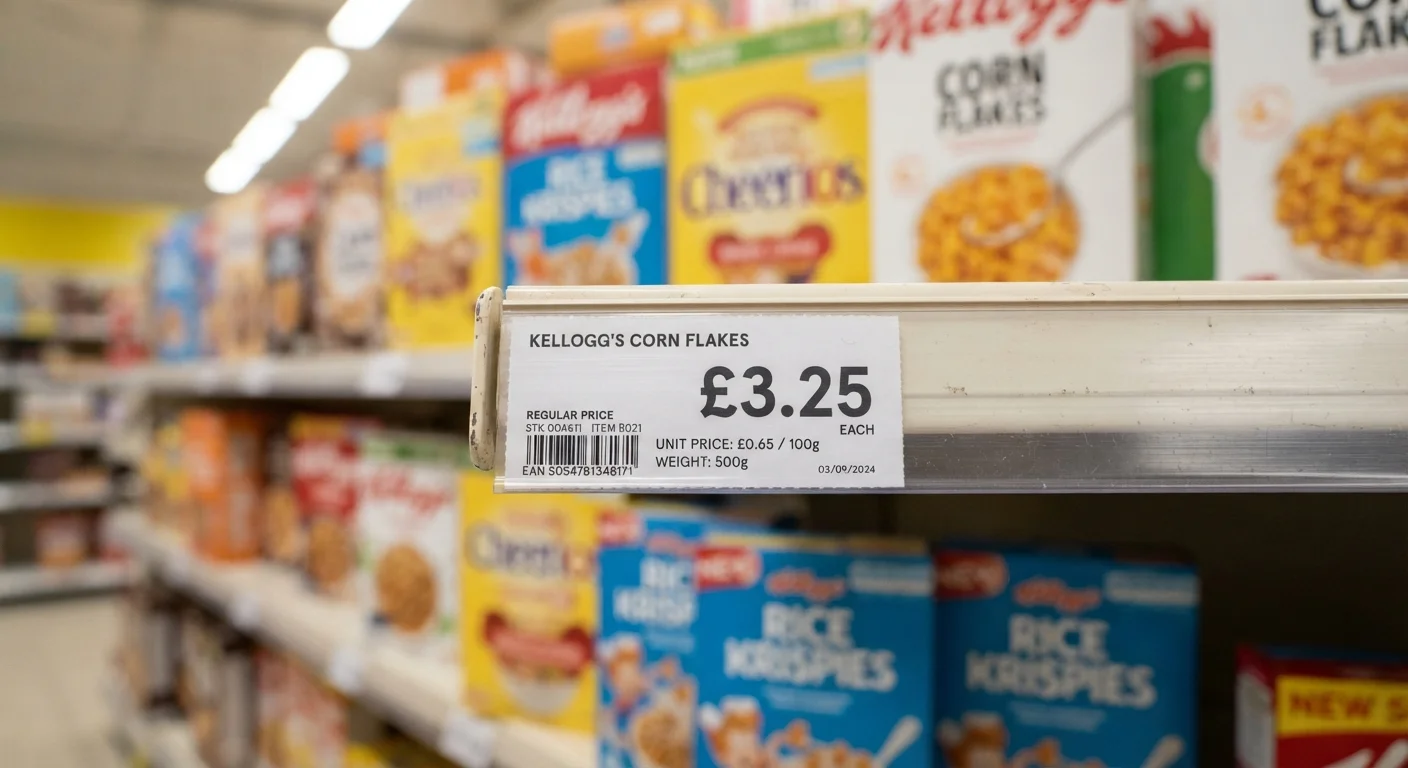
Every grocery shelf tag contains two numbers. The large one is what you hand to the cashier. The small one - the unit price - is what you're actually paying for what's inside. It's the more useful figure, and most shoppers walk past it without a second glance.
Unit pricing reduces any product down to a common denominator: cost per ounce, per pound, per 100 sheets, per tablet. That standardized figure makes comparison possible between packages that are deliberately sized to be hard to compare. A 12-oz jar and an 18-oz jar of the same pasta sauce aren't comparable by sticker price. Divide each price by its weight and the comparison becomes immediate.
This matters more than it might seem. Grocers and manufacturers use package sizing strategically. Slightly different sizes, promotional packaging, and "value" labels all cloud direct comparison. Unit pricing cuts through that noise. It's one of the more practical tools available to everyday shoppers - and it requires no app, no calculator, and no special knowledge beyond knowing what to look for. For a broader look at how pricing tactics affect what you spend, see why sale pricing doesn't always mean a lower price.
How to Read the Label Correctly
The unit price is usually printed in the upper corner of a shelf label, in noticeably smaller font than the retail price. It will include a number and a unit of measure - something like $0.22/oz or $0.06/ct. The key step many shoppers miss: make sure the unit of measure matches across the products you're comparing.
Comparing price per ounce with price per pound, or price per count with price per ounce, produces meaningless results. Before drawing any conclusion, confirm that both labels are using the same measure. If they differ, convert: 16 ounces equal one pound, so multiply a per-ounce price by 16 to get a per-pound equivalent.
Calculate It Yourself in Seconds
If a unit price isn't shown, divide the shelf price by the quantity listed on the package - for example, $3.49 ÷ 18 oz = $0.19/oz. Most smartphones have a calculator built in, and the math takes less time than reading a nutrition label. Making this a reflexive step for higher-cost items is where the habit pays off most.
If a unit price is absent - which can happen with specialty items, in-store bakery goods, or at retailers that don't display them - you can calculate it manually: divide the shelf price by the quantity shown on the package. The math takes about ten seconds and is the same thing the label would show.
When Bigger Isn't Actually Cheaper
The assumption that larger packages always deliver a lower unit price is widespread and often wrong. Several common scenarios flip that logic:
- Sales on smaller sizes: A manufacturer may discount a 16-oz package to move inventory, making it cheaper per ounce than the 32-oz version sitting next to it at full price.
- Store-brand sizing: A store-brand 15-oz can may undercut a national-brand 28-oz can on a per-ounce basis, even though the national-brand package is larger.
- Package downsizing: A product that used to contain 16 oz may now contain 14 oz at the same price - a practice sometimes called "shrinkflation." The package looks identical; the unit price reveals the change.
- Bulk waste: If you won't use a large quantity before it expires or goes stale, the lower unit price doesn't translate into actual savings. A cheaper-per-ounce purchase you throw out is still money lost.
These scenarios come up regularly in real shopping trips. Grocery shopping on a budget involves more than just reaching for the largest package - unit pricing is one piece of a broader decision.
~35 states
US states with some form of unit pricing law
Requirements vary significantly in scope, covered product categories, and enforcement - check your state's consumer protection office for specifics.
$5,000+
Average annual US household grocery spend
According to the Bureau of Labor Statistics Consumer Expenditure Survey, food-at-home spending represents one of the largest recurring household expense categories.
10-30%
Typical unit price variation within a product category
Consumer research consistently finds wide per-unit cost variation between package sizes and brands in common grocery categories like cereal, canned goods, and cleaning products.
Building a Simple Habit That Compounds Over Time
Unit price awareness is not a dramatic money-saving strategy - it's a quiet, consistent one. Choosing the lower unit price on five or six items per shopping trip won't transform a budget in a single visit. Repeated across dozens of trips and dozens of categories over a year, the effect is real and measurable.
The habit is easy to build because the information is already there on the shelf. It requires only a slight shift in attention: glance at the small number, not just the big one. Over time, you'll develop a rough sense of what reasonable unit prices look like for the categories you buy regularly, which makes spotting outliers - whether a genuine bargain or an inflated "value" pack - faster and more intuitive.
This connects directly to the broader reality that small purchase decisions accumulate into meaningful annual amounts. Small daily purchases add up to surprisingly large annual costs - and grocery decisions are among the most frequent purchase decisions most households make. For foundational strategies on managing where money goes, budgeting basics provides a useful starting point.
This article is for general informational purposes only and does not constitute financial or purchasing advice tailored to your individual circumstances.