

Key Takeaways
Skin Barrier
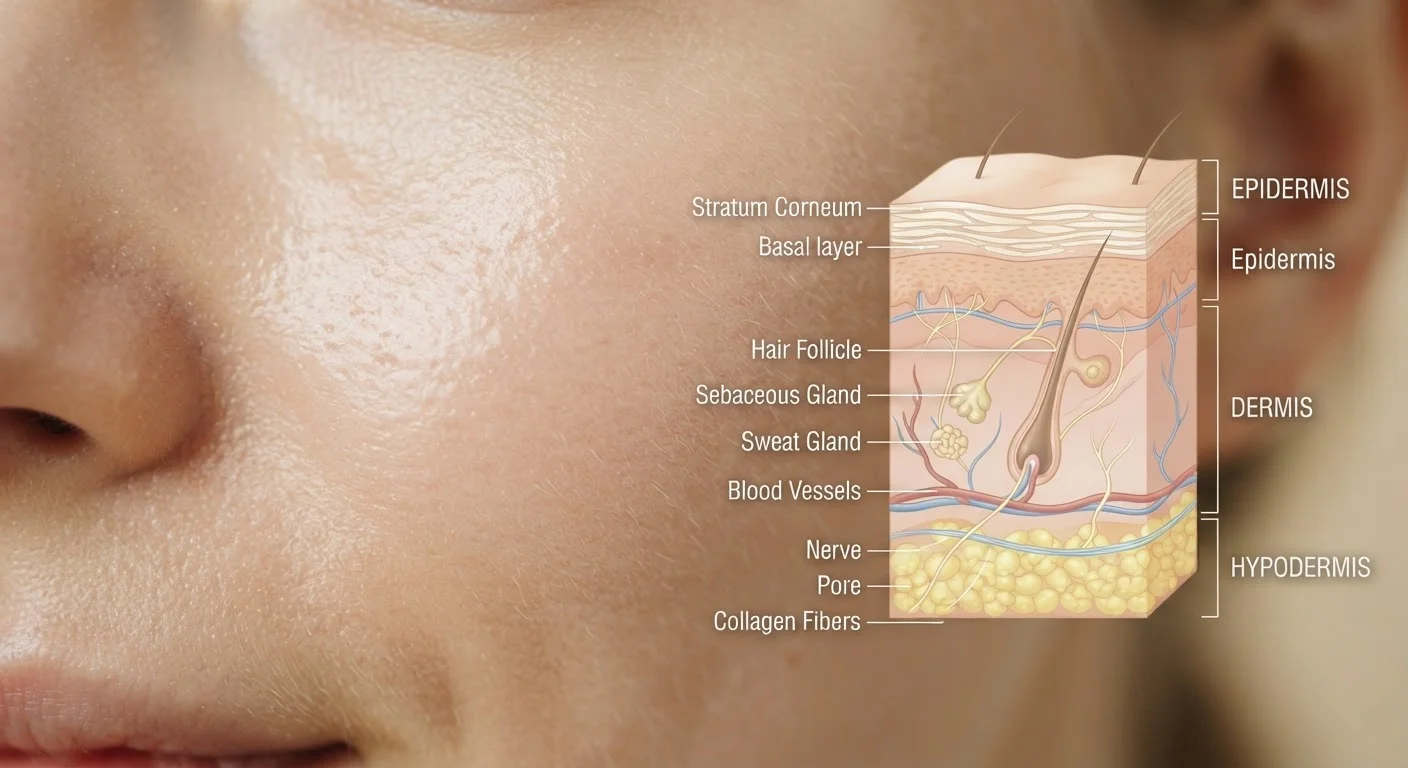
The skin barrier — also called the stratum corneum — is the outermost layer of your skin. It acts like a protective shield, keeping moisture in and harmful things like bacteria, pollutants, and irritants out. When it's working well, skin stays hydrated, calm, and resilient. When it's damaged, skin becomes dry, reactive, and prone to problems.
Structurally, the skin barrier is often described using a 'brick and mortar' model: skin cells (corneocytes) are the bricks, held together by a lipid matrix — primarily ceramides, cholesterol, and fatty acids — that acts as the mortar.
What the Skin Barrier Actually Does
Think of the skin barrier as a living seal between your body and the environment. Its primary jobs are twofold: prevent transepidermal water loss (TEWL) — the process by which moisture evaporates from skin — and block external threats including allergens, microbes, and pollution from penetrating deeper layers.
The lipid matrix that holds skin cells together is especially critical. It's composed mainly of ceramides, free fatty acids, and cholesterol. When this matrix is intact, skin holds moisture effectively and resists irritation. When it breaks down — through stripping or dehydration — those gaps allow water to escape and irritants to enter simultaneously.
Understanding this helps explain why so many skin complaints, from sudden sensitivity to chronic dryness, trace back to barrier function rather than a product lacking some exotic ingredient. For a broader look at how each step in a skincare routine supports skin health, see what each skincare step actually does.
Common Ways the Barrier Gets Damaged
Barrier damage rarely happens dramatically — it accumulates through everyday habits. The most frequent culprits include:
- Over-cleansing or harsh cleansers: Surfactants that strip natural oils disrupt the lipid matrix with every wash. Foaming cleansers with high pH levels are particularly problematic for barrier integrity.
- Aggressive exfoliation: Physical scrubs used too frequently, or high-concentration chemical exfoliants applied more often than skin can recover from, thin the protective layer rather than refine it.
- Environmental exposure: Cold, dry air, wind, and UV radiation all degrade the lipid layer over time. Sun damage in particular degrades barrier components and slows natural repair. Daily sun protection is one of the most direct ways to prevent cumulative barrier stress.
- Product overload: Using too many actives — retinoids, acids, vitamin C — simultaneously overwhelms the skin's repair capacity and compromises the barrier faster than it can rebuild.
Barrier Health Isn't Only Skin Deep
Skin barrier health is also influenced by internal factors including hydration, sleep quality, stress levels, and underlying conditions like eczema or rosacea. General lifestyle habits matter alongside topical care. Individuals managing diagnosed skin conditions should follow guidance from a qualified dermatologist rather than relying solely on general skincare principles.
Skin barrier health is also influenced by internal factors including hydration, sleep quality, stress levels, and underlying conditions like eczema or rosacea. General lifestyle habits matter alongside topical care.
How to Build a Barrier-Protective Routine
Supporting your skin barrier doesn't require a complex or expensive routine — in fact, simplicity is often more effective. The core principles are straightforward:
- Cleanse gently: Use a low-pH, non-stripping cleanser that removes surface dirt without disrupting the lipid matrix. Skin should feel comfortable immediately after washing — not tight or squeaky clean.
- Moisturize consistently: A well-formulated moisturizer works by combining humectants (which draw water in), emollients (which smooth and soften), and occlusives (which seal moisture at the surface). Apply while skin is slightly damp for better absorption.
- Use actives strategically: Retinoids and exfoliating acids are valuable tools, but introducing them gradually — and not stacking them — gives the barrier time to adapt. Rest days matter.
- Protect from UV: Daily broad-spectrum sunscreen is one of the single most effective barrier-preservation habits available. UV exposure degrades ceramides and accelerates moisture loss.
If you're building a routine from scratch, this complete starting point for first-timers walks through realistic, beginner-friendly steps. And if budget is a consideration, barrier-protective routines don't require expensive products — the principles hold regardless of price point.
One often-overlooked factor is skin pH, which directly affects how well the barrier functions. Understanding your skin's pH balance helps explain why product order and formulation choices make a real difference.
This article is for general informational purposes only and does not constitute medical or dermatological advice. If you have a persistent skin condition or concerns about your skin health, consult a qualified healthcare professional or licensed dermatologist.