

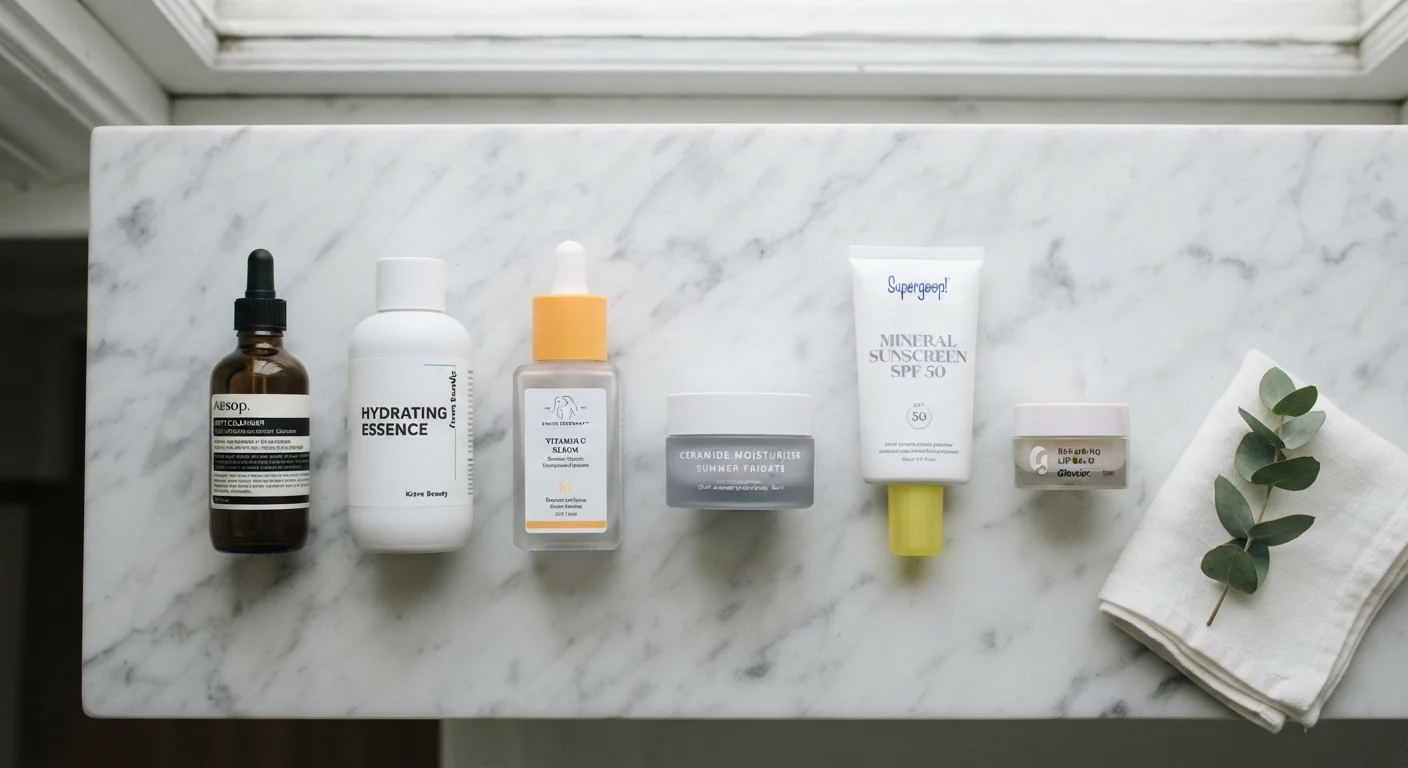
The Purpose Behind the Order
Walk into any pharmacy and the skincare aisle can feel overwhelming — dozens of product types, layering rules, and conflicting advice. The good news: most routines follow the same logic. Products are applied in a deliberate sequence so each one can do its job without interference from the next.
The general rule is thinnest to thickest consistency — water-based formulas absorb first; heavier creams seal everything in. Understanding why each step exists makes it far easier to decide what your skin actually needs, rather than buying everything on a shelf. For foundational definitions of common terms you'll encounter on packaging, see our skincare terms glossary.
Step-by-Step: What Each Product Actually Does
Cleanser
A cleanser removes dirt, excess oil, sunscreen, and makeup from the skin's surface. This is the one non-negotiable step — skipping it means everything applied afterward sits on top of debris rather than absorbing properly. The key is using a formula gentle enough not to strip the skin's natural oils. Over-washing or using a cleanser with a high pH can damage the protective barrier that keeps skin resilient. Our article on why over-cleansing is a common misstep covers this in detail.
Toner
Toners were historically alcohol-heavy astringents designed to remove residue after soap-based cleansers. Modern toners serve a different function: they deliver a quick layer of hydration or active ingredients — such as niacinamide or mild exfoliating acids — immediately after cleansing. Not everyone needs a toner. For simple routines, it's an optional enhancement, not a required step.
Serum
Serums are concentrated, lightweight formulas designed to deliver specific active ingredients — such as vitamin C, retinol, hyaluronic acid, or peptides — at higher levels than a moisturizer typically contains. Because serums are formulated to penetrate deeper into the skin, they target particular concerns: hyperpigmentation, fine lines, dehydration, or uneven texture. One well-chosen serum addressing your primary concern is generally more effective than layering several. For guidance on how common actives interact, see our piece on mixing skincare actives.
Moisturizer
A moisturizer's primary job is to prevent water loss from the skin's surface, not to add water on its own. It does this through a combination of humectants (which attract water), emollients (which soften), and occlusives (which form a light protective film). Applied last in a routine, it also helps lock in the ingredients from the steps before it. Even oily skin benefits from a lightweight moisturizer — skipping this step can push the skin to overproduce sebum in compensation.
Sunscreen
Sunscreen is the final morning step and arguably the most evidence-supported product in any routine. UV exposure is the leading external driver of premature skin aging and a significant health concern. Sunscreen is applied last in the morning so its protective film isn't disrupted by other products layered on top. It should be reapplied throughout the day when outdoors.
To understand how all of these steps support your skin's structural integrity, explore our article on the skin barrier and why routines should protect it.
Building a Routine That Works for You
A functional daily routine doesn't require every step listed above. A cleanser, moisturizer, and sunscreen (morning) cover the essentials for most people. Serums and toners are additions you layer in when you have a specific concern to address.
For anyone exploring active ingredients — exfoliating acids, retinoids, or vitamin C — understanding how those ingredients interact with each other matters. Our grooming ingredients reference offers a plain-language overview of what common actives do and for whom they're suited. And if you're unsure about physical vs. chemical exfoliation, this breakdown of exfoliant types explains the difference clearly.
Consistency and simplicity outperform complexity. A short routine done daily will generally produce better results than an elaborate one done occasionally.
This article is for general informational purposes only and does not constitute medical or dermatological advice. Consult a qualified dermatologist or healthcare professional for guidance specific to your skin type or any skin condition.