

Key Takeaways
Why Simplicity Isn't a Compromise
The skincare industry generates billions of dollars annually by suggesting that more products equal better skin. In practice, dermatologists consistently point to a short list of fundamentals that account for the vast majority of skin health outcomes. A tight budget, it turns out, forces exactly the kind of disciplined thinking that benefits most routines.
If you're new to building a routine from scratch, the foundational guide for first-timers covers essential steps and realistic habits that apply at any price point. The principle is consistent: fewer, well-chosen steps used reliably outperform a cluttered shelf used inconsistently.
The goal of this article is to identify which steps are load-bearing — the ones where skipping or skimping creates real consequences — and which are optional upgrades that can wait until the budget allows.
The Three Steps That Actually Move the Needle
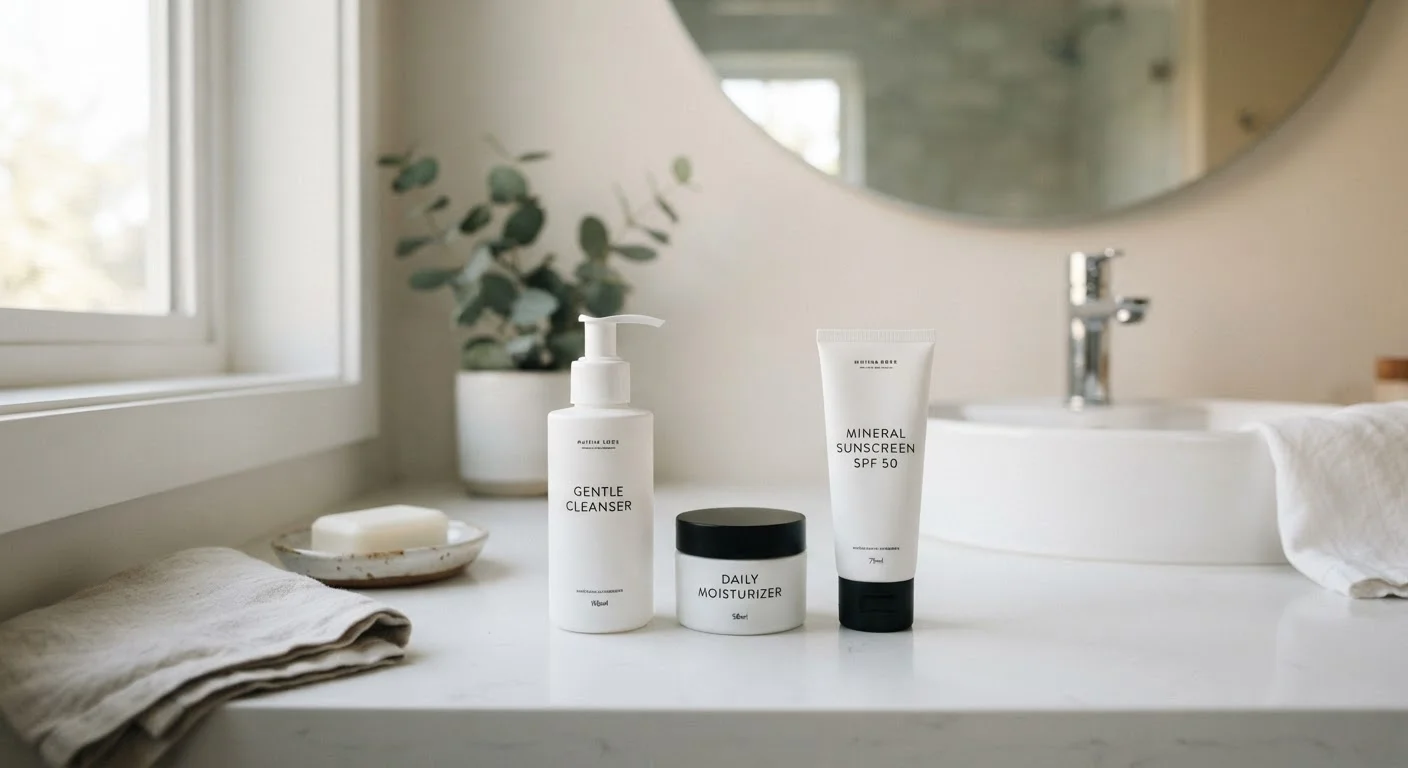
Almost every evidence-based skincare framework reduces to the same core triad: cleansing, moisturizing, and sun protection. Everything else — serums, toners, exfoliants, eye creams — builds on top of this foundation or addresses specific concerns. None of it replaces it.
Understanding how these steps interact also matters. For example, applying products in the wrong sequence can reduce how well key ingredients absorb. The guide to layering skincare products correctly explains the logic behind sequencing in plain terms.
Where to Put Your Limited Dollars
When every product purchase requires a trade-off, the question isn't just what to buy — it's what to prioritize first. Sunscreen consistently earns the top slot. Decades of peer-reviewed research link daily broad-spectrum UV protection to reduced risk of photoaging and skin damage. It's the one product dermatologists most universally recommend, regardless of skin type or budget.
Moisturizer is a close second. Skin barrier function — the skin's ability to retain moisture and resist irritants — underpins most other skin health concerns. A basic, fragrance-free moisturizer suited to your skin type supports that barrier without unnecessary ingredients that can trigger sensitivity.
Cleanser, by contrast, is a product where spending less rarely means losing much. A gentle, low-pH cleanser that removes dirt and oil without stripping the skin is all most people need. The differences between AM and PM routines can also help you decide whether you actually need to cleanse twice daily or whether once is sufficient for your skin.
Principles for Staying Consistent Without Overspending
A routine only works if it's followed. That sounds obvious, but product fatigue — the feeling of being overwhelmed by too many steps — is one of the most common reasons people abandon skincare habits entirely. Keeping the routine short reduces friction and increases the likelihood of daily follow-through.
Skin type awareness is another cost-saving principle. Buying a rich, occlusive cream for oily skin, or a lightweight gel for very dry skin, leads to products sitting unused. A basic understanding of whether your skin tends toward oily, dry, combination, or sensitive significantly narrows down which formulations are likely to work. If you're unsure, a consultation with a licensed dermatologist or esthetician can provide clarity and help avoid wasted spending.
For those balancing skincare within a broader personal budget, the same discipline applies here as it does in other areas. The habit of daily sun protection — like any good financial or wellness habit — compounds in value over time. Small, consistent actions tend to outperform sporadic, expensive ones.
This article is for general informational purposes only and does not constitute medical or dermatological advice. For skin concerns, consult a qualified healthcare or skincare professional.