

Key Takeaways
Our Verdict
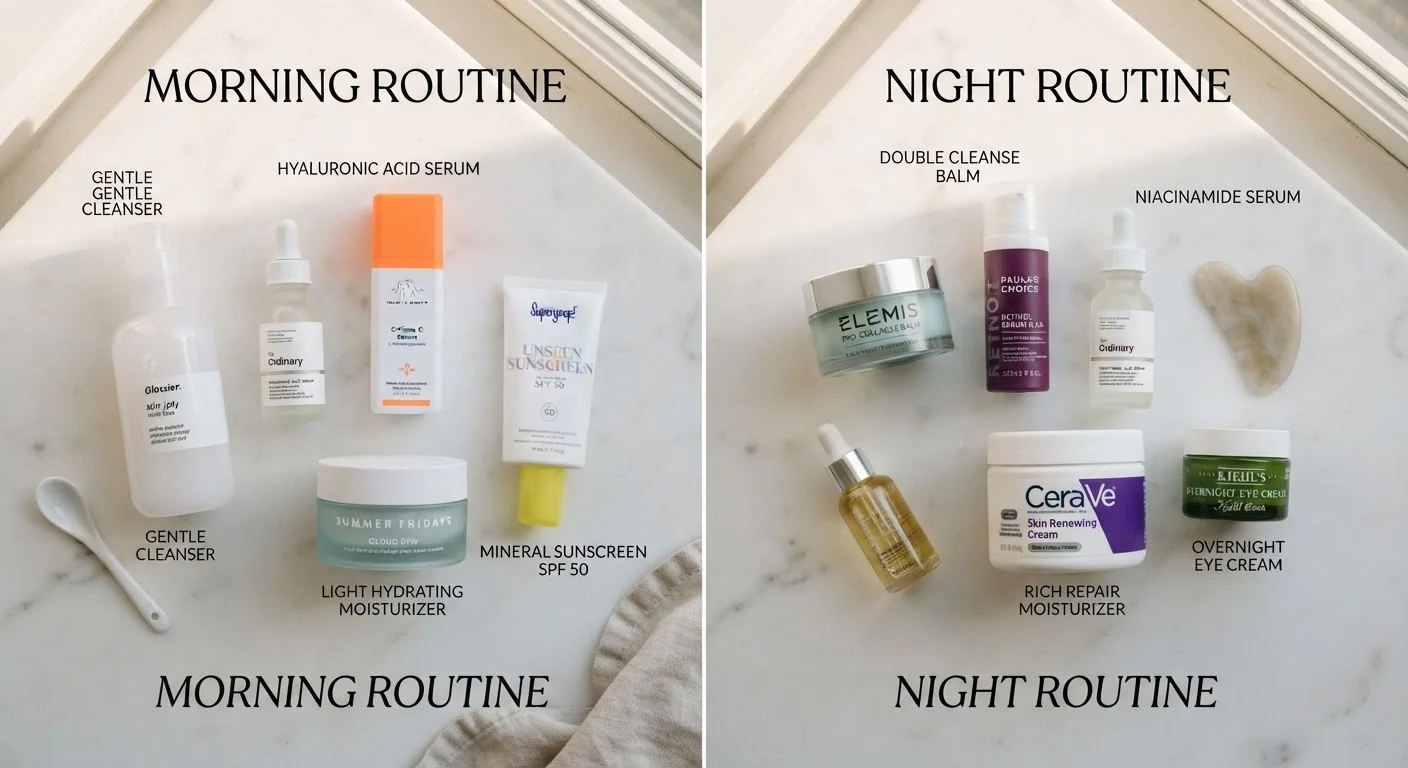
Neither the morning nor the evening routine is more important than the other — they serve distinct biological functions. Your AM routine shields skin from the day ahead; your PM routine capitalizes on the body's natural repair cycle. Understanding this division helps you place the right ingredients at the right time and get more out of every product you use.
| Best for | Recommended |
|---|---|
| Those building a routine for the first time | Start with a simple PM routine |
| Anyone concerned about sun damage or premature aging | Prioritize the AM routine with SPF |
| Those targeting specific skin concerns like texture or pigmentation | Focus active ingredients in the PM routine |
| Readers with sensitive or reactive skin | Minimal AM steps, gentle actives PM only |
Why Your Skin Needs Two Different Routines
Skin is not a static barrier. It cycles through distinct phases tied to circadian rhythms — the internal biological clock that governs most of the body's functions. Research in chronobiology shows that skin cell turnover, sebum production, and barrier permeability all fluctuate across a 24-hour period. This means a one-size-fits-all routine applied morning and night is likely working against your skin's natural rhythm at least half the time.
During the day, skin shifts into a defensive mode. Exposure to ultraviolet (UV) radiation, pollution, and oxidative stress from the environment makes protection the primary goal. At night, the skin pivots toward repair — barrier recovery accelerates, blood flow to the skin increases, and cellular regeneration peaks. Building two targeted routines, rather than one generic one repeated twice, puts these biological windows to work. See our complete starting-point guide if you are new to routines altogether.
The AM Routine: Protection as the Foundation
Morning skincare is fundamentally about defense. The core job is to shield the skin barrier from UV damage and environmental aggressors before you step outside.
Cleansing in the Morning
A gentle, low-lather cleanser — or even just water if your skin is dry or sensitive — is enough in the morning. Overnight, skin loses moisture and produces some sebum, but a full cleanse is usually unnecessary unless you use heavy overnight treatments. Over-cleansing in the morning can strip the barrier and leave skin more reactive throughout the day.
Antioxidant Serums
Vitamin C is the most well-studied topical antioxidant for daytime use. It helps neutralize free radicals generated by UV and pollution exposure and may support a more even skin tone over time. Applying it in the morning — before SPF — positions it to work alongside your sunscreen rather than separately from it. For a closer look at this ingredient alongside a complementary option, the niacinamide vs. vitamin C comparison is worth reading.
Moisturizer and SPF
A lightweight moisturizer followed by a broad-spectrum SPF 30 or higher sunscreen finishes the AM routine. Sunscreen is not optional — dermatologists broadly agree it is the single most evidence-supported step for preventing premature skin aging. Apply it as the final step before makeup.
| AM Routine | PM Routine | |
|---|---|---|
| Primary goal | Protection from UV and environmental damage | Repair, renewal, and barrier recovery |
| Cleansing intensity | Gentle rinse or mild cleanser | Thorough cleanse or double cleanse |
| Key actives | Vitamin C, antioxidants | Retinoids, AHAs, peptides |
| SPF required | Yes — essential final step | No — omit entirely |
| Moisturizer type | Lightweight, non-occlusive | Richer, barrier-supportive |
| Complexity level | Minimal steps recommended | More room for targeted treatments |
| Biological context | Skin in defensive mode | Skin in repair and regeneration mode |
The PM Routine: Repair and Renewal After Dark
Evening routines have more flexibility for active, potentially sensitizing ingredients because the skin is no longer being exposed to UV radiation. The absence of sun exposure is what makes nighttime the appropriate window for certain ingredients that would cause photosensitivity if applied in the morning.
Double Cleansing or a Single Thorough Cleanse
Removing sunscreen, makeup, and the day's buildup thoroughly is non-negotiable. An oil-based or balm cleanser as a first step dissolves sunscreen and makeup effectively; a water-based cleanser follows to clear any residue. If you skip sunscreen and heavy products, a single gentle cleanser is sufficient.
Retinoids and Exfoliating Acids
Retinoids (vitamin A derivatives) and chemical exfoliants — such as alpha-hydroxy acids (AHAs) like glycolic acid and lactic acid — are PM-only ingredients. Retinoids degrade in sunlight, and AHAs increase photosensitivity, making nighttime application both more effective and safer. These are among the most research-supported categories for improving skin texture, tone, and signs of aging over time. Start slowly with any new active ingredient and consult a dermatologist if you are uncertain what concentration is appropriate for your skin.
Rich Moisturizer or Barrier Repair
Finishing the evening routine with a more occlusive or nourishing moisturizer helps support the skin's overnight barrier repair. Ingredients like ceramides, fatty acids, and peptides are well-suited to nighttime use. For guidance on sequencing these products correctly, see our product layering guide.
This article is for general informational purposes only and does not constitute medical or dermatological advice. Consult a qualified dermatologist or healthcare provider for concerns about your skin or before starting any new treatment regimen.
Common Timing Mistakes to Avoid
Even with good products, misplaced timing can undermine results or cause irritation. A few patterns consistently cause problems:
- Using retinoids in the morning: Retinoids break down with UV exposure, which reduces their effectiveness and increases the risk of irritation and photosensitivity. Keep them strictly in the PM.
- Skipping SPF because you're staying indoors: UVA radiation — the type most associated with skin aging — penetrates glass. SPF is still relevant on days spent primarily indoors near windows.
- Layering too many actives at once: Combining multiple potent ingredients — such as a retinoid with an AHA and a vitamin C — in a single session can overwhelm skin. Alternating nights or spacing ingredients reduces the risk of irritation.
- Using a heavy overnight cream in the morning: Rich occlusives can pill under SPF and feel uncomfortable under makeup. Reserve them for the PM routine when they can work undisturbed.
If your evening habits extend to other areas of wellness, it may be worth reading how evening routines affect sleep quality — the connection between skincare timing and rest is more relevant than most people realize. For those working with limited budgets, our budget-conscious routine guide outlines which steps to prioritize when you can't do everything at once.