

Key Takeaways
Our Verdict
Neither coat type is strictly harder to manage — they simply demand different tools, frequencies, and techniques. Short-coated dogs are more forgiving of missed sessions, while long-coated dogs require consistent daily attention to prevent mats that can cause real discomfort. Understanding your dog's specific coat structure lets you build a realistic, sustainable routine from day one.
| Best for | Recommended |
|---|---|
| Owners with limited grooming time or new to pet care | Short-coated dog routine |
| Owners comfortable with daily brushing and regular professional trims | Long-coated dog routine |
| Dogs prone to skin issues or heavy shedding | Short-coated dog routine with de-shedding tools |
| Owners who enjoy bonding through hands-on daily grooming | Long-coated dog routine |
Why Coat Type Is the Starting Point
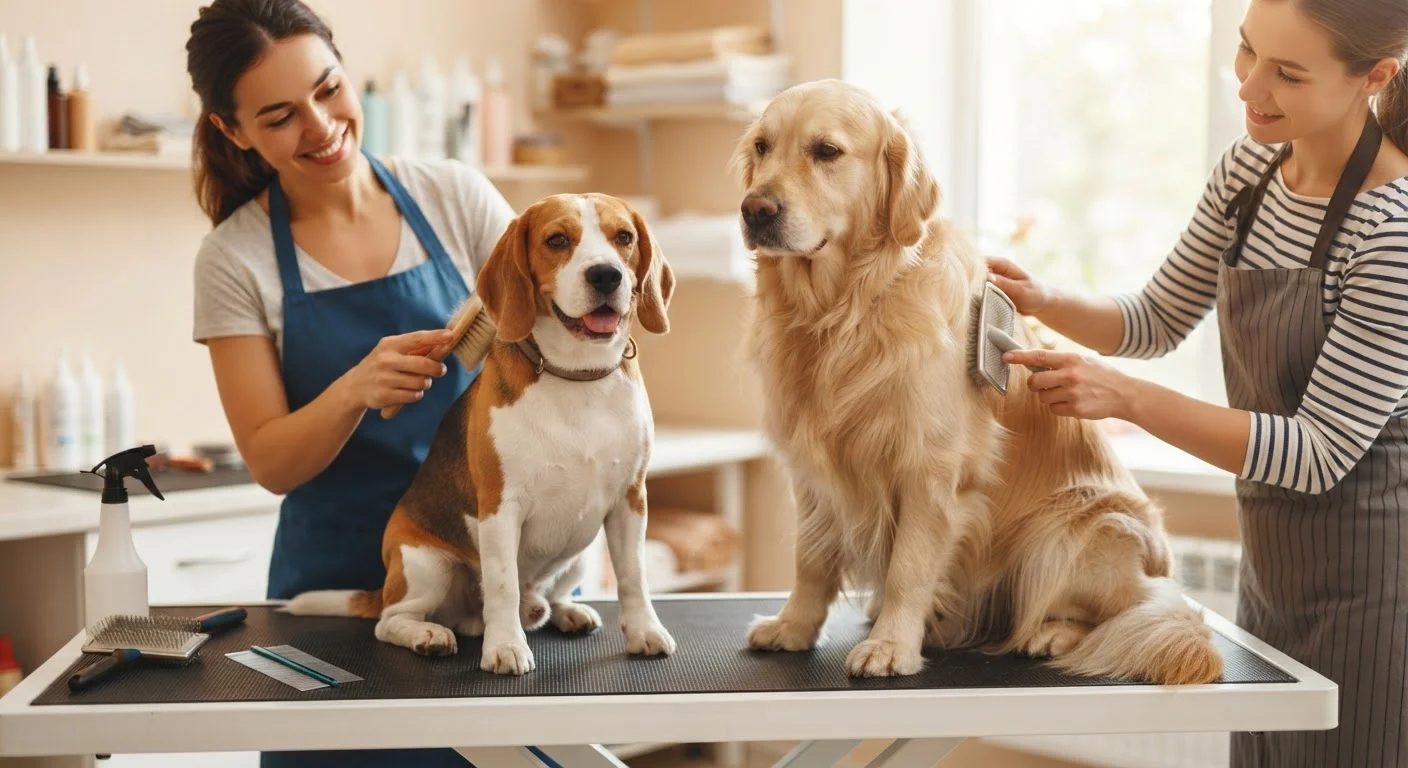
Before buying a single brush or scheduling a bath, it helps to understand what your dog's coat is actually doing. A short coat — think Beagle, Boxer, or Dachshund — lies flat, repels surface dirt reasonably well, and has fewer places for tangles to form. A long coat — such as those on a Golden Retriever, Shih Tzu, or Border Collie — grows continuously or in dense layers, traps debris, and creates conditions where mats can develop close to the skin within days of neglect.
Coat length also isn't the whole picture. Double-coated breeds (a dense undercoat beneath a longer outer coat) shed heavily in seasonal cycles, regardless of whether the visible fur looks long or short. This is why a Labrador Retriever — technically a short-coated dog — can still benefit from weekly de-shedding sessions. Grooming is part of the broader commitment that responsible pet ownership requires, and getting coat care right protects both your dog's skin health and your home.
Brushing: Frequency and Tools Compared
For short-coated dogs, brushing once or twice a week is generally sufficient for coat health. The goal is to remove loose hairs before they land on furniture, distribute natural skin oils, and give you a chance to check for lumps, fleas, or dry patches. A rubber curry brush or grooming mitt works well — these tools grip short hairs without scratching the skin.
For long-coated dogs, daily brushing is the standard recommendation from veterinary groomers. Start with a wide-toothed comb or slicker brush to work through the outer layer, then use a fine-toothed comb close to the skin to catch early-stage mats. Pay special attention to friction zones — behind the ears, under the collar, in the armpits, and around the hindquarters — where tangles form fastest.
| Short-Coated Dogs | Long-Coated Dogs | |
|---|---|---|
| Brushing frequency | 1–2 times per week | Daily or every other day |
| Recommended brush type | Rubber curry brush or grooming mitt | Slicker brush and fine-toothed comb |
| Bathing frequency | Every 4–6 weeks | Every 4–6 weeks (more involved process) |
| Mat risk | Very low | High — especially in friction zones |
| Drying time after bath | Fast — 15–30 minutes | Slow — can take 1–2 hours |
| Professional grooming need | Occasional or minimal | Regular trims recommended |
| Time per grooming session | 10–20 minutes | 30–60+ minutes |
If you encounter a mat, work it apart gently from the tip inward using your fingers and a detangling spray; never yank from the root. Severe mats that are tight against the skin should be addressed by a professional groomer or veterinarian, as they can restrict circulation and hide skin infections beneath them. Persistent scratching after grooming may also signal a skin issue — see our article on why dogs keep scratching for guidance on when to call the vet.
Bathing: How Often and What to Use
Short-coated dogs generally need a bath every four to six weeks under normal circumstances, or sooner if they've rolled in something unpleasant. Their coats dry quickly, making the process relatively fast. Use a gentle, dog-formulated shampoo — human products are formulated for a different skin pH and can cause irritation over time.
For long-coated dogs, bathing frequency is similar — roughly every four to six weeks — but the process is considerably more involved. Thorough rinsing is critical because product residue trapped in dense fur can cause itching and skin problems. Always brush the coat before bathing; washing a coat full of tangles tightens them into solid mats that are far harder to remove. After the bath, use a conditioner or detangling rinse, and dry completely with a low-heat dryer or allow full air-drying before the dog goes outside in cold weather.
Activity level and environment matter too. A dog that swims regularly or works outdoors may need more frequent bathing regardless of coat type. When in doubt about bathing frequency for a dog with a skin condition, ask your veterinarian. This kind of routine care fits into the full picture of pet health care.
Completing the Grooming Session
Brushing and bathing are the core of any grooming routine, but a complete session covers more ground. Each grooming visit — whether at home or with a professional — is an opportunity to check ears for redness or odor, inspect paws for cuts or embedded debris, and look over the skin for anything unusual. These quick checks can catch early health concerns before they escalate.
Nail care is another essential component. Overgrown nails affect posture and can cause joint discomfort over time. Our guide on clipping your dog's nails without stress walks through technique and how to gradually build your dog's comfort with the process. Similarly, dental hygiene should run alongside your grooming routine — see how at-home and clinic dental cleanings compare for dogs.
Long-coated breeds may also benefit from periodic professional trims to manage coat length and reduce your at-home maintenance burden. Establishing a consistent grooming schedule — even an imperfect one — is far more valuable than occasional intensive sessions. Consistency is the same principle that makes a training routine stick, and it applies equally here.
This article is for general informational purposes only and does not constitute veterinary advice. Consult a licensed veterinarian for guidance specific to your dog's health and coat condition.