

Key Takeaways
Option A
At-Home Dental Cleaning
The daily prevention habit that slows plaque buildup.
Best for: Pet owners committed to a consistent brushing and oral hygiene routine between vet visits.
Option B
Professional Clinic Dental Cleaning
The deeper intervention that removes what home care cannot.
Best for: Pets with existing tartar buildup, gum disease, or those due for their annual dental exam under anesthesia.
If your pet has no current tartar buildup and tolerates brushing
At-Home Dental Cleaning
Daily brushing is your most powerful tool for preventing plaque from hardening into tartar between professional visits.
If your pet has visible brown or yellow deposits on teeth or signs of gum inflammation
Professional Clinic Dental Cleaning
Hardened tartar can only be safely removed with professional scaling tools; delaying treatment can lead to tooth loss and infection.
If you want the most complete long-term oral health strategy
At-Home Dental Cleaning
Use daily home care as the foundation, and schedule annual professional cleanings to address what brushing cannot reach — particularly below the gum line.
If your pet is a senior or has a history of dental disease
Professional Clinic Dental Cleaning
Older pets and those with recurring periodontal issues typically benefit from more frequent professional evaluations and cleanings as guided by your veterinarian.
Why Pet Dental Health Deserves Serious Attention
Dental disease is one of the most common health conditions in adult dogs and cats — yet it often develops silently, without obvious symptoms until it has progressed significantly. Bacteria in the mouth form plaque, which hardens into tartar within days if not removed. Left unchecked, this leads to gingivitis, periodontal disease, and eventually tooth loss or systemic complications. For a deeper look at how this progression works, see our article on dental disease in pets.
Two main tools exist to combat this: the daily habits you build at home, and the professional cleanings performed at your veterinary clinic. Understanding what each one does — and doesn't do — helps you make confident decisions about your pet's care.
| Criterion | At-Home Cleaning | Professional Clinic Cleaning |
|---|---|---|
| Removes soft plaque | Yes, effectively | Yes, thoroughly |
| Removes hardened tartar | No | Yes, above and below gum line |
| Evaluates below the gum line | No | Yes, with probing and X-rays |
| Requires anesthesia | No | Yes |
| Frequency | Daily (ideally) | Typically once a year or as advised |
| Cost | Low (ongoing supplies) | Higher (veterinary procedure) |
| Can detect hidden disease | No | Yes |
At-Home Dental Cleaning: The Daily Defense
Brushing your pet's teeth is the single most effective at-home method for preventing plaque buildup. Ideally, this means daily brushing with a pet-safe toothpaste (never human formulas, which contain ingredients toxic to animals) and a soft-bristled toothbrush or finger brush. The goal is disrupting the thin film of bacteria before it mineralizes into tartar.
Consistency matters more than technique. Even 30 to 60 seconds of gentle brushing — focusing on the outer surfaces where saliva contact promotes tartar formation — provides meaningful benefit. Dental chews, water additives, and specialized diets may offer supplemental support, though their effectiveness varies and no product fully substitutes for brushing.
The main limitation of home care is that it works on the tooth surface above the gum line. Once tartar has calcified onto the tooth, brushing cannot remove it. Home care also cannot evaluate what's happening below the gum line, where early disease often hides. Just as grooming practices like those described in our guide to building a grooming routine require consistency, dental care rewards pet owners who commit to a regular schedule.
Professional Clinic Dental Cleaning: The Deeper Intervention
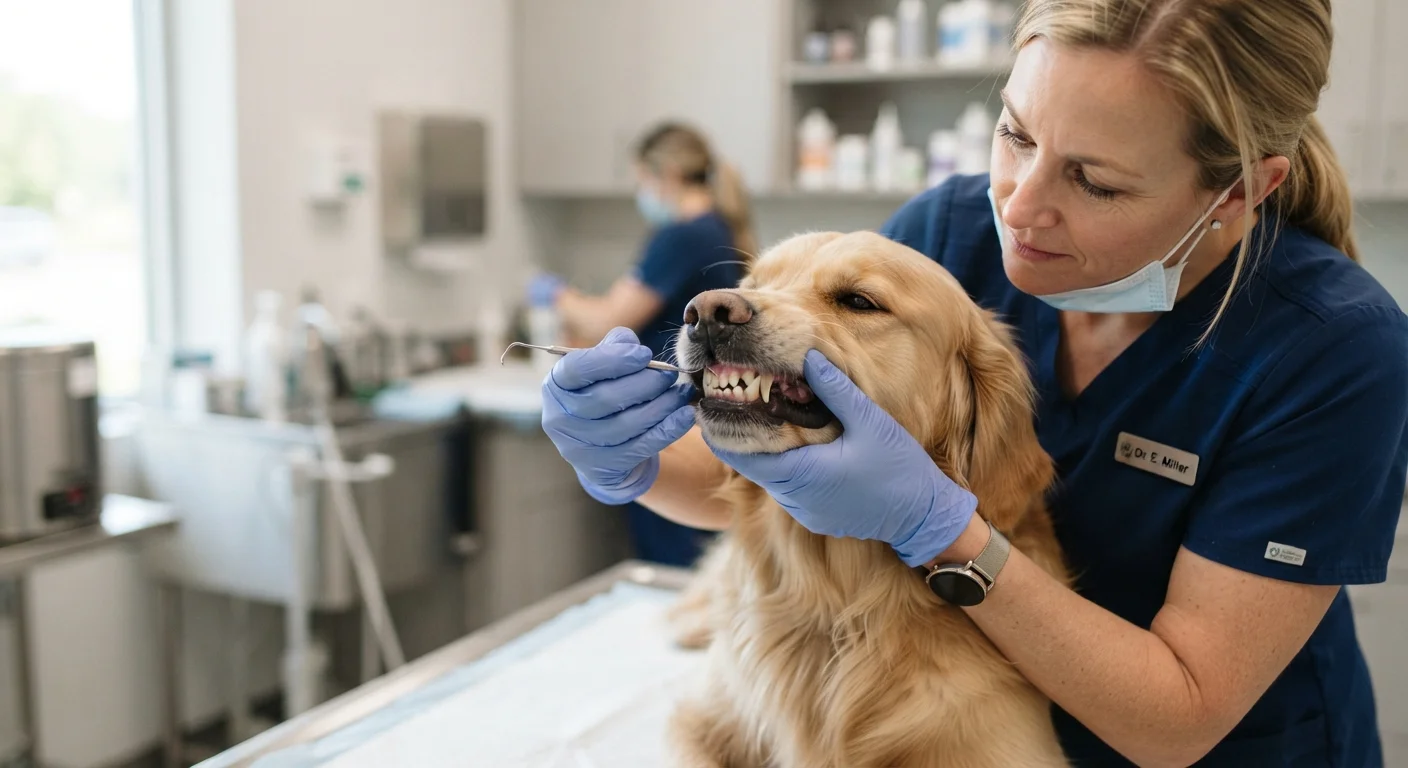
Professional dental cleanings — formally called dental prophylaxis — are performed by a veterinarian or licensed veterinary technician under general anesthesia. Anesthesia is not optional: it allows the team to safely scale below the gum line, examine each tooth individually, take dental X-rays to detect hidden disease, and probe the gum pockets where periodontal damage begins.
During a cleaning, ultrasonic scalers remove calcified tartar both above and below the gum line. Teeth are then polished to smooth the enamel surface, making it harder for new plaque to adhere quickly. If X-rays reveal damaged or infected roots, extractions may be recommended.
80%
Adult dogs affected by dental disease by age 3
According to the American Veterinary Medical Association, the majority of dogs show signs of periodontal disease by their third year of life.
70%
Adult cats with periodontal disease
Veterinary dental organizations estimate that most cats develop some form of dental disease by age three, often without obvious outward symptoms.
The frequency of professional cleanings depends on individual factors: breed, age, diet, home care habits, and prior dental history. Smaller breeds and brachycephalic (flat-faced) animals tend to accumulate tartar faster and may need more frequent cleanings. Your veterinarian is best positioned to recommend an appropriate interval for your specific pet.
How They Work Together — Not Against Each Other
A common misconception is that regular professional cleanings eliminate the need for home care, or that diligent home brushing means a pet can skip clinic visits. Neither is accurate. These two approaches address different stages of the same problem.
Think of it this way: daily brushing prevents what professional cleanings would otherwise need to treat. And professional cleanings address what daily brushing structurally cannot reach. Together, they form a complete oral health strategy that reduces the overall frequency and severity of dental disease over a pet's lifetime.
This principle mirrors responsible pet ownership more broadly. Dental care is one of several ongoing commitments — alongside feeding, grooming, and preventive vet visits — that add up to a healthy life for your animal. Our overview of responsible pet ownership puts dental care in context with everything else your pet needs.
This article is for general informational purposes only and does not constitute veterinary medical advice. Always consult a licensed veterinarian for guidance specific to your pet's health needs.