

Key Takeaways
Why Routine Matters More Than Effort
Many pet owners approach training with genuine enthusiasm — but that energy is often spent in uneven bursts rather than consistent practice. Behavioral science consistently shows that animals learn best through repetition spread over time, not through marathon sessions driven by weekend motivation. A dog trained for five minutes every day will almost always outperform one trained for an hour once a week.
Routine works because it leverages how memory consolidates. Each short session reinforces neural pathways, and the predictability of a schedule signals to your pet that learning is a normal, safe part of their day. It also makes the habit easier to maintain for you — short sessions are far easier to fit into a busy schedule than extended blocks of time. For a closer look at what can quietly derail progress when structure breaks down, see training habits that undermine progress.
Structuring Sessions for Maximum Retention
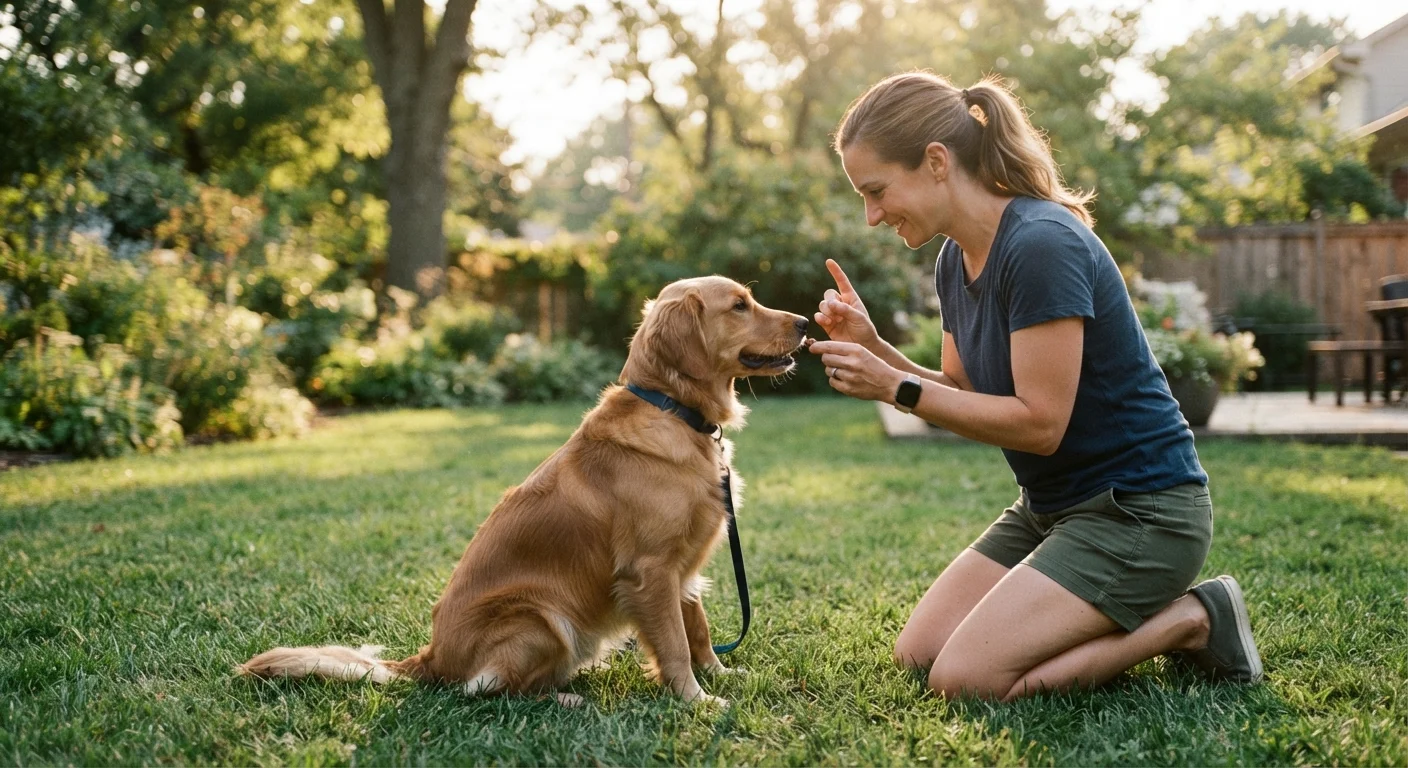
An effective training session has a clear beginning, middle, and end. Start with a behavior your pet already knows well — this warms up their focus and delivers an early win. Then introduce or practice the target skill. Finish by returning to something reliable so the session ends positively.
Aim for sessions of three to five minutes for puppies and young animals, and five to ten minutes for adult pets with more experience. Stop before your pet loses interest, not after. Quitting while they are still engaged keeps them eager to start next time.
Timing: Work With Your Pet's Natural Rhythms
Your pet's receptiveness varies throughout the day. Most dogs are most alert and motivated shortly after waking or following a brief rest — not immediately after eating or intense physical activity. Scheduling sessions at consistent times each day does two things: it anchors the habit for you, and it trains your pet to mentally prepare for engagement at those moments.
Avoid training when your pet is overtired, overstimulated, or hungry to the point of distraction. A slightly hungry pet may respond well to food rewards, but a ravenous animal may be too agitated to focus reliably. Pairing training with an existing daily anchor — right before the morning walk, for example — makes it far easier to maintain.
Keeping Cues and Rewards Consistent
One of the most common reasons training stalls is inconsistency in how cues are delivered. Using "sit" one day and "sit down" the next introduces ambiguity that genuinely confuses animals. Every person in the household should use the same words, hand signals, and tone. This consistency is especially important in the early stages of teaching a new behavior.
Reward timing is equally critical. The reinforcer — a treat, praise, or play — should arrive within one to two seconds of the desired behavior. Delayed rewards lose their instructive power and can accidentally reinforce whatever the animal is doing at the moment of delivery. If you are working on a complex behavior, pairing a marker signal with your reward can sharpen timing significantly. The clicker vs. verbal marker guide explains how each approach works in everyday practice.
For foundational skills like stay, building duration and reliability takes a structured progression. The step-by-step stay breakdown walks through exactly how to layer difficulty without losing the behavior.
Building Habits That Last Beyond the First Week
The hardest part of any routine is surviving the second and third week — after initial excitement fades and life gets complicated. Planning for missed sessions without abandoning the system is essential. A single skipped day is not failure; treating it as one is where routines actually collapse.
Track sessions simply — a tally on a notepad or a phone note is enough. Celebrate small milestones: the first reliable recall, the first sit in a distracting environment. These moments reinforce your own motivation alongside your pet's. For more on how consistency compounds over time in habit-building, the principles in why consistency beats intensity apply broadly to animal training as well.
Training is also an investment in your pet's overall wellbeing. A mentally stimulated, well-guided animal tends to show fewer behavioral problems and less anxiety. For a broader view of your pet's daily care foundations, the Pet Care Basics hub is a practical starting point.