

Key Takeaways
Needs, Wants, and Savings
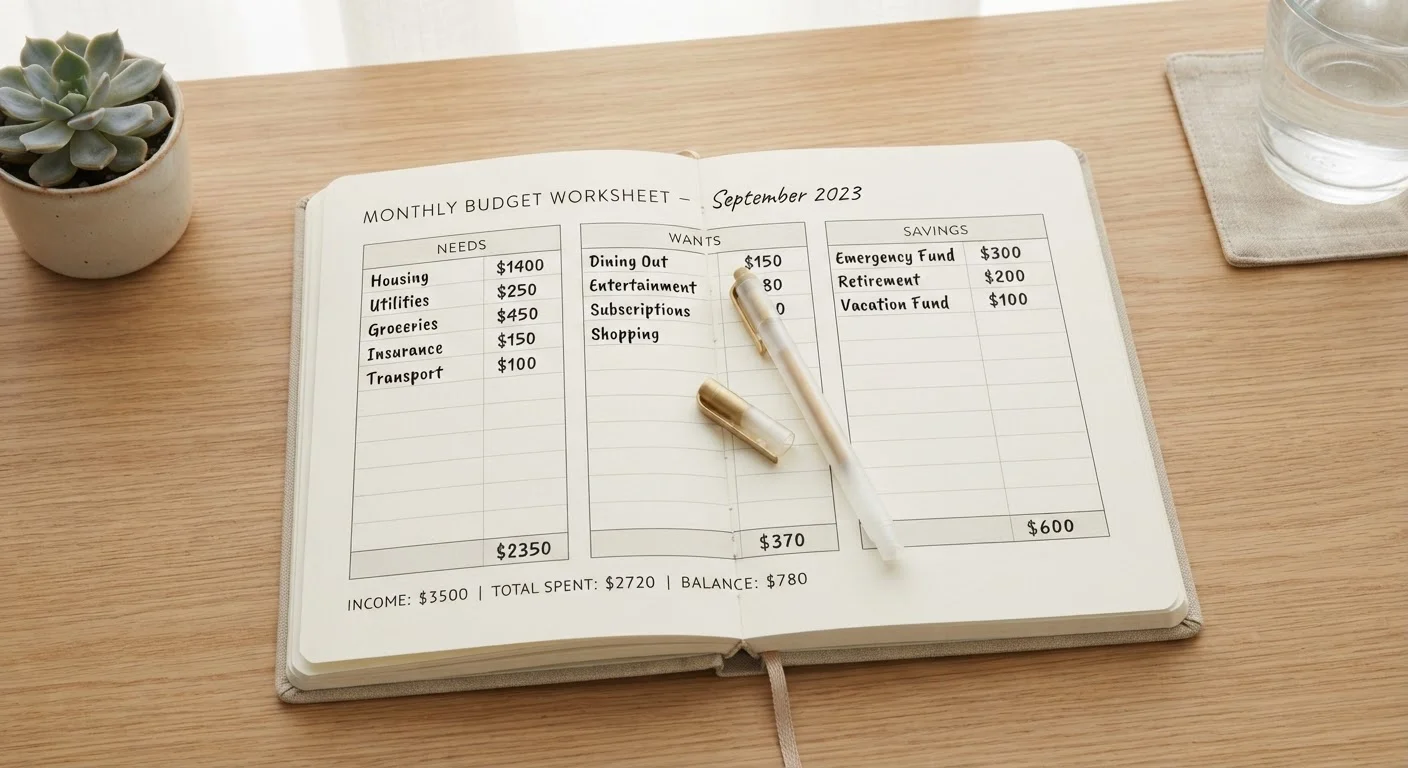
Needs are expenses required for basic survival and functioning - housing, food, utilities, and essential transportation. Wants are expenses that improve your quality of life but aren't strictly necessary. Savings is money set aside before or after spending, used to build financial security or meet future goals.
In the widely referenced 50/30/20 budgeting framework, these three categories are assigned percentage targets of after-tax income: roughly 50% to needs, 30% to wants, and 20% to savings and debt repayment.
Why the Lines Blur in Real Life
Most people can define needs and wants in the abstract. Ask someone on the street and they'll say food is a need, a vacation is a want. But sit down with a real bank statement and the categories get murky fast. Is a gym membership a health need or a lifestyle want? Is a streaming subscription a mental-health essential or pure entertainment?
The blurring happens for three main reasons: habit (spending that once felt optional has become automatic), emotion (we justify wants as needs when we're stressed or tired), and social context (spending that's normal in your peer group starts to feel necessary). Recognizing these forces at work is not about guilt - it's about making decisions with clearer eyes.
The practical stakes are real. When needs and wants aren't separated, savings tends to be treated as whatever remains at the end of the month. And most months, that means very little gets saved at all.
Defining Each Category Precisely
Needs are non-negotiable expenses whose absence would directly threaten your health, safety, housing, employment, or basic functioning. This includes rent or mortgage payments, utilities required to live safely, groceries, essential medications, and the minimum transportation necessary to get to work. Notice that this category is intentionally narrow. It does not include the nicest apartment you can afford, name-brand groceries, or a car payment on a vehicle well above your functional requirements.
Wants cover everything that improves or enriches life beyond bare necessity. Dining out, subscription services, travel, upgraded technology, gym memberships, and entertainment all belong here - not because they aren't valuable, but because life could continue without them. This is not a shame category. Wants are legitimate parts of a balanced budget. The point is simply to see them clearly. For a closer look at how small want-category purchases accumulate, see how daily purchases add up over a year.
Savings is money intentionally reserved for future use before you assess what's left to spend. This includes emergency funds, retirement contributions, and saving toward specific goals. Treating savings as a fixed expense - not an afterthought - is what separates people who build financial security over time from those who mean to but never quite get there.
Start With One Month of Real Data
Before categorizing anything, pull one full month of bank and credit card statements. Go line by line and assign each expense to needs, wants, or savings without editing as you go. The goal is an honest picture first - adjustments come after. Most people discover their actual spending distribution is meaningfully different from what they estimated.
Understanding how your expenses break down by type is foundational to any budgeting system. For a broader look at the structural differences in spending, see our explainer on fixed vs. variable expenses.
A Practical Test for Ambiguous Expenses
When you're unsure which category an expense belongs to, try asking three questions:
- What happens if I stop paying this? If the answer involves losing housing, your job, or your health, it's a need. If life continues with some discomfort or inconvenience, it's likely a want.
- Is the basic version a need but the premium version a want? Groceries are a need; a weekly meal-kit delivery is a want. Phone service is a need; an unlimited premium plan may include a want component.
- Am I calling this a need because it would be hard to give up? Difficulty letting go is a sign of habit or emotional attachment, not necessity. Recognizing that honestly doesn't obligate you to cut it - just to categorize it correctly.
The goal of this exercise isn't to strip your life down to the bare minimum. It's to see your spending as it actually is, so you can make informed choices about what stays, what shifts, and what gets redirected toward savings. The 50/30/20 rule provides a structured percentage target for each category if you want a framework to build from.
57%
Americans unable to cover a $1,000 emergency
According to a Bankrate survey, more than half of U.S. adults could not pay for a $1,000 emergency expense from savings - underscoring how often savings is treated as an afterthought rather than a budget priority.
30%
Recommended share of income for wants (50/30/20 rule)
The 50/30/20 budgeting framework allocates 30% of after-tax income to discretionary wants - a useful ceiling for evaluating whether lifestyle spending is in proportion to income.
~$3,000
Estimated annual cost of common small daily habits
Routine discretionary purchases - subscriptions, convenience food, small impulse buys - can collectively reach several thousand dollars per year, according to general consumer spending analyses.
This article provides general financial education and is not personalized financial advice. For guidance tailored to your circumstances, consult a qualified financial professional.