

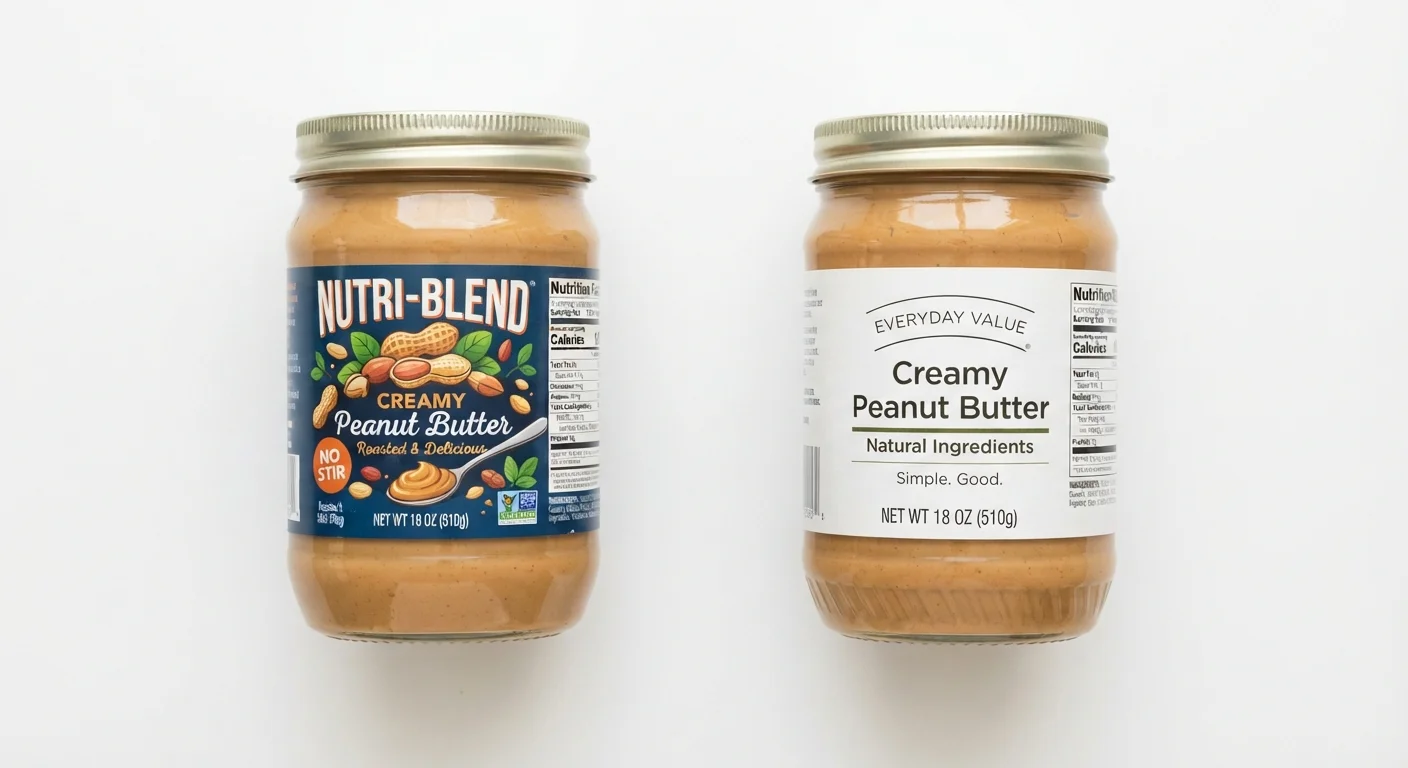
Key Takeaways
Option A
Generic / Store-Brand Products
The streamlined, value-focused alternative.
Best for: Shoppers who want comparable performance at a lower price point, especially for commodity items with standardized formulations.
Option B
Name-Brand Products
The established, heavily marketed option.
Best for: Situations where proprietary formulations, quality controls, or category-specific differences genuinely affect performance or safety.
If you're buying over-the-counter medications like pain relievers or antacids
Generic / Store-Brand Products
FDA regulations require generic OTC drugs to contain the same active ingredients at the same dosage - the difference is almost purely cosmetic.
If you're buying complex electronics or power tools
Name-Brand Products
Component quality, reliability testing, and available service networks can vary significantly in electronics categories where no equivalency standard exists.
If you're purchasing pantry staples like flour, sugar, or canned goods
Generic / Store-Brand Products
Commodity foods frequently come from the same suppliers or co-packers as name brands, with minimal difference in the final product.
If you're shopping for specialty skincare with patented active compounds
Name-Brand Products
Proprietary concentrations, delivery systems, or stabilized formulas may not be replicated in store-brand alternatives.
If you're stocking household cleaning supplies
Generic / Store-Brand Products
Many cleaning products share the same key chemical compounds; comparing ingredient lists often reveals near-identical formulations.
The Core Question: What Are You Actually Paying For?
When you pick up a store-brand product next to its name-brand counterpart, you're really asking one question: does the price gap reflect a real quality gap? The honest answer is: it depends heavily on the product category.
Brand premiums exist for several reasons that have nothing to do with product quality - national advertising campaigns, retail shelf placement fees, premium packaging, and brand equity built over decades. A significant portion of the price difference between a name-brand and a store-brand product often reflects those costs, not what's inside the box.
That said, claiming generics are universally equivalent to name brands is just as misleading as assuming name brands are always superior. The reality requires category-by-category evaluation. See our guide to sale pricing tactics for related context on how retail pricing strategies can distort perceived value.
Where Generics Are Essentially Equivalent
Certain product categories have regulatory frameworks that make generic equivalence reliable and verifiable.
Over-the-counter (OTC) medications are the clearest example. The FDA requires generic OTC drugs - think ibuprofen, acetaminophen, or loratadine - to contain the same active ingredient at the same strength and dosage form as the reference product. The inactive ingredients (binders, fillers, coatings) can differ, which rarely affects efficacy but may matter for people with specific sensitivities.
Pantry staples and commodity foods represent another area where the gap is often minimal. Items like all-purpose flour, white sugar, baking soda, and canned tomatoes frequently originate from the same food processors as name-brand versions. Without a regulated equivalency standard here, you can't assume it - but comparing ingredient lists and nutrition facts panels often tells the story quickly.
Household cleaning products tend to follow similar patterns. Many store-brand cleaners use the same surfactants and disinfecting agents found in national brands. Concentration levels can vary, so reading the label matters - but outright inferiority is far less common than the marketing suggests.
| Criterion | Generic / Store-Brand | Name-Brand |
|---|---|---|
| Price | Generally lower | Generally higher |
| OTC drug equivalency | FDA-mandated same active ingredient | Reference standard product |
| Food & pantry staples | Often co-packed with name brands | Branded packaging, similar sourcing |
| Electronics quality control | Variable; no equivalency standard | Brand-specific QC and warranties |
| Specialty skincare actives | Ingredient may differ in delivery | May use proprietary formulations |
| Third-party certifications | Available; verify label | Available; verify label |
| Marketing spend in price | Minimal | Often significant |
Where the Brand Name Can Matter
Some categories lack the equivalency safeguards that apply to regulated goods - and in those spaces, real quality differences are more common.
Electronics and batteries are categories where component sourcing, manufacturing tolerances, and quality-control processes can meaningfully affect performance and longevity. A store-brand battery may technically work but deliver fewer hours of charge. A no-name cable may fail faster or lack adequate shielding. Without a regulatory standard requiring equivalence, performance can vary in ways that aren't visible until you're using the product.
Specialty personal care products - particularly skincare with active ingredients like retinoids, vitamin C derivatives, or AHAs - sometimes rely on proprietary stabilization or encapsulation technology. A store-brand equivalent using the same ingredient name may not deliver it in the same bioavailable form. For everyday moisturizers and basic hygiene products, this distinction usually doesn't apply.
Adhesives and construction materials also show more meaningful variation in performance data. For low-stakes applications, a generic works fine. For structural or specialized uses, manufacturer specifications deserve closer scrutiny. Our guide to material and construction labels covers how to read those specifications accurately.
How to Evaluate Any Purchase on Its Own Terms
Rather than applying a blanket rule, use this practical framework:
- Check whether the category is regulated for equivalency. OTC drugs are; most consumer goods are not. This single factor tells you how much weight you can place on assumed similarity.
- Compare ingredient or component lists directly. For food, cleaning products, and personal care, the ingredient list is publicly available and often settles the question. For electronics or tools, specification sheets serve a similar function.
- Look for third-party certifications. Standards from bodies like NSF International, UL (for safety), or USDA Organic apply consistently regardless of brand name. A certified generic can be genuinely equivalent - or even manufactured in the same facility.
- Consider the cost of a wrong decision. If a cheaper option fails in a low-stakes situation (pantry staple, basic cleaning supply), the downside is minor. If it fails in a high-stakes one (a medical device, a structural adhesive, a safety item), the calculus changes.
For food products in particular, ingredient literacy is its own skill. Our breakdown of pet food label reading applies many of the same principles to a category where marketing language is particularly dense.
This article provides general consumer education and is not a substitute for professional advice. Product formulations vary by manufacturer and may change over time; always verify current label information before purchasing.