

Key Takeaways
Why Pet Food Labels Are Harder to Read Than They Look
A pet food bag is part nutrition document, part marketing canvas. Manufacturers are required by the Association of American Feed Control Officials (AAFCO) and individual state feed laws to include specific information, but the rest of the package — the photography, the bold claims, the ingredient callouts — exists primarily to sell the product. Learning to separate the regulated from the promotional is the core skill this guide will build.
As part of responsible pet ownership, understanding what's actually in your pet's food is one of the highest-impact habits you can develop. It doesn't require a nutrition degree — it requires knowing which five or six elements on that label carry real meaning.
Start With the Back of the Bag
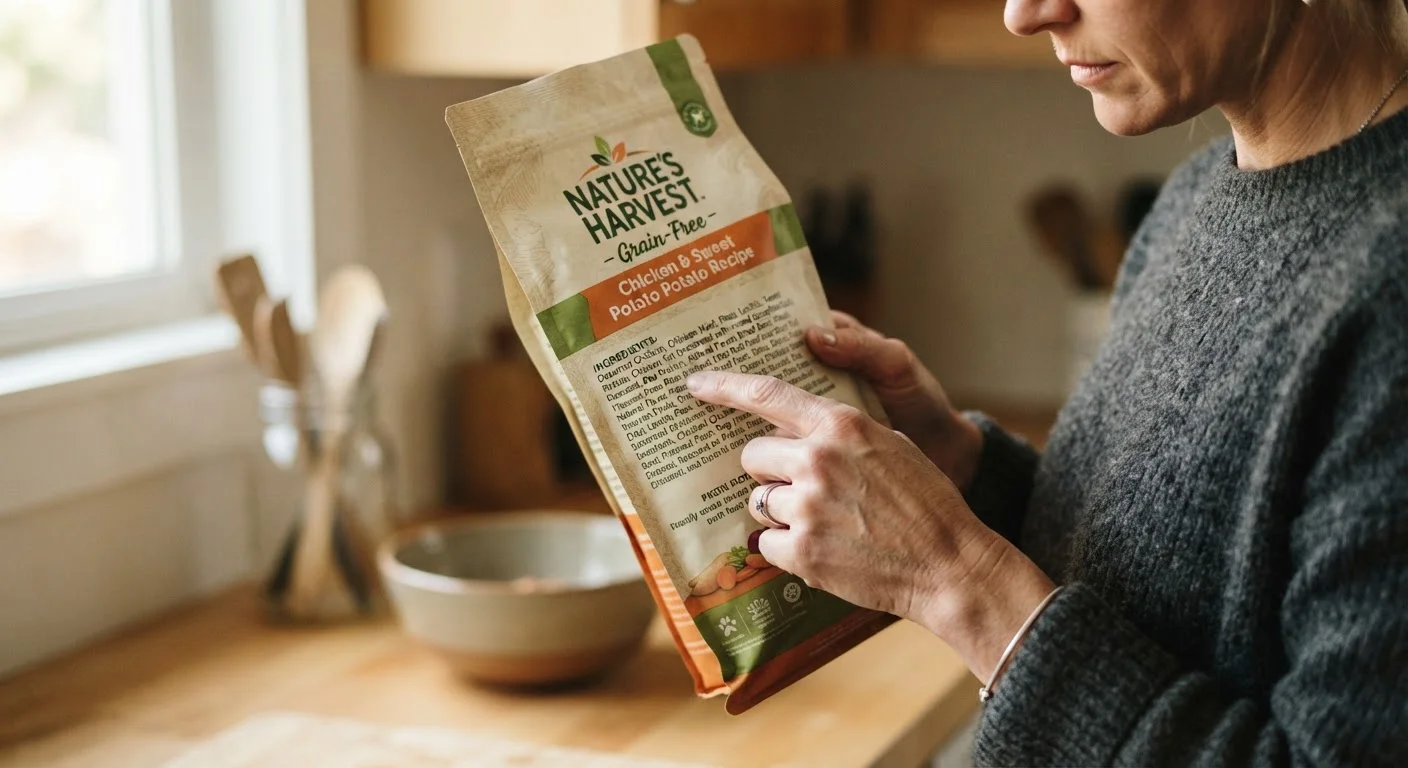
The front of a pet food package is designed by marketers; the back and sides contain the regulated information. Make it a habit to flip the bag first before evaluating any claims. This simple reorientation filters out a significant amount of promotional noise before you've even begun reading.
What Every Pet Food Label Must Include
Regulated labels are required to carry these elements, all of which you should locate before evaluating any food:
- Product name and species designation — the label must specify which animal the food is formulated for.
- Net weight or volume
- Ingredient list — ingredients listed in descending order by pre-cooking weight.
- Guaranteed analysis panel — minimum crude protein, minimum crude fat, maximum crude fiber, and maximum moisture.
- AAFCO nutritional adequacy statement — explains whether the food is complete and balanced, and for which life stage.
- Feeding directions
- Manufacturer name and address
Everything else on the packaging — "grain-free," "ancestral diet," "human-grade" — is marketing language with varying degrees of regulatory backing. Our deep-dive on nutrition label sections covers each regulated panel in greater technical detail if you want to go further.
Step-by-Step: How to Evaluate a Label
Follow these steps in order each time you assess a new food. The sequence is deliberate — start with the most meaningful information before you get pulled into ingredient details.
Find and read the AAFCO nutritional adequacy statement first
This statement is the most important line on the label. It tells you whether the food is complete and balanced (meeting all known nutritional requirements) or intended only as a supplement or treat. It will also name the life stage the food is designed for: growth (puppies/kittens), adult maintenance, reproduction, or all life stages.
If a food lacks an AAFCO statement entirely, it should not serve as your pet's primary diet.
Check the first five ingredients on the ingredient list
Ingredients are listed by weight before cooking. A named animal protein — such as "chicken," "salmon," or "beef" — appearing first or second is generally a positive indicator. Be aware that "chicken meal" is a concentrated, moisture-removed form that delivers more protein per pound than fresh chicken, so its position may understate its contribution.
Seeing the same ingredient split into multiple forms (e.g., "corn," "corn gluten meal," "corn flour") listed separately can push each one lower individually while their combined proportion remains high — a practice sometimes called ingredient splitting.
Review the guaranteed analysis panel
This panel shows four core values: minimum crude protein, minimum crude fat, maximum crude fiber, and maximum moisture. Note the language — "minimum" means the food contains at least that amount; the actual level could be higher. "Maximum" means it contains no more than that amount.
Because wet foods have much higher moisture content, comparing them to dry foods using these numbers directly is misleading. To compare on an equal basis, you'd need to convert both to a dry matter basis — a calculation your veterinarian or a veterinary nutritionist can help you with.
Identify the manufacturer and look for a contact source
The label must include the manufacturer's or distributor's name and address. Some manufacturers produce their own food; others contract with third-party facilities. If you want to know more about where and how a food is made, the manufacturer's contact information is your starting point for asking those questions directly.
Cross-reference claims against regulated content
Once you've read the regulated sections, revisit any bold claims on the front of the package and ask whether the regulated content supports them. If a bag shouts "protein-rich" but the guaranteed analysis shows modest protein minimums, the claim may be technically permissible but contextually misleading.
This habit — checking the claim against the data — is the practical skill that makes label-reading genuinely useful. For a broader view of when brand names and label claims matter across product categories, see our piece on when brand names matter and when they don't.
Common Marketing Claims — and What They Actually Mean
Once you understand the regulated sections, it's easier to evaluate the promotional language around them:
- "Natural"
- AAFCO defines this term, but it does not mean organic, additive-free, or nutritionally superior. It generally means ingredients derived from plant, animal, or mined sources without chemical alteration.
- "Premium" or "Ultra Premium"
- These terms have no regulatory definition and carry no guaranteed nutritional standard.
- "Grain-free"
- Describes what's absent, not what nutritional benefit replaces it. Grains are often substituted with legumes or potatoes. The FDA has studied a potential link between grain-free diets and dilated cardiomyopathy in dogs; consult your veterinarian before switching.
- "With Real Chicken"
- AAFCO rules require that a product using "with" in its name contain at least 3% of that ingredient. Compare that to a product called "Chicken Formula," which must contain at least 25%.
For a related perspective on how label claims translate (and sometimes don't) across consumer products, see our article on reading a skincare label without getting lost in the jargon.
Also consider pairing your label-reading skills with an understanding of format: wet vs. dry food differences affect nutrient density and how you interpret the guaranteed analysis panel.
This article provides general educational information about pet food labeling and is not a substitute for personalized veterinary advice. Always consult a licensed veterinarian before making significant changes to your pet's diet, especially if your animal has a health condition or specific nutritional needs.