

Key Takeaways
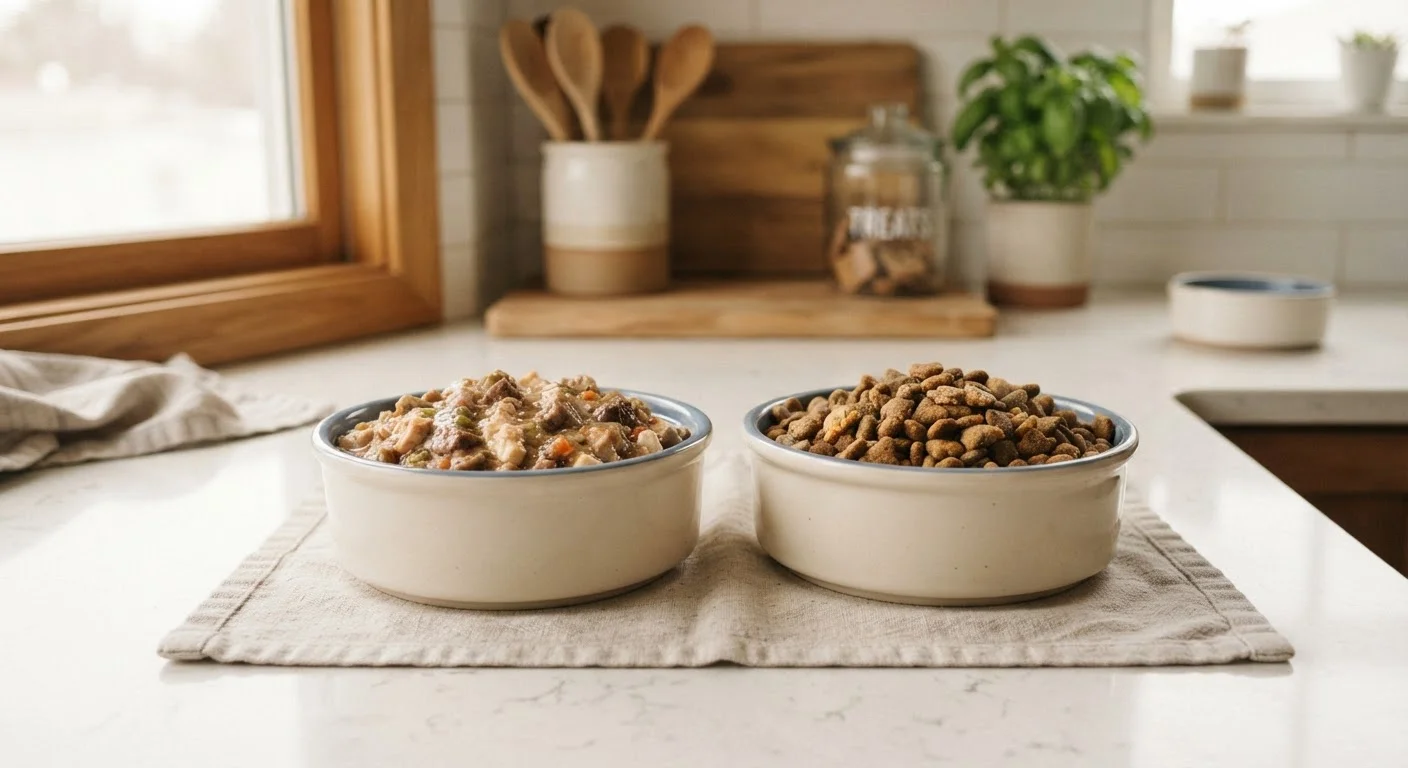
Option A
Wet Food
The moisture-rich, palatable option for picky or at-risk pets.
Best for: Cats and dogs with urinary issues, kidney disease, dental pain, or low thirst drive who need extra hydration from their diet.
Option B
Dry Food (Kibble)
The convenient, calorie-dense staple for most healthy pets.
Best for: Generally healthy dogs and cats whose owners want budget-friendly, easy-to-portion meals with a longer shelf life.
If your cat drinks very little water on its own
Wet Food
Cats are naturally low-thirst animals, and wet food's high moisture content meaningfully supports urinary tract and kidney health.
If you have a healthy, active dog and want to manage feeding costs
Dry Food (Kibble)
Kibble provides complete nutrition at a lower cost per calorie, and it's easy to measure and store without refrigeration.
If your pet has dental disease or mouth pain affecting chewing
Wet Food
Soft texture reduces the physical effort required to eat, making meals more comfortable for pets with compromised teeth or gums.
If you want to support dental hygiene through diet
Dry Food (Kibble)
The mechanical action of chewing kibble can reduce plaque buildup, though it is not a substitute for regular tooth brushing.
If your senior pet has kidney disease or reduced appetite
Wet Food
Higher moisture supports kidney function and the stronger aroma of wet food can stimulate appetite in older animals. Consult your veterinarian for guidance specific to your pet.
What Actually Differs Between the Two Formats
The most significant difference between wet and dry pet food is water content. Wet food — sold in cans, pouches, or trays — typically contains 70–80% moisture. Dry kibble, by contrast, contains roughly 8–12% moisture. That gap has real consequences for nutrition, palatability, and health outcomes.
Because wet food is largely water by weight, the actual protein, fat, and carbohydrate content is concentrated into a smaller volume of solids. This can make wet food appear lower in calories per gram than it truly is on a dry-matter basis. To compare two foods accurately — wet versus dry — you need to account for moisture by converting both to a dry-matter basis. Our guide to reading the nutrition label on your pet's food explains how to do this calculation step by step.
Dry kibble concentrates nutrients and calories into each piece, which is why a cup of kibble delivers far more energy than the same volume of wet food. This makes portion control critical — and easier to measure consistently.
| Criterion | Wet Food | Dry Food (Kibble) |
|---|---|---|
| Moisture content | 70–80% | 8–12% |
| Calories per gram | Lower (water dilutes) | Higher (calorie-dense) |
| Hydration support | Significant | Minimal |
| Dental scrubbing action | None | Modest benefit |
| Shelf life (opened) | 1–3 days refrigerated | Weeks in airtight container |
| Cost per serving | Higher | Lower |
| Palatability for picky eaters | Generally higher | Varies by formula |
| Best life stage fit | Senior, ill, or urinary-prone pets | Healthy adults of any age |
Hydration, Dental Health, and Digestibility
Hydration: Cats evolved as desert animals with a naturally low drive to drink water. Wet food can supply a substantial portion of their daily fluid needs, which is why many veterinarians recommend it for cats prone to urinary tract problems or early kidney disease. Dogs are better at seeking water independently, but wet food still provides a supplemental hydration benefit for pets in hot climates or those recovering from illness.
Dental effects: Dry kibble is often credited with cleaning teeth through the mechanical scrubbing action of chewing. This is partially true — some kibble formulations do reduce plaque accumulation — but the benefit is modest compared with daily tooth brushing. Wet food does not provide this scrubbing action. However, dental disease is multifactorial, and food format alone is rarely the deciding factor. Pets on wet food diets can maintain excellent dental health with proper brushing and regular veterinary cleanings.
Digestibility: Both formats can be highly digestible when made from quality ingredients. Some pets with sensitive stomachs tolerate wet food more easily, partly because it passes through the digestive system with less physical bulk. If your pet has ongoing digestive concerns, speak with your veterinarian before switching formats — food changes should be made gradually to avoid gastrointestinal upset.
For older animals whose health needs evolve significantly, our article on senior pet care and shifting health needs offers broader guidance on how diet fits into a changing care routine.
Cost, Convenience, and Practical Feeding
Dry food is almost always less expensive per calorie than wet food. A bag of kibble can remain shelf-stable for months after opening — provided it's stored in an airtight container — while an opened can of wet food must be refrigerated and used within one to three days. For owners managing multiple pets or tighter budgets, kibble's cost-per-serving advantage is meaningful.
Wet food, however, has its own practical strengths. It requires no measuring cup calibration for smaller meals, individual portions are clearly defined by the can or pouch, and the stronger aroma often appeals to picky eaters or animals with diminished senses of smell — a common concern in older pets.
Many veterinarians and pet nutritionists support a combination approach: feeding a base of dry kibble supplemented with a portion of wet food at one or more meals. This can balance cost savings with hydration benefits and increased meal variety. If you're weighing how to structure mealtimes overall, our comparison of free-feeding versus scheduled meals covers how feeding schedule interacts with food format choices.
Whichever format you choose, confirm that the product carries an AAFCO nutritional adequacy statement for your pet's specific life stage — puppy or kitten, adult, or senior. That statement indicates the food is formulated to meet established nutritional standards, not just palatable ingredients with no verified balance. See our guide to reading a pet food label without getting lost in the marketing for what to look for.
This article is for general informational purposes only and is not a substitute for personalized veterinary advice. Consult your veterinarian before making significant changes to your pet's diet, especially if your pet has a health condition.