

Key Takeaways
Reduces meal anxiety in low-appetite or anxious cats
Constant food access removes the pressure of a timed eating window, which can benefit cats that graze naturally or become stressed around meals.
Convenient for owners with irregular schedules
When daily routines vary significantly, free-feeding ensures a pet isn't waiting hours past a usual mealtime, reducing the risk of skipped feedings.
Supports natural grazing behavior in cats
Cats are physiologically adapted for frequent small meals; free-feeding can align more closely with their instinctive eating pattern than two large daily meals.
May reduce food-related competition in single-cat households
When only one cat is present and intake is easy to monitor, free access to food can eliminate the urgency that sometimes drives fast eating and regurgitation.
Makes portion control and calorie tracking difficult
Without measuring each serving and knowing exactly how much a pet consumes, excess calorie intake can accumulate invisibly, contributing to weight gain over months or years.
Masks early signs of illness or appetite loss
When food is available continuously, it becomes nearly impossible to notice whether a pet ate less than usual — one of the earliest and most reliable indicators of health problems.
Encourages overeating in food-motivated dogs
Many dogs, particularly certain breeds, lack reliable self-regulation around food and will consume whatever is available, raising the risk of obesity and associated conditions.
Creates conflict and inequity in multi-pet homes
Dominant animals may monopolize free-access bowls while shyer pets go underfed, producing hidden nutritional imbalances that are difficult to detect without scheduled monitoring.
Wet food spoilage limits free-feeding viability
Canned or fresh wet foods spoil within a few hours at room temperature, making free-feeding with these formats a food safety concern for pets and a hygiene challenge for owners.
Our Verdict
Scheduled feeding wins out for most dogs and for cats with weight concerns or health conditions, because portion control and routine offer clear advantages for long-term health monitoring. Free-feeding has a legitimate place for healthy adult cats with low food-motivation and for owners with unpredictable schedules, but it requires vigilance to prevent overconsumption. Neither method is universally right or wrong.
Scheduled meals are best for dog owners, multi-pet households, and anyone managing a pet with weight, digestive, or medical concerns; free-feeding may suit solitary, healthy adult cats whose intake is easy to track.
What Each Feeding Method Actually Means
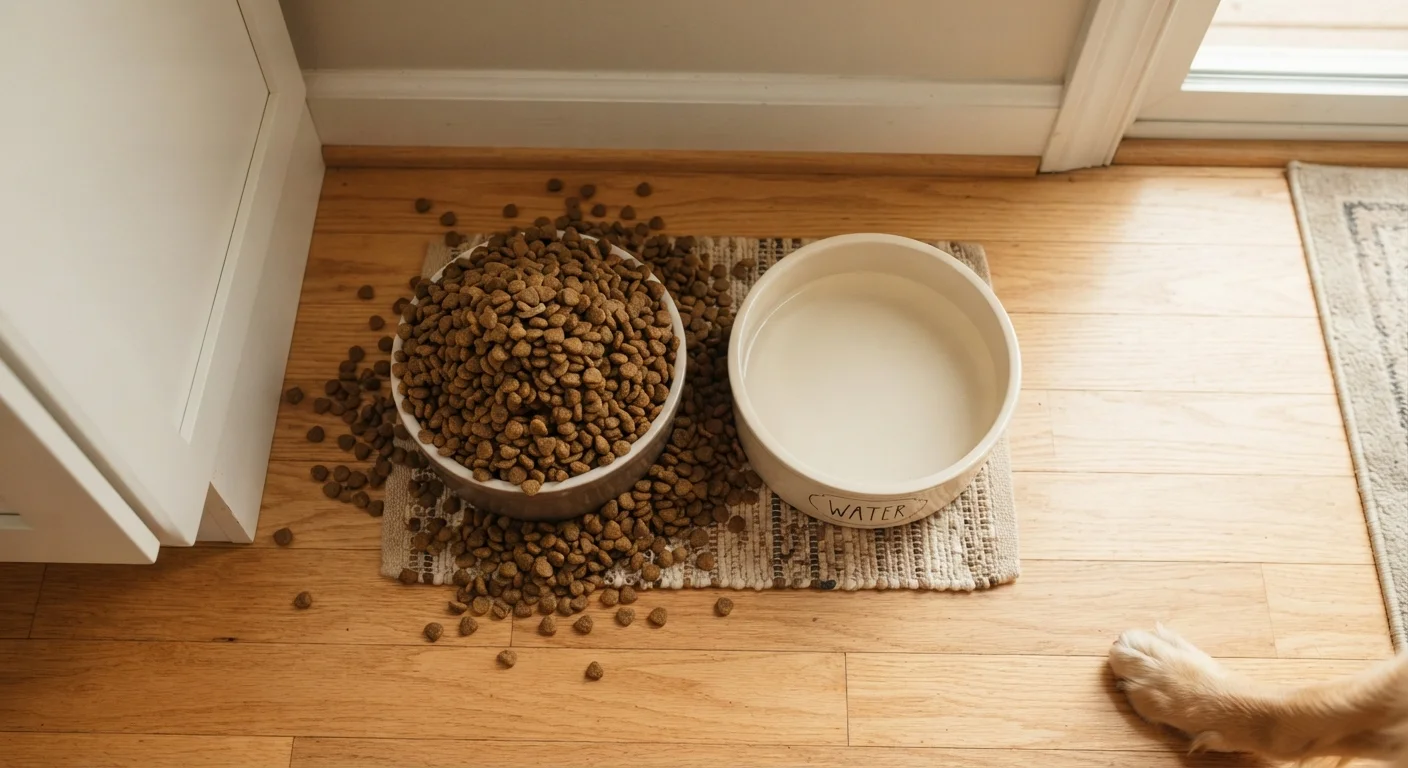
Before weighing the trade-offs, it helps to define the terms precisely. Free-feeding (also called ad libitum feeding) means leaving a measured or unmeasured quantity of food in the bowl throughout the day so a pet can eat whenever they choose. Scheduled feeding means offering food at fixed times — typically once or twice daily — and removing whatever isn't eaten after 20 to 30 minutes.
A third hybrid approach, sometimes called portion-controlled free-feeding, sets a daily calorie allotment but lets the pet decide when to eat it. Automatic feeders have made this middle ground more practical for busy owners. Understanding where your current habits land on this spectrum is the first step toward evaluating whether they're serving your pet well.
For context on how food type interacts with feeding style, see our comparison of wet and dry pet food — wet food spoils quickly at room temperature, which makes free-feeding with it impractical for most households.
The Case for Free-Feeding
Free-feeding has genuine advantages in certain situations, and dismissing it outright ignores the real reasons some veterinarians and behaviorists recommend it for specific animals.
Reduces meal anxiety in low-appetite or anxious cats
Constant food access removes the pressure of a timed eating window, which can benefit cats that graze naturally or become stressed around meals.
Convenient for owners with irregular schedules
When daily routines vary significantly, free-feeding ensures a pet isn't waiting hours past a usual mealtime, reducing the risk of skipped feedings.
Supports natural grazing behavior in cats
Cats are physiologically adapted for frequent small meals; free-feeding can align more closely with their instinctive eating pattern than two large daily meals.
May reduce food-related competition in single-cat households
When only one cat is present and intake is easy to monitor, free access to food can eliminate the urgency that sometimes drives fast eating and regurgitation.
Cats, in particular, are natural grazers. In the wild, they consume multiple small prey animals throughout the day rather than two large meals. Some cats thrive when allowed to self-regulate in this way, especially lean, active cats with no history of overeating. For anxious cats, constant food availability can also reduce meal-related stress.
The Case for Scheduled Meals
For most pet owners — and especially for dog owners — a structured mealtime routine offers meaningful health and behavioral benefits that free-feeding simply cannot match.
Makes portion control and calorie tracking difficult
Without measuring each serving and knowing exactly how much a pet consumes, excess calorie intake can accumulate invisibly, contributing to weight gain over months or years.
Masks early signs of illness or appetite loss
When food is available continuously, it becomes nearly impossible to notice whether a pet ate less than usual — one of the earliest and most reliable indicators of health problems.
Encourages overeating in food-motivated dogs
Many dogs, particularly certain breeds, lack reliable self-regulation around food and will consume whatever is available, raising the risk of obesity and associated conditions.
Creates conflict and inequity in multi-pet homes
Dominant animals may monopolize free-access bowls while shyer pets go underfed, producing hidden nutritional imbalances that are difficult to detect without scheduled monitoring.
Wet food spoilage limits free-feeding viability
Canned or fresh wet foods spoil within a few hours at room temperature, making free-feeding with these formats a food safety concern for pets and a hygiene challenge for owners.
One of the most practical advantages is early illness detection. A pet that normally finishes their bowl in minutes and suddenly shows no interest is sending a clear signal worth investigating. That signal disappears entirely when food sits out all day. As pets age, this monitoring becomes even more valuable; see how health needs shift in senior pets for guidance on adapting routines as your animal gets older.
Scheduled feeding also supports training and behavior. Dogs fed on a routine develop predictable hunger and energy cycles, making training sessions timed around moderate hunger more effective. Mealtimes themselves become cooperative, calm interactions when practiced consistently.
A Note on Automatic Feeders
Programmable automatic feeders offer a practical middle ground: they dispense measured portions at set times, giving owners flexibility without sacrificing portion control. They work best with dry kibble and are particularly useful for households where work schedules make consistent manual feeding difficult. If you use one, still check daily that meals are being eaten fully and on time — it remains an important health signal.
Special Circumstances That Change the Calculation
Several situations make one approach clearly preferable regardless of general guidelines.
Multiple pets
Households with more than one pet almost always do better with scheduled meals. Free-feeding in a multi-pet home makes it nearly impossible to know which animal ate how much — and faster or more dominant animals can consume the food of shy or slower companions, creating hidden nutritional imbalances or conflict.
Medical conditions
Pets managing diabetes, kidney disease, hyperthyroidism, or weight disorders generally require strictly measured, timed meals as part of their treatment plan. For these animals, free-feeding is rarely compatible with management goals. Always follow your veterinarian's specific guidance for medically complex pets.
Puppies and kittens
Young animals have higher energy needs relative to body size and can't regulate hunger as reliably as adults. Most veterinary guidelines recommend three to four scheduled small meals daily for puppies and kittens until they reach adult size, transitioning to two meals from there. Understanding how to read a pet food nutrition label can help you ensure each meal delivers the right nutrient balance at every life stage.
Making Your Decision and Sticking to It
If you're shifting from one method to the other, transition gradually. Abrupt changes in feeding routine can cause stress and digestive upset, especially in cats. Introduce scheduled times by leaving food out for progressively shorter windows over one to two weeks until the new routine feels normal to your pet.
Track your pet's body condition score — a hands-on assessment of whether you can feel your pet's ribs without pressing hard — every few weeks regardless of which method you use. This is a more reliable ongoing measure than scale weight alone. Your veterinarian can show you how to perform this check at your next visit and help you set an appropriate daily calorie target based on your pet's life stage and activity level.
Also consider enrichment as part of the feeding equation. Puzzle feeders, slow bowls, and food-dispensing toys can slow eating, reduce boredom, and add mental stimulation to mealtimes — benefits that complement either approach. For cats especially, indoor enrichment strategies can make food-based play a meaningful part of their daily routine.
This article is for general informational purposes only and does not constitute veterinary advice. Always consult a licensed veterinarian for guidance specific to your pet's health and dietary needs.