

Key Takeaways
Option A
Collision Coverage
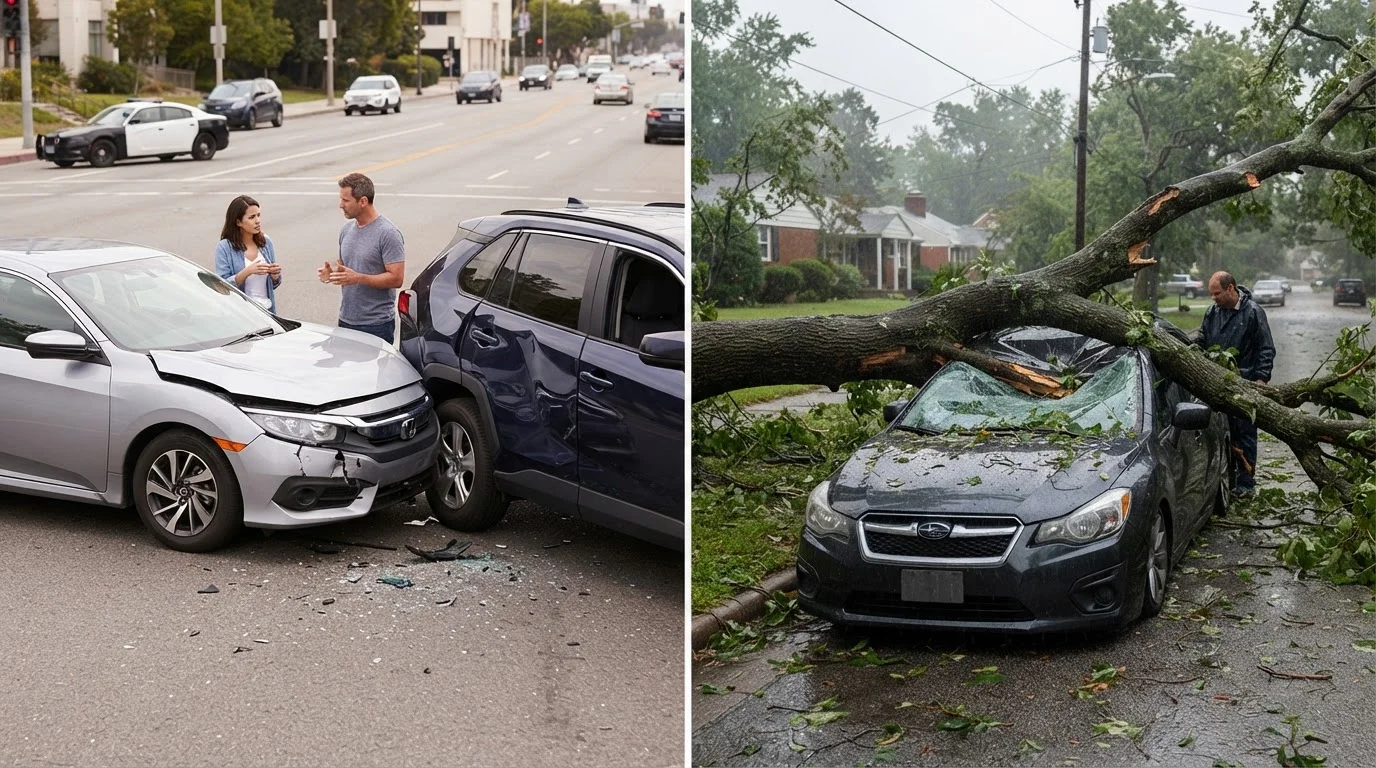
The coverage that kicks in when your car hits something - or something hits it.
Best for: Drivers who want protection for damage caused by accidents involving their vehicle and another object.
Option B
Comprehensive Coverage
The coverage for losses that happen outside of a collision.
Best for: Drivers seeking protection from weather events, theft, vandalism, and other non-collision perils.
If you drive frequently in heavy traffic or accident-prone conditions
Collision Coverage
Collision coverage directly addresses the most common risk for active drivers - impact damage - whether you're at fault or not.
If you live in an area prone to hailstorms, flooding, wildfires, or high vehicle theft
Comprehensive Coverage
Comprehensive coverage handles exactly the kinds of non-collision losses that are more likely in high-weather or high-crime regions.
If you have a loan or lease on your vehicle
Both Collision and Comprehensive Coverage
Most lenders and lessors contractually require both coverages to protect their financial interest in the vehicle.
If your car's market value is low and you're weighing cost against benefit
Neither may be cost-effective
When a vehicle's actual cash value is close to or below the combined annual premium and deductible, dropping one or both coverages may be worth discussing with a licensed agent.
What Each Coverage Actually Covers
Collision coverage and comprehensive coverage both protect your own vehicle - but they respond to entirely different triggering events. That's the core distinction, and it's worth pinning down before anything else.
Collision coverage applies when your car makes physical contact with something. That includes rear-ending another car, hitting a guardrail, or rolling over. It doesn't matter who is at fault. If your car is damaged in a collision, this is the coverage that pays for repairs or, if the car is totaled, its actual cash value (ACV) - the market value of the vehicle at the time of loss, not what you paid for it.
Comprehensive coverage pays for damage caused by events other than a collision. Common examples include theft, vandalism, hail, flooding, fire, a falling tree, or a collision with an animal such as a deer. Insurers sometimes call this "other than collision" coverage, which is actually a more precise name. If your car is stolen and never recovered, comprehensive is what pays out.
For a fuller picture of how these two fit within your overall auto policy, see our auto insurance coverage explainer, which walks through how collision, comprehensive, and liability interact.
| Criterion | Collision Coverage | Comprehensive Coverage |
|---|---|---|
| What triggers it | Impact with another vehicle or object | Theft, weather, fire, vandalism, animal strike |
| Fault matters? | No - pays regardless of fault | No - non-collision events, not fault-based |
| Typical deductible | Set separately, often $250-$1,000 | Set separately, often $100-$500 |
| Usually required by lenders? | Yes, on financed/leased vehicles | Yes, on financed/leased vehicles |
| Pays for total loss? | Yes - actual cash value of vehicle | Yes - actual cash value of vehicle |
| Covers animal strikes? | No | Yes |
| Covers flooding? | No | Yes |
| Generally more expensive? | Yes - higher frequency of claims | No - typically lower premium |
Deductibles, Premiums, and When You'll Use Each
Both coverages come with a deductible - the amount you agree to pay out of pocket before your insurer covers the rest. Deductibles for collision and comprehensive are set separately, so you could choose a $500 deductible for collision and a $250 deductible for comprehensive, or any other combination your insurer offers.
Generally, collision coverage costs more than comprehensive because accidents are more frequent than theft or weather events in most parts of the country. Your actual premium will depend on factors including your vehicle's value, your driving record, your location, and the deductible you select.
A key practical point: if the cost to repair your car is less than your deductible, filing a claim doesn't make financial sense - you'd pay for the damage yourself anyway, and a claim could affect your future premiums. This is one reason some drivers with older, lower-value vehicles choose to drop one or both coverages. That decision is personal and depends on your financial cushion and the vehicle's current market value. A licensed insurance agent can help you think through the math for your specific situation.
Understanding where these coverages leave off is equally important. Neither collision nor comprehensive covers injuries to you or other people - that falls under different parts of your policy. And neither pays for damage you cause to someone else's property; that's the role of liability coverage, which we explain in our liability coverage guide.
Coverage gaps can surface at the worst moments. Our article on coverage gaps people discover after a claim outlines situations where policyholders found out too late that they were underprotected. Before settling on your coverage levels, these questions can help you think through what your coverage needs to do.
This article is for general informational purposes only and does not constitute personalized insurance, financial, or legal advice. Coverage terms, exclusions, and availability vary by insurer and state. Always read your actual policy documents and consult a licensed insurance agent for guidance specific to your situation.