

What Auto Insurance Actually Covers - and What It Doesn't
Most drivers know they're legally required to carry car insurance, but far fewer understand what each part of their policy actually pays for. A standard auto policy isn't a single blanket of protection - it's a collection of separate coverage types that respond to different events. Knowing which is which helps you avoid nasty surprises after an accident.
The three coverage types you'll encounter most often are liability, collision, and comprehensive. They can be purchased together or, in some cases, separately - and each one has its own deductible, limit, and role. For a deeper look at how those numbers interact, see how deductibles, premiums, and coverage limits relate.
Liability Coverage: The Foundation
Liability coverage pays for damage or injuries you cause to other people - not yourself and not your own vehicle. It's split into two parts:
- Bodily injury liability: Covers medical bills, lost wages, and legal costs for other people hurt in a crash you caused.
- Property damage liability: Covers repair or replacement costs for vehicles, fences, buildings, or other property you damage.
Nearly every state requires drivers to carry at least a minimum amount of liability coverage. Those minimums are often quite low - sometimes too low to cover a serious accident - so many drivers choose higher limits. Liability doesn't pay a cent toward your own car or your own medical bills. For a broader explanation of how this coverage works across different policy types, see our liability coverage explainer.
Collision Coverage: Your Car, Your Fault
Collision coverage pays to repair or replace your vehicle when it's damaged in a collision - regardless of who was at fault. That includes crashes with another car, hitting a guardrail, or rolling into a ditch. It does not cover damage from things like hail, theft, or a tree falling on your roof - that's where comprehensive comes in.
Collision is optional under most state laws, but lenders almost always require it if you're financing or leasing a vehicle. You'll choose a deductible - the amount you pay out of pocket before the insurer covers the rest. A higher deductible lowers your premium but means more out-of-pocket costs when you file a claim.
Comprehensive Coverage: Everything Else
Comprehensive coverage - sometimes called "other than collision" - handles damage to your vehicle from events outside your control: theft, vandalism, fire, flooding, hail, falling objects, or striking an animal. It also has its own deductible.
Like collision, comprehensive is typically required by lenders but optional if you own your vehicle outright. The confusion between collision and comprehensive is common. The key mental shortcut: if your car hit something (or something hit your car in a crash), that's collision; if nature, crime, or an animal caused the damage, that's comprehensive. Our article on collision vs. comprehensive coverage walks through the distinction with concrete examples.
How the Layers Work Together - and What Happens When You Drop One
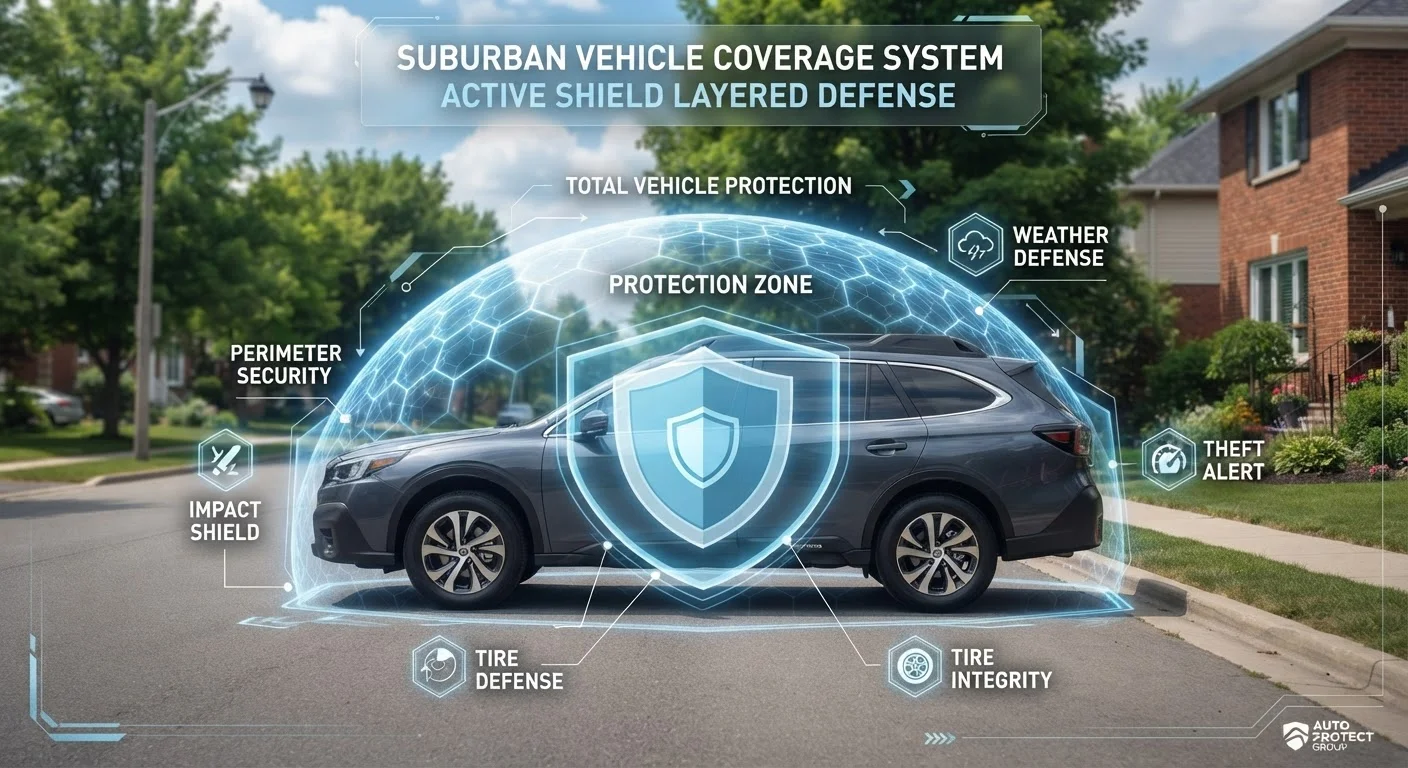
These three coverage types are designed to complement each other. Liability protects other people; collision and comprehensive protect your vehicle. A policy with all three covers most common loss scenarios. A policy with only liability - the legal minimum in most states - leaves your own car and out-of-pocket repair costs entirely unprotected.
Dropping collision or comprehensive on an older, lower-value vehicle can make financial sense: if the car is worth less than a few thousand dollars, the premium and deductible cost may outweigh what the insurer would pay. But that's a deliberate trade-off, not a free lunch. On a newer or financed vehicle, dropping either coverage is rarely a smart move.
Costs and coverage decisions are deeply connected. The Costs & Claims hub offers guidance on premiums, deductibles, and filing claims successfully. And when you're ready to compare policies, the Choosing a Policy hub can help you work through the options systematically.
This article is for general informational purposes only and does not constitute personalized insurance, legal, or financial advice. Coverage terms, exclusions, and requirements vary by provider and state. Always read your policy documents carefully and consult a licensed insurance agent or adviser for guidance specific to your situation.