

Key Takeaways
Liability Coverage
Liability coverage is the part of an insurance policy that pays for harm you accidentally cause to other people or their property. If you're found legally responsible for an injury or damage, this coverage steps in to pay costs - including medical bills, repair bills, and legal defense fees - so those expenses don't come out of your own pocket. It shows up in auto, homeowners, renters, and umbrella policies.
Liability coverage is typically split into two sub-limits: per-occurrence (the max paid per single incident) and aggregate (the max paid across all claims in a policy period). Some policies combine these into a single limit.
What Liability Coverage Actually Does
Insurance policies can feel like a tangle of terms, but liability coverage has a straightforward job: it protects you financially when you're responsible for hurting someone else or damaging their belongings.
Think of it as a financial buffer between an accident you caused and your personal savings. Without it, any judgment against you in a lawsuit - or any settlement you agree to - would have to come directly out of your own assets.
Liability coverage has two main components:
- Bodily injury liability - covers medical expenses, lost wages, and pain-and-suffering claims for people injured because of something you did.
- Property damage liability - pays to repair or replace someone else's property that you damaged.
Both components also typically include legal defense costs if the injured party sues you. This matters because even a lawsuit you win can cost tens of thousands of dollars in attorney fees.
Where Liability Coverage Shows Up
Liability coverage isn't limited to one type of policy. You'll encounter it across several common insurance products:
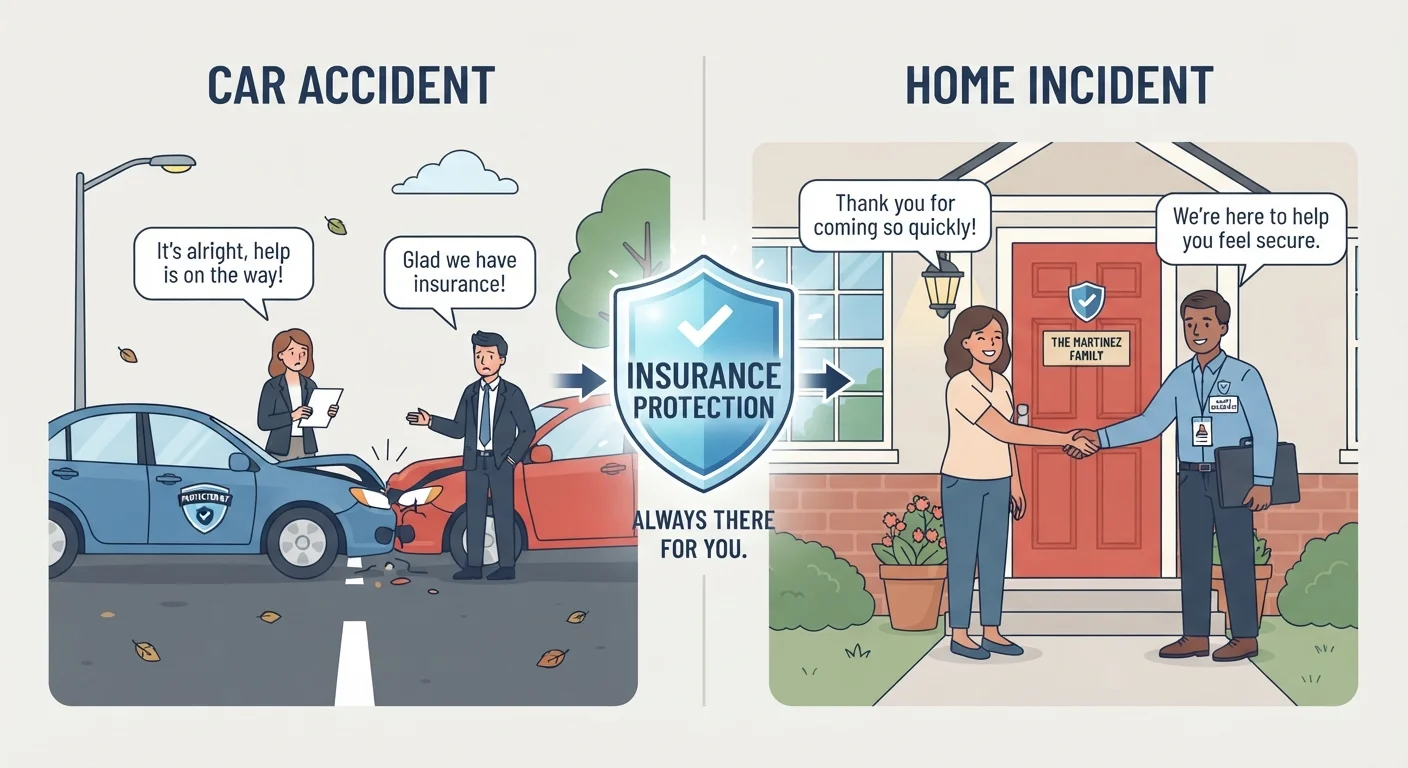
- Auto insurance - If you cause a car accident, your auto liability coverage pays for the other driver's medical bills and vehicle repairs. Nearly every state requires drivers to carry at least a minimum amount. See our full breakdown of auto insurance coverage to understand how liability fits alongside collision and comprehensive coverage.
- Homeowners insurance - If a guest slips and falls in your home, or your dog bites a neighbor, your homeowners liability section responds to those claims.
- Renters insurance - Even if you don't own your home, you can still be legally responsible for accidents in your apartment. Renters policies include liability coverage for this reason.
- Umbrella insurance - This standalone policy sits on top of your auto and homeowners coverage, extending your total liability protection when a single claim exceeds the limits on your underlying policies.
49 of 50
U.S. states requiring auto liability insurance
Nearly every U.S. state mandates some level of auto liability coverage, though minimum required limits differ significantly from state to state.
$1M+
Typical umbrella policy coverage amount
Personal umbrella policies commonly provide at least $1 million in additional liability protection above underlying auto and homeowners policy limits.
~1 in 6
Drivers on U.S. roads estimated to be uninsured
According to research published by the Insurance Research Council, a notable share of drivers carry no auto liability coverage at all, increasing risk for everyone on the road.
Understanding how limits work across these policies is essential. Our coverage limits explainer walks through how caps and sub-limits affect what you're actually protected against.
Why Your Coverage Limit Is a Critical Number
Every liability policy has a cap - the maximum dollar amount the insurer will pay on a single claim or across all claims in a policy year. Once that ceiling is hit, any remaining costs fall to you personally.
This is why selecting a coverage limit isn't just a formality. A serious car accident involving multiple injured people, or a significant injury lawsuit filed by a visitor to your home, can easily generate claims well into six figures.
If your limit is $50,000 and a judgment comes in at $180,000, you're personally responsible for the remaining $130,000 - which can be collected from your wages, bank accounts, or other assets depending on your state's laws.
A licensed agent can help you evaluate whether your current limits make sense given what you own. For a broader look at how policies are structured before you make any decisions, the insurance policy landscape guide is a useful starting point.
This article is for general informational purposes only and does not constitute legal, financial, or insurance advice. Coverage terms, limits, and requirements vary by policy and by state. Consult a licensed insurance professional to understand what coverage is right for your specific situation.