

Key Takeaways
Premium, Deductible, and Coverage Limit
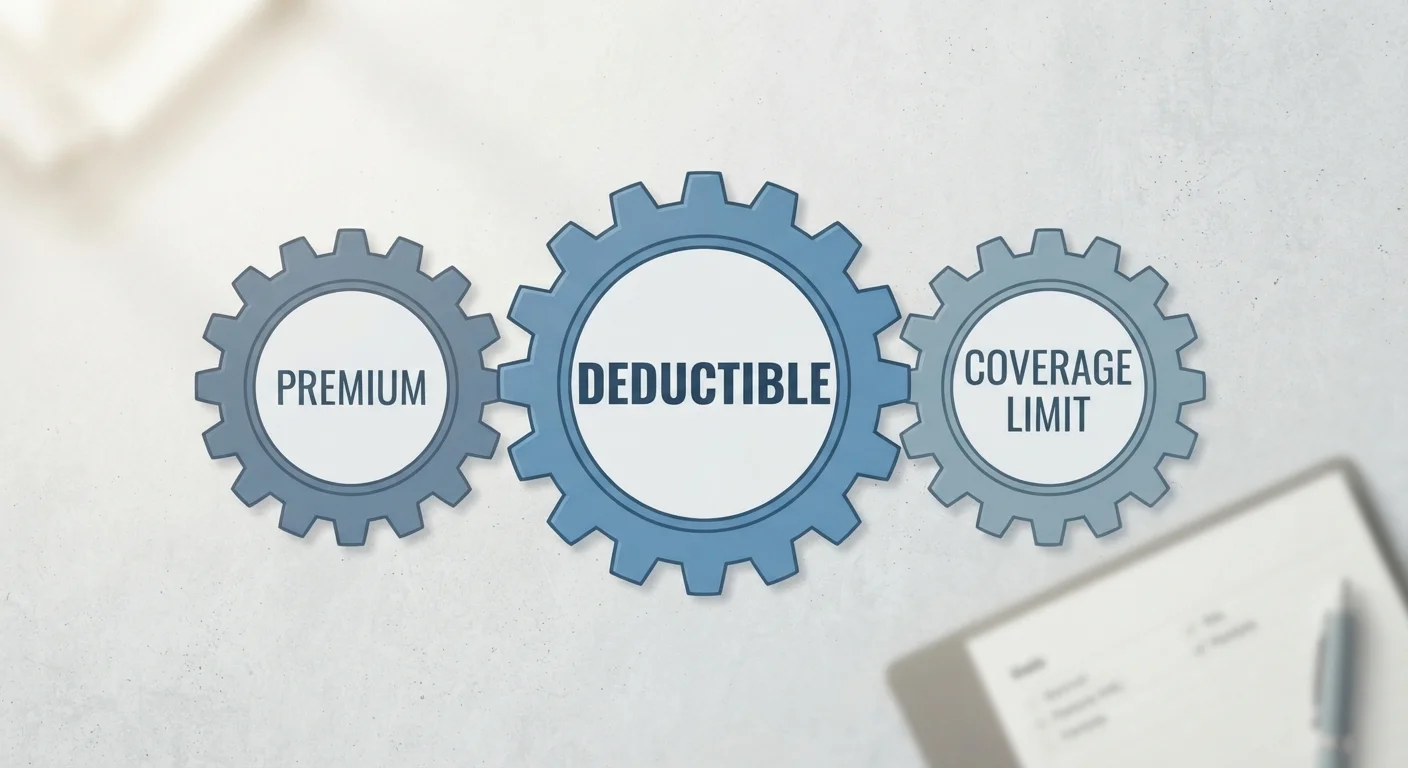
A premium is what you pay to keep your insurance policy active - usually monthly. A deductible is what you pay out of your own pocket before your insurer starts covering costs. A coverage limit is the maximum dollar amount your insurer will pay for a covered loss. These three figures define both what insurance costs you and what you can actually collect from it.
Insurers price premiums based on the risk profile associated with a given deductible and limit combination; adjusting one almost always affects the others.
The Three Numbers That Define Your Policy
Every insurance policy - whether it covers your health, your car, your home, or your life - is built around three core figures: the premium, the deductible, and the coverage limit. Most people know these terms exist, but fewer understand how they push and pull on each other. Getting that relationship wrong is one of the most common and costly mistakes in personal finance.
Think of them as a triangle. Move one corner and the other two shift. Lowering your deductible makes your monthly premium go up. Raising your coverage limit usually costs more in premium. Understanding why helps you make a smarter trade-off rather than just picking the lowest number that catches your eye.
For a plain-language breakdown of each term individually, see what premiums, deductibles, copays, and coinsurance actually mean. This article focuses on how the three interact.
How Premiums and Deductibles Trade Off
The premium-deductible relationship is essentially a deal you strike with your insurer about who absorbs small losses. When you agree to a high deductible, you are telling the insurer: "I will handle the first $2,000 (or $5,000, or $10,000) of any claim myself." Because you are taking on more of that risk, the insurer charges you less each month.
The reverse is also true. A low deductible means the insurer steps in sooner after a loss - so they price that generosity into a higher monthly premium.
$1,644
Average annual auto insurance deductible chosen by U.S. drivers
Industry data consistently shows most drivers select deductibles in the $500-$2,000 range, with higher deductibles correlating to lower monthly premiums.
~30%
Premium reduction from doubling a typical home deductible
According to the Insurance Information Institute, moving from a $500 to a $1,000 homeowners deductible can reduce premiums by roughly 25-30%, though results vary by insurer and location.
This trade-off makes financial sense only if the math works in your favor. If you pay significantly more in annual premiums to keep a low deductible but rarely file claims, you may pay more over time than you would have under a higher-deductible plan. The right deductible level depends on how you actually use insurance, not just on what looks affordable month to month.
How Coverage Limits Affect What You Pay - and What You Collect
A coverage limit is the ceiling on what your insurer will pay for a covered loss. If your homeowners policy has a $300,000 dwelling coverage limit and a fire causes $400,000 in damage, you are responsible for the remaining $100,000 - no matter how long you have been a loyal policyholder or how much you have paid in premiums.
Higher limits generally cost more in premium because the insurer is accepting greater financial exposure. But many people underestimate the real cost of a major loss and choose limits based on what feels affordable rather than what would actually make them whole after a catastrophe.
Coverage limits can also be more complex than a single number suggests. Policies often have sub-limits for specific categories - jewelry, electronics, or liability claims, for example - and aggregate caps that apply across an entire policy period. For a deeper look at how these layers work, see how coverage limits really work.
Finding a Balance That Fits Your Situation
There is no universally correct combination of premium, deductible, and limit. The right balance depends on factors specific to you: how often you are likely to need coverage, how much of a financial cushion you have to cover out-of-pocket costs, and what it would actually cost to replace or repair what the policy covers.
A few practical ways to think it through:
- Emergency savings matter. A high-deductible plan only makes financial sense if you have enough savings to actually cover that deductible without hardship when a claim arises.
- Think about worst-case, not average-case. Your coverage limit should reflect what a serious loss would cost - not just a minor one.
- Run the annual math. Multiply the premium difference between two plans by 12, then compare that to the deductible difference. That gives you a rough break-even point.
Before you settle on numbers, ask the right questions about your coverage level - they help you think through what the policy actually needs to do for you. And if you want to go deeper on the financial trade-off specifically, getting the premium-deductible balance wrong can cost you more than you realize.
Insurance terms, coverage rules, and pricing vary by provider, policy type, and state. This article is general educational information, not personalized insurance or financial advice. Always read your actual policy documents carefully and consult a licensed insurance agent or adviser before making coverage decisions.
This article is for informational purposes only and does not constitute insurance, financial, or legal advice. Coverage, costs, and terms vary by insurer and by state. Consult a licensed insurance professional for guidance specific to your situation.