

Key Takeaways
No interest on short-term plans if paid on time
The standard "Pay in 4" structure carries zero interest provided every installment is paid by the due date, making it cost-equivalent to paying in full for disciplined users.
Quick approval with minimal credit impact
Most BNPL providers use a soft inquiry rather than a hard credit pull at the application stage, so checking eligibility typically doesn't affect your credit score.
Predictable, fixed payment schedule
Unlike a credit card where the minimum payment can shift month to month, BNPL installments are fixed in advance, which makes budgeting for that specific commitment straightforward.
Accessible to consumers with limited credit history
Because approval criteria are generally less stringent than traditional credit products, BNPL can provide short-term flexibility to consumers who may not qualify for a credit card.
Late fees can negate any cost advantage
Missing a payment often triggers a flat late fee immediately. On a small purchase, a single late fee can represent a significant percentage of the item's original price.
Multiple open plans create overlapping payment obligations
Because BNPL is available across many retailers, it's easy to accumulate several active plans simultaneously, each with its own due date, making cash flow management genuinely difficult.
Longer-term plans may carry high interest rates
Six- or twelve-month BNPL financing plans often carry APRs comparable to or higher than many credit cards, and the interest cost may not be clearly surfaced during checkout.
Consumer protections are weaker than credit cards
Federal protections such as the Fair Credit Billing Act, which covers disputed charges on credit cards, do not automatically extend to BNPL arrangements - dispute resolution varies by provider.
May encourage spending beyond a realistic budget
Breaking a price into smaller installments can make an item feel more affordable than it is in aggregate, which research suggests may lead some consumers to spend more overall.
Credit bureau reporting varies and can cut both ways
Some BNPL providers report to credit bureaus; if they do, missed payments can damage your credit score, while on-time payments may offer only limited positive benefit depending on how the tradeline is categorized.
Our Verdict
Buy Now, Pay Later can be a useful tool for spreading out a predictable, necessary expense - provided you read the terms carefully and are confident you can meet every payment. The risk grows quickly when it's used habitually for everyday discretionary spending, layered across multiple plans, or treated as a substitute for a realistic budget. As general financial information: the arrangement works best as an occasional, deliberate choice, not a default payment habit.
Consumers who occasionally need to spread a larger, planned purchase across a few paychecks and who have a clear repayment schedule already in mind.
How Buy Now, Pay Later Actually Works
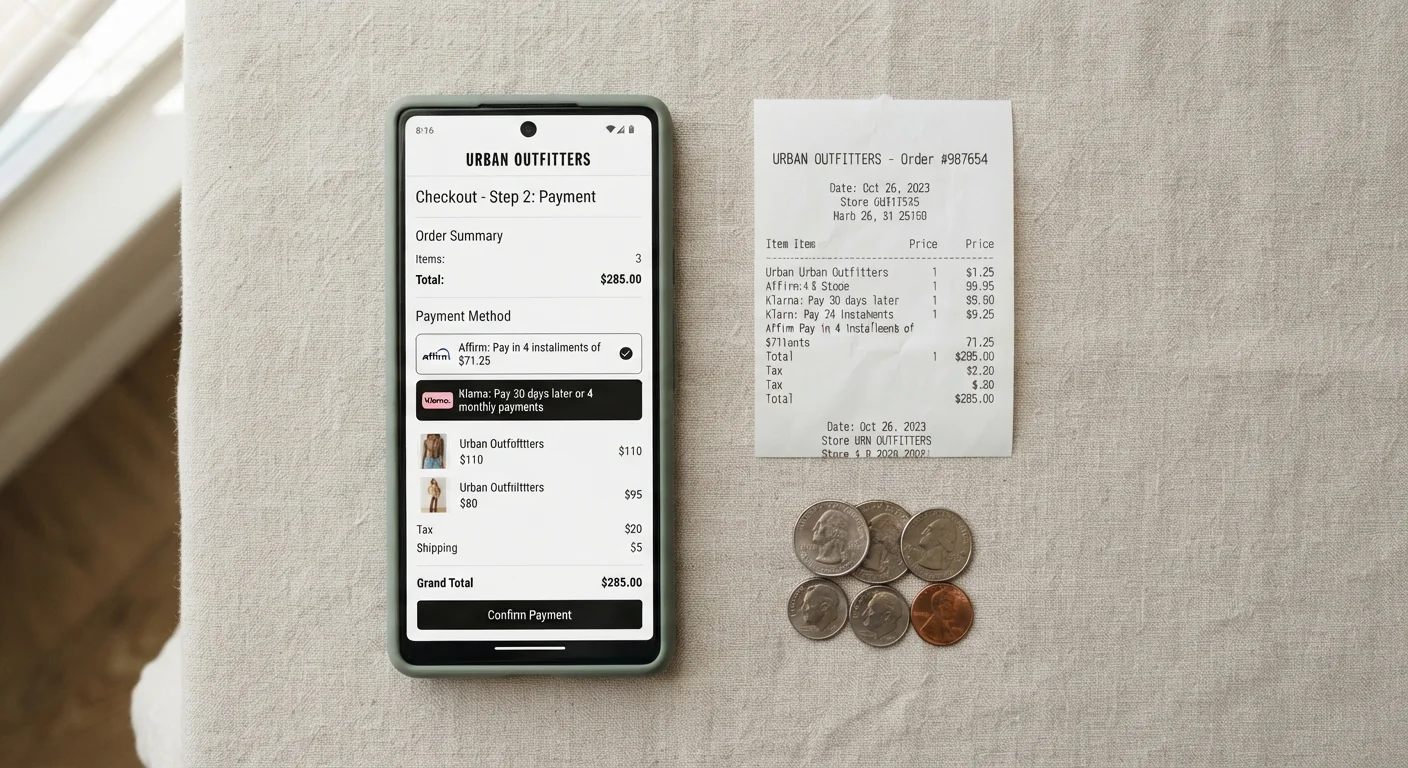
Buy Now, Pay Later - commonly called BNPL - is a short-term financing arrangement that lets you receive a product or service immediately and pay for it in a series of installments, often four equal payments spread over six weeks. BNPL providers typically perform a soft credit check or a minimal review at checkout, and approval is nearly instant.
The most common structure is "Pay in 4" - four biweekly payments with no interest if each is made on time. Some providers also offer longer-term plans of three, six, or twelve months, which may carry interest rates that function similarly to a personal loan. Understanding which structure you're agreeing to is essential, because the two types carry meaningfully different costs and risks.
BNPL is now embedded at checkout for a wide range of retailers, from electronics to clothing to groceries. That accessibility is both its appeal and its chief risk factor. For a broader look at how payment method choice affects your everyday finances, see how credit and debit compare for routine purchases.
The Advantages Worth Considering
BNPL does offer genuine, practical benefits for certain consumers in certain situations.
No interest on short-term plans if paid on time
The standard "Pay in 4" structure carries zero interest provided every installment is paid by the due date, making it cost-equivalent to paying in full for disciplined users.
Quick approval with minimal credit impact
Most BNPL providers use a soft inquiry rather than a hard credit pull at the application stage, so checking eligibility typically doesn't affect your credit score.
Predictable, fixed payment schedule
Unlike a credit card where the minimum payment can shift month to month, BNPL installments are fixed in advance, which makes budgeting for that specific commitment straightforward.
Accessible to consumers with limited credit history
Because approval criteria are generally less stringent than traditional credit products, BNPL can provide short-term flexibility to consumers who may not qualify for a credit card.
~$75B
Estimated US BNPL loan originations in a recent year
The Consumer Financial Protection Bureau has tracked substantial growth in BNPL loan volume, noting tens of millions of loans originated annually in the US market.
1 in 3
BNPL users who have missed at least one payment
Multiple consumer surveys conducted in the US have found that a substantial minority of BNPL users report having missed a payment at some point, with lower-income users disproportionately represented.
For consumers who lack a credit card or prefer not to carry a revolving balance, BNPL can be a structured way to manage a larger, one-time expense - provided every payment is made on schedule. It's worth comparing this against other payment options before committing, particularly if the purchase itself is optional.
The Disadvantages That Catch People Off Guard
The risks of BNPL are less visible at checkout than the benefits, which is part of what makes them worth understanding clearly before you opt in.
Late fees can negate any cost advantage
Missing a payment often triggers a flat late fee immediately. On a small purchase, a single late fee can represent a significant percentage of the item's original price.
Multiple open plans create overlapping payment obligations
Because BNPL is available across many retailers, it's easy to accumulate several active plans simultaneously, each with its own due date, making cash flow management genuinely difficult.
Longer-term plans may carry high interest rates
Six- or twelve-month BNPL financing plans often carry APRs comparable to or higher than many credit cards, and the interest cost may not be clearly surfaced during checkout.
Consumer protections are weaker than credit cards
Federal protections such as the Fair Credit Billing Act, which covers disputed charges on credit cards, do not automatically extend to BNPL arrangements - dispute resolution varies by provider.
May encourage spending beyond a realistic budget
Breaking a price into smaller installments can make an item feel more affordable than it is in aggregate, which research suggests may lead some consumers to spend more overall.
Credit bureau reporting varies and can cut both ways
Some BNPL providers report to credit bureaus; if they do, missed payments can damage your credit score, while on-time payments may offer only limited positive benefit depending on how the tradeline is categorized.
One compounding issue: because BNPL commitments don't always appear on bank statements the same way a credit card bill does, it's easy to underestimate how much is owed across several open plans simultaneously. This parallels a broader pattern of small financial obligations that quietly accumulate - explored in more depth in our look at everyday spending habits that add up over a year.
What to Check Before You Agree to Any BNPL Plan
Before selecting BNPL at checkout, a short review of the terms can prevent costly surprises.
- Late payment fees: Confirm the exact fee and whether there is a grace period.
- Interest rate and APR: For longer-term plans, the annual percentage rate can be significant. Zero-interest "Pay in 4" plans are a different product than a six-month financed plan.
- Credit reporting: Ask whether the provider reports payments (on-time or missed) to one or more of the three major credit bureaus.
- Dispute and return policies: Unlike credit card chargebacks, BNPL refund processes vary and may require you to continue making payments while a return is being processed.
- Autopay defaults: Many BNPL plans automatically enroll you in autopay. Confirm which account will be charged and ensure funds will be available. For guidance on managing automatic payments carefully, see how to set up automated finances without the common pitfalls.
BNPL Regulation Is Still Evolving
Unlike credit cards, which are governed by established federal statutes, BNPL products occupy a regulatory gray area that is still being defined by agencies including the Consumer Financial Protection Bureau (CFPB). Rules around disclosure, dispute resolution, and credit reporting for BNPL are subject to change. Before entering any BNPL agreement, read the provider's terms of service in full and keep a copy for your records.
BNPL is one of several recurring financial commitments that can accumulate unnoticed. The same audit logic that applies to subscription services - detailed in our guide to managing subscription costs - applies equally to open BNPL plans. Periodically reviewing all active installment agreements is a sound budgeting habit.
This article is for general informational and educational purposes only and does not constitute personalized financial or legal advice. Consult a qualified financial professional for guidance specific to your situation.