

Key Takeaways
The Cortisol-Sleep Feedback Loop
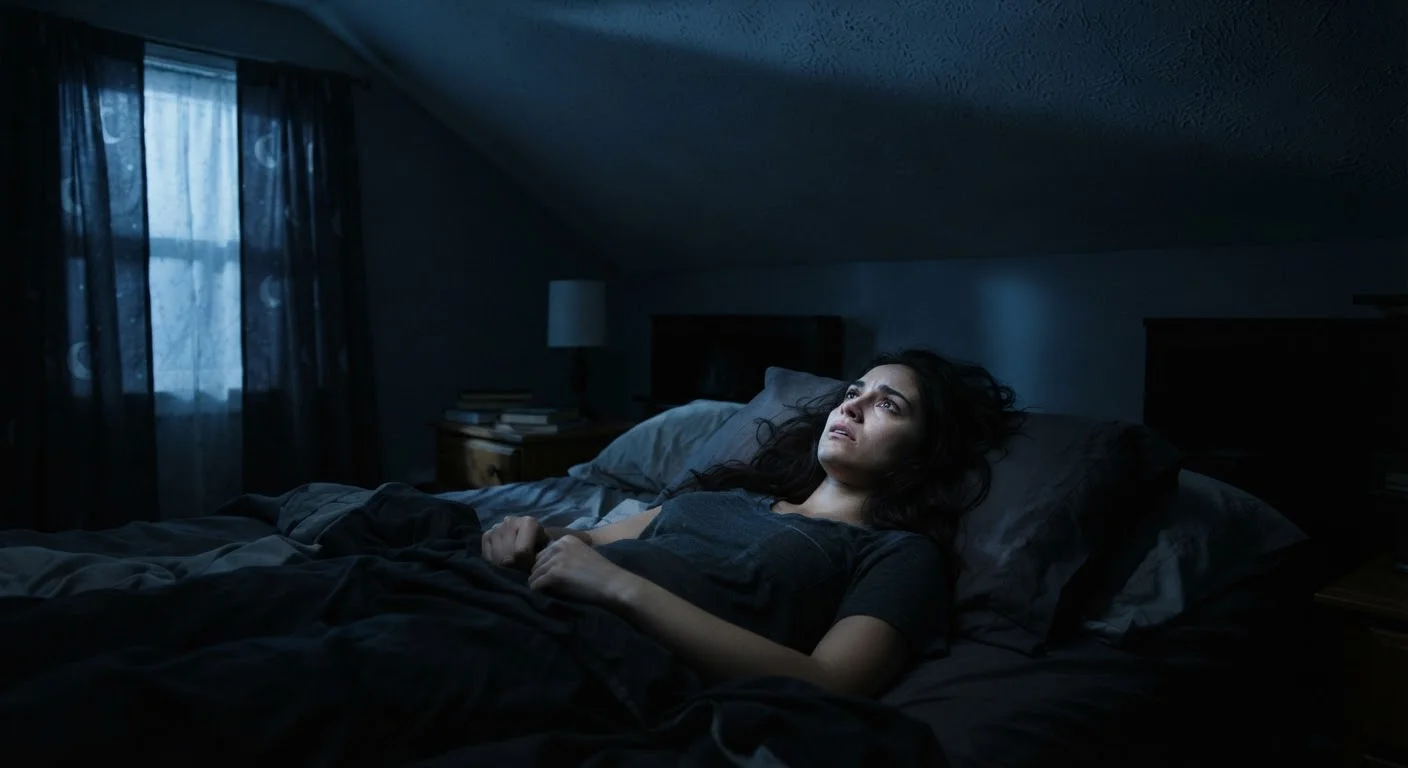
When you experience stress, your body releases cortisol - a hormone that keeps you alert and ready to respond. Elevated cortisol suppresses melatonin, the hormone that signals your brain it's time to sleep. Poor sleep then triggers the release of more cortisol, creating a self-reinforcing cycle that makes both stress and sleeplessness worse over time.
Cortisol follows a diurnal rhythm governed by the hypothalamic-pituitary-adrenal (HPA) axis; disruption of this rhythm can dysregulate the entire circadian system, impairing sleep architecture and cognitive recovery.
How Cortisol and Sleep Are Chemically Linked
Cortisol is often labeled a "stress hormone," but that framing undersells its complexity. Produced by the adrenal glands in response to signals from the brain's HPA axis, cortisol governs metabolism, immune function, and - critically - alertness. Its levels naturally peak in the early morning to help you rise and taper toward evening to allow sleep.
Melatonin, produced by the pineal gland, follows the opposite arc: rising after dark to signal the brain that sleep is appropriate. The two hormones exist in a physiological tug-of-war. When cortisol is elevated - whether from genuine danger or a relentless inbox - it suppresses the melatonin signal. The result: your body chemistry is primed for vigilance precisely when it should be winding down.
Understanding this relationship is foundational to understanding your own sleep. For more on how your internal clock coordinates these signals, see how circadian rhythms govern daily energy and recovery.
The Feedback Loop: Why Stress and Sleep Loss Amplify Each Other
The cycle becomes self-sustaining in a predictable way. Psychological stress elevates cortisol. Elevated cortisol delays sleep onset and reduces the proportion of deep, slow-wave sleep - the most physically restorative stage. A night of fragmented or shallow sleep leaves the HPA axis less regulated the following day, which means higher cortisol output even before any new stressor arrives. That elevated baseline then makes it harder to fall asleep the next night.
~33%
U.S. adults getting less than 7 hours of sleep
According to CDC surveillance data, roughly one in three American adults regularly sleeps fewer than the recommended minimum of seven hours per night.
50-70 million
Americans affected by sleep disorders
The NIH estimates this range for U.S. adults experiencing chronic sleep and wakefulness disorders, underscoring the scale of the problem.
↑ HPA activity
Effect of even one night of partial sleep loss
Laboratory studies have demonstrated measurably elevated HPA axis activity and higher cortisol output following a single night of restricted sleep in healthy participants.
This bidirectional relationship is well-documented in sleep research. Studies using polysomnography (a clinical sleep monitoring tool) show that psychological stress measurably reduces slow-wave sleep, while sleep restriction studies consistently find elevated next-day cortisol in healthy volunteers. Neither problem causes the other exclusively - they perpetuate each other.
The two-way relationship between sleep and mental health deepens this further: mood dysregulation from poor sleep makes stressors feel more threatening, increasing the cortisol response they trigger.
What Happens to Your Sleep Architecture
Cortisol doesn't just delay sleep - it alters its structure. A normal night cycles through light sleep, deep slow-wave sleep, and REM (rapid eye movement) sleep multiple times. Each stage serves distinct recovery functions: slow-wave sleep repairs tissue and consolidates memory; REM sleep processes emotion and supports cognitive flexibility.
Elevated nighttime cortisol preferentially suppresses slow-wave sleep and can increase nighttime awakenings. The result is sleep that feels thin and unrefreshing even when its total duration looks adequate on a tracker. Readers interested in a deeper breakdown can explore what happens during each sleep stage.
Chronic disruption of sleep architecture is associated - in observational research - with increased risk of metabolic, cardiovascular, and immune problems, reinforcing why breaking the cortisol-sleep cycle matters beyond simply feeling rested.
General Strategies for Interrupting the Cycle
No single intervention works universally, and this article provides general health information - not personal medical advice. That said, several approaches have reasonable evidence supporting their role in cortisol regulation and sleep quality.
- Consistent sleep and wake times: Anchoring your schedule helps stabilize the cortisol rhythm, which is strongly time-dependent.
- Diaphragmatic breathing and mindfulness: Slow, controlled breathing activates the parasympathetic nervous system, which counteracts the HPA stress response. Even brief practices before bed have been studied for their effect on pre-sleep arousal.
- Limiting stimulants: Caffeine has a half-life of roughly five to six hours in most adults, meaning afternoon consumption can extend into your sleep window. Alcohol, despite initial sedation, fragments sleep and can elevate late-night cortisol.
- Moderate, timed physical activity: Regular aerobic exercise is associated with lower baseline cortisol and improved sleep quality, but high-intensity exercise very close to bedtime may temporarily elevate cortisol in some individuals.
- Evening environment: Light exposure - especially blue-spectrum light - suppresses melatonin. Reviewing your evening habits that undermine sleep and your bedroom environment are practical starting points.
A Simple Wind-Down Signal for Your Nervous System
About 30 to 60 minutes before your target bedtime, dim household lights and avoid screens if possible. Even this single environmental cue can help your brain begin melatonin secretion earlier and lower cortisol more predictably. Pair it with slow, deep breathing for a few minutes to engage the parasympathetic nervous system and support the transition to sleep.
This article is for general informational purposes only and does not constitute medical advice. If stress or sleep difficulties are significantly affecting your daily life, consult a qualified healthcare professional.