

Key Takeaways
Summary
22 items · 30-60 minutes
Why Your Bedroom Environment Shapes Your Sleep
Sleep isn't just a behavior - it's a biological process that your environment can actively support or undermine. The brain begins transitioning toward sleep in response to environmental cues: fading light, dropping temperature, reduced noise. When those cues are absent or contradicted, sleep onset is delayed and sleep quality suffers.
For busy Americans juggling demanding schedules, poor sleep compounds quickly. Research consistently links inadequate sleep to reduced cognitive performance, impaired immune function, and higher stress reactivity. The good news is that your bedroom environment is one of the most controllable variables in your sleep equation - and most improvements cost little to nothing.
This checklist is designed as a room audit you can complete in a single walkthrough. It covers the four primary environmental domains that sleep science has examined most closely: light, temperature, noise, and physical space. For a broader look at how habits and routines interact with your environment, see the sleep hygiene overview.
This article is for general informational and educational purposes only, and is not medical advice. If you experience persistent sleep difficulties, consult a qualified healthcare professional.
Light Control
Temperature Regulation
Noise Management
Mattress and Bedding Condition
Air Quality and Scent
Room Organization and Mental Association
How to Use This Checklist
Walk through each category with your bedroom as it currently exists - ideally at the time of day you actually prepare for sleep. Items marked must represent changes that research most strongly supports; should items are strongly recommended; nice-to-have items offer incremental gains for those who want to optimize further.
Address the light and temperature categories first - these tend to have the most immediate impact. Noise and space improvements can be phased in over time.
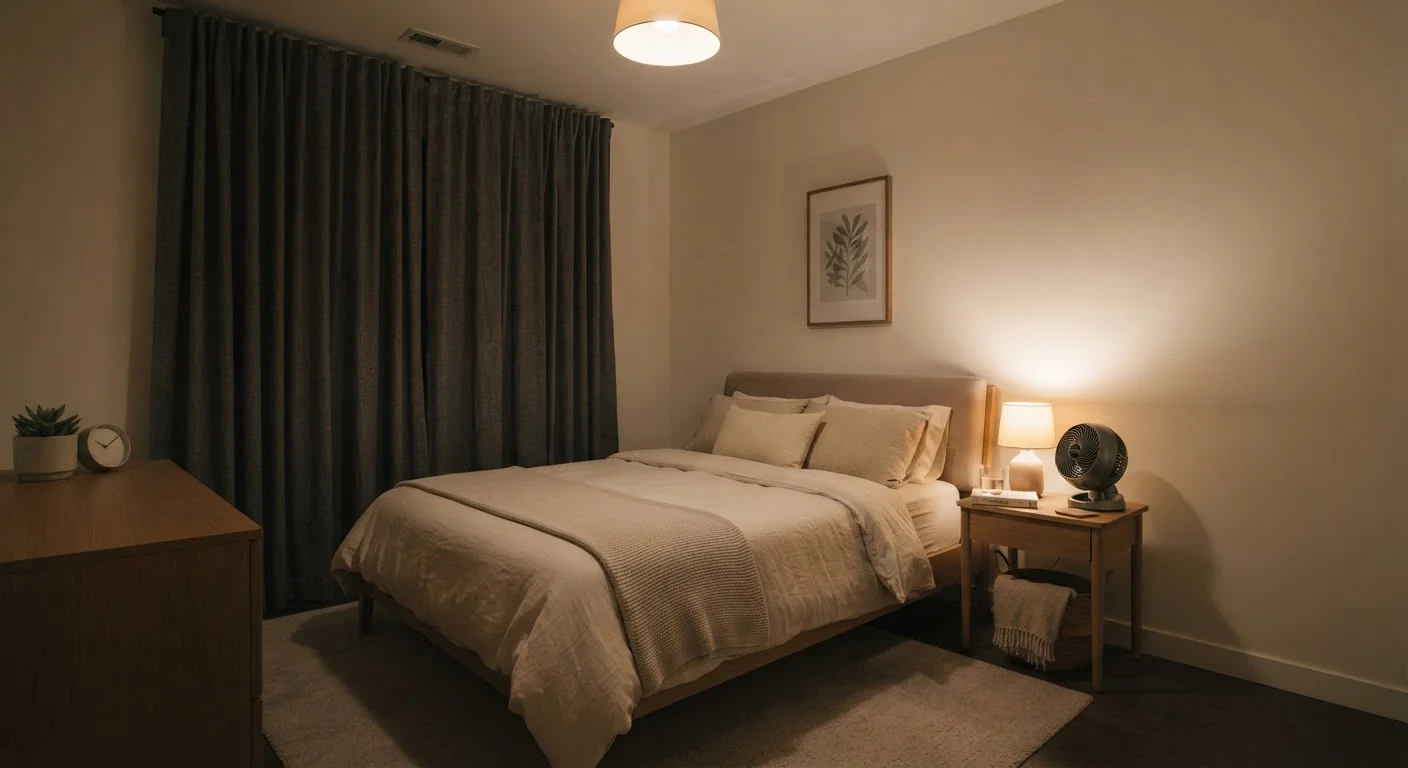
Blackout curtains or sleep mask
Blocks ambient and early-morning light that suppresses melatonin and disrupts sleep continuity.
Thermometer
Helps you verify the actual temperature in your sleeping space, which can differ from your thermostat reading.
White noise machine or fan
Creates consistent background sound to mask unpredictable noise disruptions during the night.
Earplugs
A low-cost option for blocking noise in environments where mechanical solutions aren't practical.
HEPA air purifier
Filters particulates and allergens that can cause nighttime nasal congestion and disrupted breathing.
Once your bedroom environment is optimized, the next layer is your pre-sleep behavior. A consistent wind-down practice compounds the environmental gains you've made - the guide to building a wind-down routine walks through how to design one that fits a realistic schedule. You may also want to examine evening habits that quietly undermine sleep quality, which covers less obvious behavioral factors like meal timing and device use patterns.
If you're curious whether beliefs you hold about sleep are accurate, the common sleep beliefs that don't hold up to scrutiny is a useful companion. And for those whose sleep challenges are layered with chronic stress, understanding the cortisol-sleep feedback loop can clarify why environment alone may not be sufficient.
Persistent Sleep Problems Warrant Professional Attention
This checklist addresses environmental factors - not underlying sleep disorders such as insomnia, sleep apnea, or restless leg syndrome. If you consistently struggle to fall or stay asleep despite a well-optimized environment, or if you frequently feel unrefreshed after a full night's sleep, speak with a healthcare provider. Untreated sleep disorders carry meaningful health consequences and are not resolved by environmental changes alone.