

Key Takeaways
Why Battery Myths Persist
Battery advice spreads fast — from tech forums, well-meaning friends, and outdated articles that haven't kept pace with how batteries actually work today. Much of the folklore made sense for the nickel-cadmium and nickel-metal hydride batteries common in devices before the mid-2000s. Lithium-ion technology, now standard in phones, tablets, laptops, and wireless earbuds, operates on fundamentally different principles. Applying old rules to new chemistry doesn't just fail to help — it can nudge you toward habits that modestly accelerate wear.
Understanding a few core concepts — charge cycles, heat sensitivity, and how charging circuits work — makes it far easier to evaluate any battery tip you encounter. The myth-and-fact pairs below address the most common misconceptions circulating among everyday device users.
Myth
You should always drain your battery to zero before charging it.
Fact
Lithium-ion batteries actually prefer partial discharge. Fully draining them regularly accelerates wear.
This advice originated with older nickel-cadmium (NiCd) batteries, which suffered from a genuine 'memory effect' — reduced capacity if not fully discharged before recharging. Lithium-ion batteries, which power virtually every modern smartphone, tablet, and laptop, work on entirely different chemistry. Repeatedly draining them to 0% places stress on the cells. Most battery engineers recommend keeping charge levels somewhere between 20% and 80% for everyday use to maximize the number of charge cycles over the battery's lifetime.
Myth
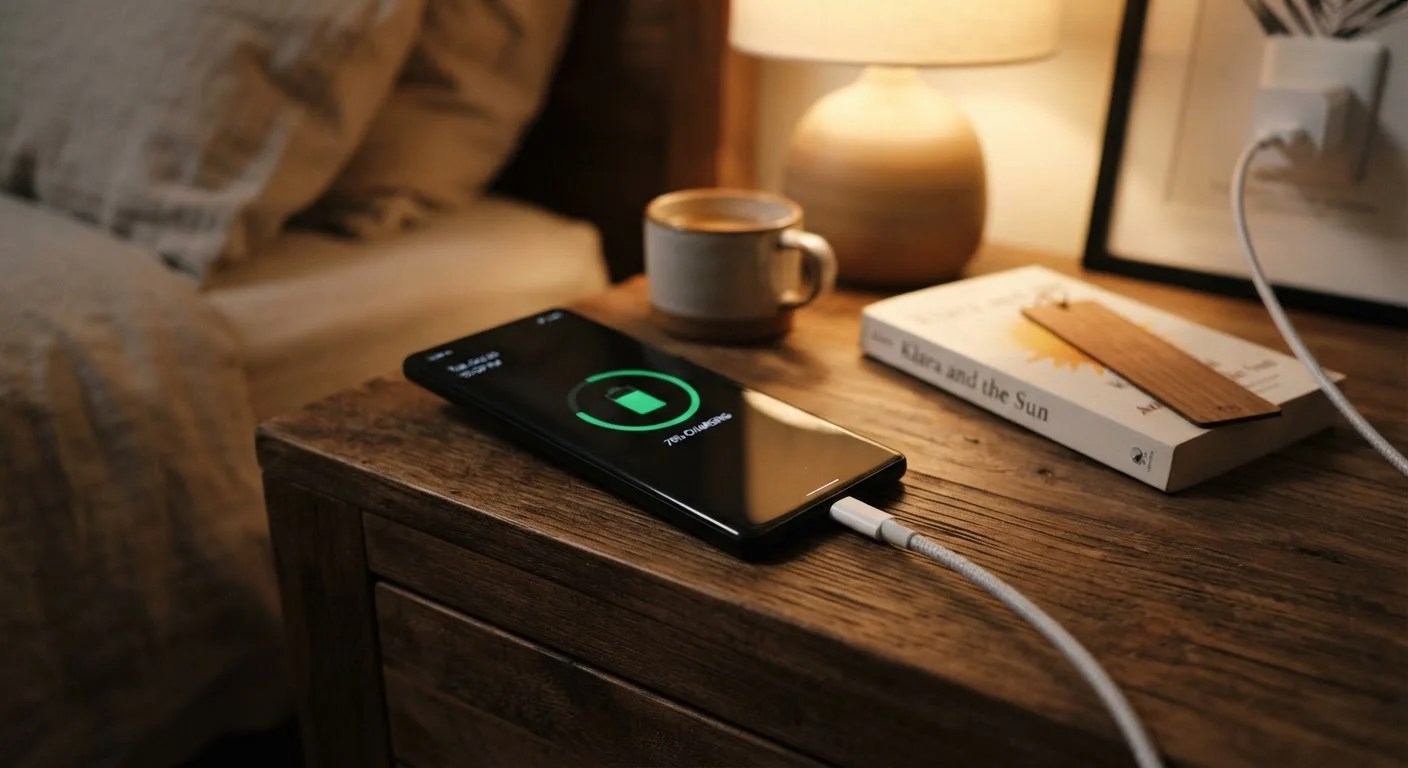
Leaving your phone plugged in overnight will ruin the battery.
Fact
Modern devices have charging management circuits that prevent overcharging, making overnight charging far less harmful than commonly believed.
Contemporary smartphones and laptops include hardware and software that slow or stop the flow of current once the battery reaches full charge. Some operating systems even have features that learn your schedule and deliberately pause charging at 80% until shortly before you typically wake up. The incremental wear from overnight charging is real but generally modest. More important factors — like heat generated by a case or a warm surface — have a larger practical impact on battery health.
Myth
Using your phone while it charges damages the battery.
Fact
Normal use during charging does not cause meaningful battery damage, though heavy tasks that generate heat are worth monitoring.
Browsing, messaging, or streaming while plugged in is not harmful in itself. The concern worth taking seriously is heat: running processor-intensive apps — like high-end games or video rendering — while charging can cause the device to warm up significantly. That heat, not the act of charging and using simultaneously, is what degrades cells faster. Light to moderate use during charging is generally fine for everyday consumers.
Myth
A higher-capacity power bank always charges your device faster.
Fact
Charging speed is determined by wattage output, not battery capacity (milliamp-hours).
Capacity — measured in milliamp-hours (mAh) — tells you how much total energy a power bank stores, not how quickly it delivers that energy. Charging speed depends on wattage: a power bank with high capacity but low wattage output can actually charge your phone more slowly than a compact model with a higher-wattage output. For a deeper look at how these specs interact, see our plain-language guide to power banks.
Myth
Wireless charging is bad for your battery.
Fact
Wireless charging is safe for lithium-ion batteries; the main trade-off is slightly more heat generation compared with wired charging.
Wireless charging (using the Qi standard, for example) transfers energy less efficiently than a direct cable connection, which means some energy is lost as heat. That modest heat increase is worth being aware of — removing a thick case while wirelessly charging can help — but it does not make wireless charging categorically unsafe or damaging. Our full explainer on wireless charging covers compatibility, speed differences, and safety considerations in detail.
What You Can Actually Do to Protect Battery Health
Heat Is the Real Battery Killer
Regardless of your charging habits, sustained high temperatures cause the most measurable damage to lithium-ion batteries. Avoid leaving devices in hot cars, in direct sunlight, or under pillows while charging. Keeping your device cool during charging and everyday use has a more meaningful impact on long-term battery health than almost any charging ritual.
The single most actionable change most people can make is managing heat exposure. Avoid leaving devices in hot cars or in direct sunlight, and consider removing thick cases during extended charging sessions if your phone tends to run warm. Beyond that, partial charging — topping off before you hit a low battery rather than waiting for 0% — is genuinely better for lithium-ion cells than full drain-and-fill cycles.
If your device is more than two or three years old and you notice significantly shorter battery life, many manufacturers and independent repair shops offer battery replacement services. A battery swap can return a device to near-original runtime for a fraction of the cost of a new gadget. You might also want to consider how standby power use fits into your broader energy picture — our piece on devices that quietly drain your home's electricity explores how gadgets draw power even when you think they're off.
Third-Party Chargers Carry Real Risks
Using uncertified third-party chargers and cables can expose your device to unregulated voltage and current, which may stress the battery or, in rare cases, pose a safety hazard. Look for chargers certified by recognized testing organizations and compatible with your device's charging standard. When in doubt, the charger that came with your device or one from a reputable manufacturer is the safer choice.
The goal isn't perfect battery management — it's making informed, low-effort choices that add meaningful months or years to your devices. Getting the fundamentals right matters far more than obsessing over any single charging session.