

Key Takeaways
Why Hand-Washing Is Worth Learning
Machine washing is convenient, but the agitation cycle that cleans your jeans can shred a silk blouse or distort a wool sweater beyond recovery. Hand-washing is the gentler alternative for garments labeled delicate, hand wash only, or made from materials like silk, cashmere, or fine lace. Done correctly, it extends a garment's life significantly. Done carelessly, it causes the exact damage you were trying to avoid.
Before you fill the basin, take 30 seconds to read the care label. If you're not sure what those small symbols mean, our plain-English guide to washing symbols breaks them all down clearly. If the label reads dry clean only, that instruction exists for a reason — honor it. Likewise, understanding your garment's fiber content helps you choose the right water temperature and handling method. Natural fibers vs. synthetics behave very differently when wet.
What you will need
What You'll Need Before You Start
You don't need specialized equipment — just a few household items used with intention. Gather these before you begin so the process stays controlled and efficient.
Clean basin or sink
Holds the wash water and gives the garment room to be gently agitated without contact with drain residue.
Mild, pH-neutral detergent
Cleans fabric without stripping natural fibers or breaking down dye bonds the way harsher detergents can.
Absorbent cotton or microfiber towels
Used to press — not wring — excess water from the garment before drying.
Flat drying rack or clean dry surface
Allows the garment to air dry in its correct shape without the distortion that hanging can cause.
Mesh laundry bag
Optional secondary containment for very fine lace or beaded items to prevent snagging during handling.
Step-by-Step: Hand-Washing Clothes Correctly
Follow these steps in order. Skipping or rushing any of them is usually where damage occurs.
Fill the basin with cool or lukewarm water
Use water that feels comfortable on the inside of your wrist — not warm enough to steam. For wool and silk, cooler is always safer; lukewarm (around 85–90°F) works well for cotton and most synthetics. Fill the basin enough to fully submerge the garment without crowding it.
Add a small amount of mild detergent
Add roughly a teaspoon of detergent — less than you might expect. Swirl gently to disperse it before adding the garment. Using too much detergent means more rinsing cycles, which increases handling time and fabric stress.
Submerge and gently agitate the garment
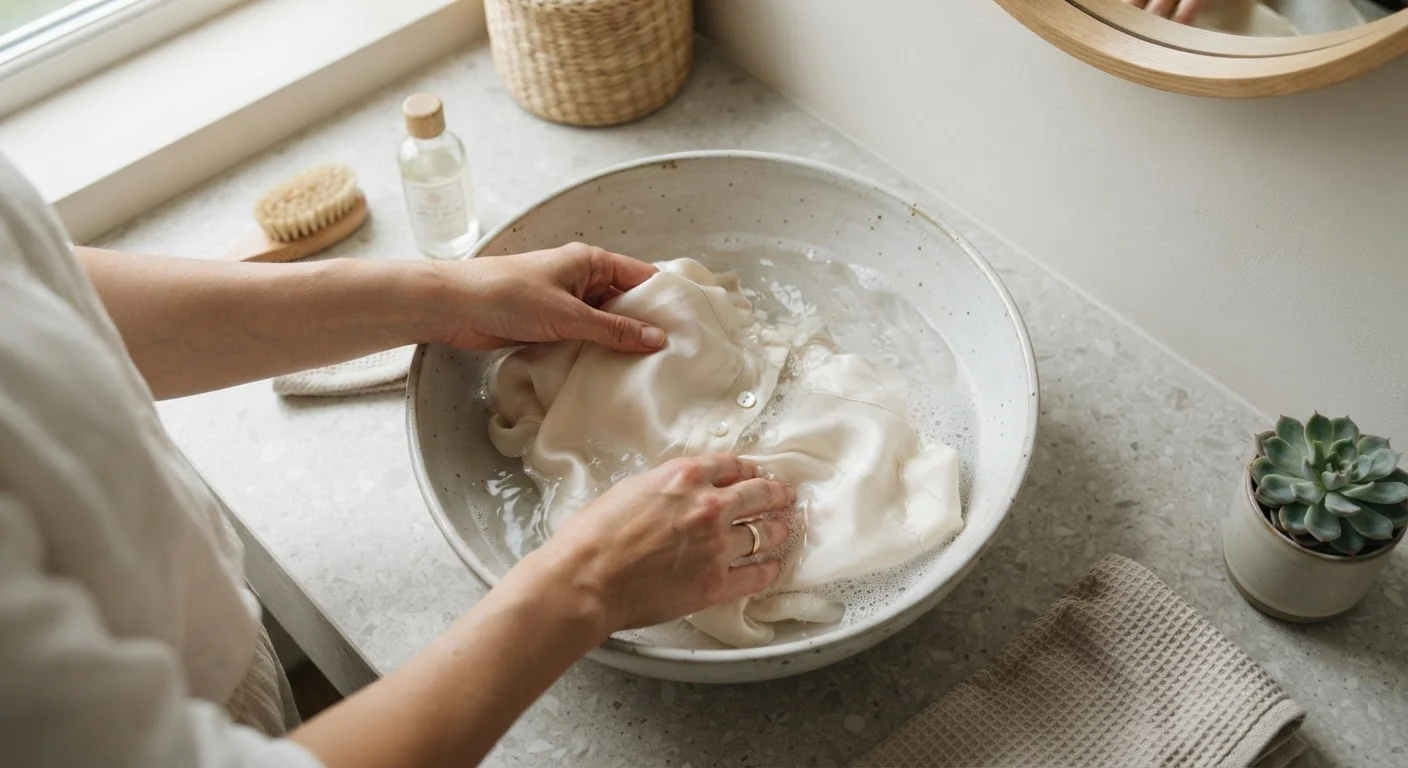
Place the garment in the water and press it down gently to saturate the fibers. Use a slow, gentle squeezing motion — pressing water through the fabric rather than scrubbing or rubbing surfaces together. Pay extra attention to underarms, collars, and cuffs where soil concentrates.
Rinse thoroughly with clean water
Drain the soapy water and refill the basin with clean, cool water. Gently press and squeeze the garment — never wring — until the rinse water runs clear and no soap remains. Repeat with a second rinse if needed. Detergent residue left in fabric can cause skin irritation and break down fibers over time.
Remove excess water without wringing
Lift the garment from the water supporting its full weight — don't let it hang unsupported, which can stretch wet fibers. Lay it flat on a clean dry towel, roll the towel and garment together into a loose cylinder, and press firmly. Unroll, and the towel will have absorbed much of the moisture without stressing the fabric.
Reshape and dry flat
Lay the garment on a clean, flat surface or drying rack. Smooth it into its correct shape — pull seams straight, smooth the collar flat, and extend sleeves to their natural length. Allow to air dry away from direct sunlight or heat sources, both of which can cause fading and fiber stress. Do not hang wet knits or loosely woven fabrics; gravity will stretch them permanently.
What Damages Fabric — and What to Skip Entirely
Several common instincts work against you when hand-washing. Hot water causes shrinkage in wool and cotton and degrades elastic fibers in synthetic blends. Wringing — twisting the garment to force out water — breaks fibers and misshapes collars, cuffs, and seams. Scrubbing with a brush or vigorous rubbing creates pilling and surface damage, especially on silk and cashmere.
Bleach-based or enzyme detergents designed for machine loads are too harsh for hand-washing delicates. Standard dish soap, while sometimes suggested online, tends to be more alkaline than fabric fibers tolerate and can strip natural oils from wool and silk. Soaking any garment for more than 30 minutes risks color bleeding and weakens fiber structure.
Never Use Hot Water on Wool or Silk
Hot water causes wool fibers to felt — a permanent, irreversible matting that shrinks and stiffens the fabric. Silk can lose its luster and develop a rough texture when exposed to heat above lukewarm. When in doubt, go cooler: cool water is almost never the wrong choice for delicates.
Finally, don't skip reshaping before drying. A damp garment draped carelessly over a hanger will dry in whatever distorted shape you leave it in — collar stretched, shoulders misaligned, hem uneven. It takes less than a minute to smooth and reshape, and it protects weeks of wear.
Hand-washing frequently also means repeated contact with water and soap for your own skin. If you notice dryness or irritation, protecting your skin through daily tasks is worth reading for practical hand care habits.