

| Most common workplace dress code (U.S.) | Business Casual (Widely reported across HR surveys) |
| Number of mainstream dress code tiers | 5 (Casual to Black Tie) |
| Key factor overriding formality labels | Fit and condition of garments |
| Safest default when uncertain | One tier above what you assume |
| Fabric types that signal formality | Wool, structured cotton, linen |
| Items rarely appropriate below black tie | Athletic wear, graphic tees, flip-flops |
Why Dress Codes Are Harder to Read Than They Should Be
Dress codes were once straightforward — you wore a suit to work, jeans on weekends, and that was largely it. Today, a single invitation might say "smart casual," leaving you staring at your closet wondering if you're overthinking it (you probably are, but the confusion is legitimate). Terms like business casual, smart casual, and cocktail attire are used inconsistently across industries, regions, and generations, which means no single outfit is universally correct for any label.
This guide defines the most common dress codes in plain terms, explains what each one typically permits and excludes, and gives you a practical framework to use when the label alone isn't enough. Think of it as a reference you can return to before any event or workweek.
Business Formal
The most structured dress tier, requiring tailored suits, dress shirts, and polished footwear. Common in legal, executive, and high-stakes professional settings.
Business Casual
A relaxed professional dress code that allows collared shirts, slacks, and blazers, but typically excludes jeans, athletic wear, and graphic tees. Interpretation varies by workplace.
Smart Casual
A middle-ground dress code that permits well-fitted dark jeans, neat trousers, and stylish tops. The key is that items look deliberate and put-together, not just comfortable.
Cocktail Attire
Semi-formal dress code appropriate for evening events. Generally means knee-length dresses or dressy separates, and a dark suit with tie. One tier below black tie.
Dress Code
A set of expectations — sometimes written, sometimes implied — about the type and formality level of clothing appropriate for a given setting or occasion.
The Main Dress Codes, Defined
Most dress codes in everyday American life fall into one of five tiers. Here's what each genuinely means:
Business Formal
Also called professional attire, this is the most structured tier. Think well-tailored suits in dark or neutral tones, dress shirts with ties for men, and tailored pantsuits, skirt suits, or formal dresses for women. Shoes should be polished and closed-toe. This code is standard in courtrooms, executive meetings, and formal interviews.
Business Casual
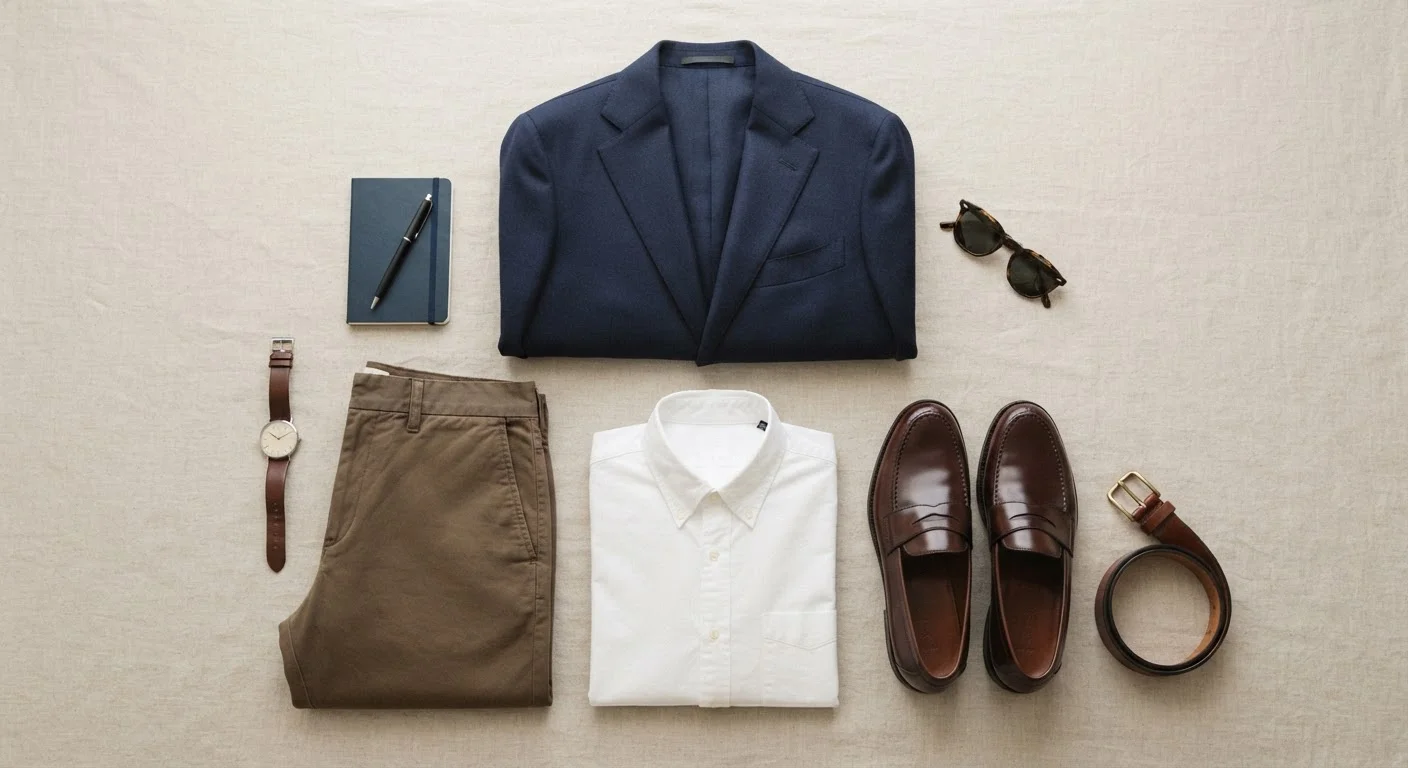
This is the most misunderstood code in American workplaces. It relaxes the formality of business formal while still signaling professionalism. Acceptable items typically include slacks or chinos, collared shirts (polo or button-down), blouses, blazers, and leather or leather-look shoes. What it usually excludes: jeans, athletic wear, graphic tees, and open-toe sandals — though this varies by workplace culture. When in doubt, err toward the more polished end of the range.
Smart Casual
Smart casual bridges the gap between dressed-up and dressed-down. It permits well-fitted dark jeans, neat trousers, simple dresses or skirts, stylish tops, and clean leather sneakers or loafers. The key word is intentional — items should look considered and put-together rather than pulled from the gym bag. Smart casual is common for restaurant dinners, daytime social events, and creative industry offices.
Casual
A true casual dress code means comfort and personal expression take precedence. Jeans, t-shirts, sneakers, and sundresses all qualify. That said, "casual" doesn't mean sloppy — clean, well-fitting clothes in good condition still read better than worn-out or ill-fitting ones regardless of formality level.
Cocktail / Semi-Formal
Cocktail attire sits just below black tie. For most occasions this means a knee-length dress or dressy separates for women, and a dark suit with a tie for men. It's the standard for evening weddings, charity galas, and corporate holiday parties.
For guidance on building outfits within any of these tiers, understanding color combinations can help you make confident choices without overthinking it.
Quick Reference and Practical Tips
Even with clear definitions, real situations come with gray areas. A few principles help:
- Default upward, not down. When you're uncertain whether an event is business casual or smart casual, choose the slightly more formal option. It's easier to remove a blazer than to wish you'd brought one.
- Read context clues. The venue, host industry, and time of day all signal expectations. A rooftop dinner at 7 p.m. calls for something different than a noon lunch, even under the same label.
- Fit matters more than formality level. A well-fitted pair of trousers reads more polished than an ill-fitting suit jacket. Across every dress code, clothes that fit correctly elevate the overall impression. See our guide to fit and body shape dressing for grounded advice on this.
- Fabric signals formality. Linen, wool, and structured cotton read more formal than jersey, fleece, or technical fabrics. Knowing your materials helps you calibrate. Our article on natural fibers vs. synthetics covers exactly what those clothing tags are communicating.
- When in doubt, ask. For workplace events especially, asking HR or a trusted colleague what people typically wear is not a social misstep — it's efficient.
| Most common workplace dress code (U.S.) | Business Casual (Widely reported across HR surveys) |
| Number of mainstream dress code tiers | 5 (Casual to Black Tie) |
| Key factor overriding formality labels | Fit and condition of garments |
| Safest default when uncertain | One tier above what you assume |
| Fabric types that signal formality | Wool, structured cotton, linen |
| Items rarely appropriate below black tie | Athletic wear, graphic tees, flip-flops |
Dress codes shift over a lifetime, too — what suits a first job interview may feel different a decade into a career. Our piece on how clothing priorities shift over time addresses that evolution thoughtfully.