

Key Takeaways
Why Cats Are Vulnerable to Environmental Stress
Cats are highly sensitive animals whose wellbeing is deeply tied to their surroundings. Unlike dogs, who are wired for social flexibility, cats evolved as both predator and prey — which means they're hardwired to monitor their environment constantly and conceal signs of vulnerability. That instinct makes stress easy to miss.
Feline stress typically stems from changes in the home: a new pet, a move, a shift in schedule, loud noise, or even rearranged furniture. Because cats communicate distress through behavior rather than obvious vocalizations, many owners don't recognize the warning signs until patterns are well established. Understanding what to look for — and how to respond — is one of the most impactful things you can do for your cat's long-term health. For a deeper look at why cats mask discomfort so effectively, see why cats are so hard to read when they're sick.
Below are the key behavioral signs of stress in cats, paired with the environmental changes most likely to help.
Excessive Hiding or Withdrawal
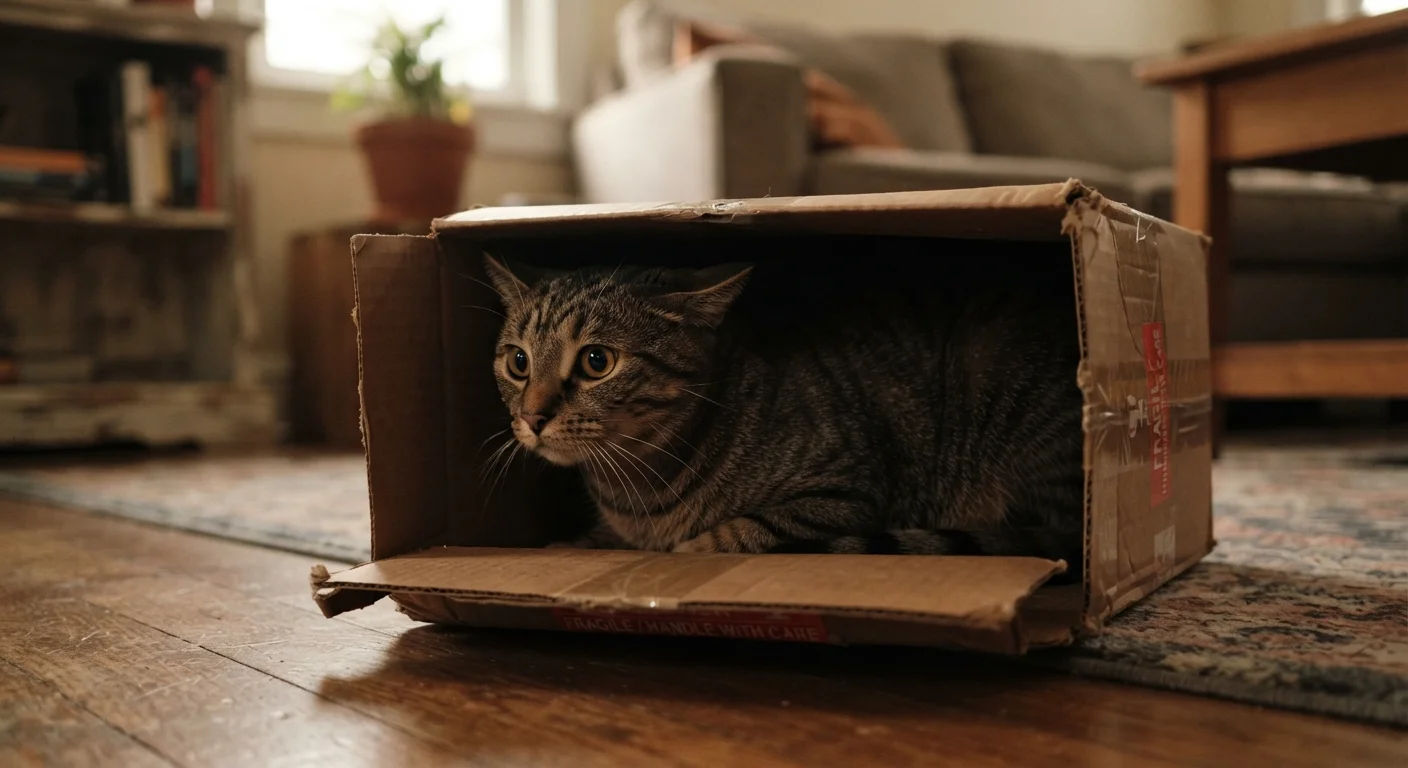
A cat that suddenly retreats to closets, under beds, or other isolated spaces — especially one that was previously social — is signaling that something feels unsafe. Occasional solitude is normal, but prolonged withdrawal, particularly when the cat avoids interaction at mealtimes, is a meaningful red flag.
What helps: Rather than coaxing the cat out, provide intentional safe zones: covered beds, open cardboard boxes, or cat condos placed in quiet corners. Giving a stressed cat a defined retreat space can lower their perceived threat level considerably.
Prolonged withdrawal — especially at mealtimes — is a meaningful feline stress signal.
Over-Grooming or Hair Loss
Psychogenic alopecia — hair loss caused by compulsive over-grooming — is a recognized stress response in cats. Owners often notice symmetrical bald patches along the belly, inner legs, or tail base. The behavior may be subtle at first, escalating gradually over weeks.
What helps: Identify and reduce the stressor where possible. Increase structured play sessions using wand toys or puzzle feeders to redirect compulsive behavior into healthy activity. Always have a veterinarian evaluate hair loss first, since skin conditions and allergies can look identical.
Symmetrical bald patches from over-grooming often point to chronic, unaddressed stress.
Litter Box Avoidance
Eliminating outside the litter box is one of the most commonly reported — and most frequently misunderstood — stress behaviors in cats. While medical causes like urinary tract infections must be ruled out first, stress is a leading non-medical trigger. Multi-cat households, a box placed in a high-traffic area, or a recent change in litter type can all be contributing factors.
What helps: Follow the general guideline of one litter box per cat, plus one extra, placed in quiet, low-traffic locations. Unscented litter and boxes with low sides (especially for older cats) tend to be more broadly accepted. See also signs of pain that are easy to miss, since litter box changes can sometimes indicate physical discomfort.
Litter box avoidance is rarely spite — it's usually a signal worth taking seriously.
Changes in Eating or Drinking Habits
Stress can suppress appetite or, less commonly, trigger stress-eating in cats. A cat that abruptly stops finishing meals, eats much faster than usual, or shows increased thirst may be responding to environmental pressure. These changes are also associated with several medical conditions, so veterinary assessment is always the appropriate first step.
What helps: Feed cats on a consistent schedule in a calm, private location — away from other pets or foot traffic. Puzzle feeders can slow fast eaters and provide mental stimulation, addressing boredom-related stress simultaneously.
Feeding cats in a calm, private location supports both appetite and emotional regulation.
Increased Vocalization or Aggression
A cat that becomes suddenly vocal — yowling, hissing, or growling without clear provocation — or that redirects aggression toward people and other pets may be in a state of chronic arousal. This is especially common after the introduction of a new animal or following a move to a new home.
What helps: Use scent-swapping techniques (exchanging bedding between animals) and controlled, gradual introductions when new pets are involved. Provide vertical space — cat trees, wall shelves, or window perches — so cats can observe their environment from a safe height, which reduces perceived vulnerability. This connects closely to enrichment strategies that support feline wellbeing.
Vertical space gives stressed cats a sense of control over their environment.
Disrupted Sleep Patterns or Restlessness
Cats sleep between 12 and 16 hours daily. A cat that paces at night, seems unable to settle, or wakes repeatedly may be experiencing stress-related hyperarousal. Environmental triggers — outdoor cats visible through windows, noise from traffic or construction, or inconsistent household routines — are common culprits.
What helps: Establish consistent daily routines for feeding, play, and quiet time. Consider placing opaque window film at lower pane levels if outdoor animals trigger arousal. A predictable evening play-then-feed sequence can help cats wind down, mimicking the natural hunt-catch-eat-groom-sleep cycle.
A predictable hunt-eat-sleep routine is one of the most effective feline stress-reduction tools.
When to Go Beyond Environmental Changes
Environmental modifications can make a significant difference, but they're not a substitute for professional guidance when stress is severe or persistent. If your cat's symptoms escalate — such as refusing food for more than 24 hours, showing signs of physical pain, or displaying aggression — a veterinary visit should be the first step. Some stress indicators overlap with medical conditions, and a vet can rule out underlying causes before behavioral interventions begin.
Build Predictability Into Daily Routines
Cats are creatures of habit, and consistency is genuinely calming. Try to feed, play, and interact with your cat at the same times each day. Even small schedule disruptions — like irregular mealtimes — can accumulate into chronic low-grade stress. A structured daily rhythm is one of the simplest, most effective things you can offer a stressed cat.
It's also worth noting that indoor enrichment strategies like foraging toys and scent play work best as preventive tools rather than crisis responses — building them into daily life before stress takes hold is ideal. And if you're curious about broader feline behavior, common cat behavior myths may reshape how you interpret your cat's signals altogether.
This article is for general informational purposes only and is not a substitute for professional veterinary advice. Always consult a licensed veterinarian if you have concerns about your cat's health or behavior.