

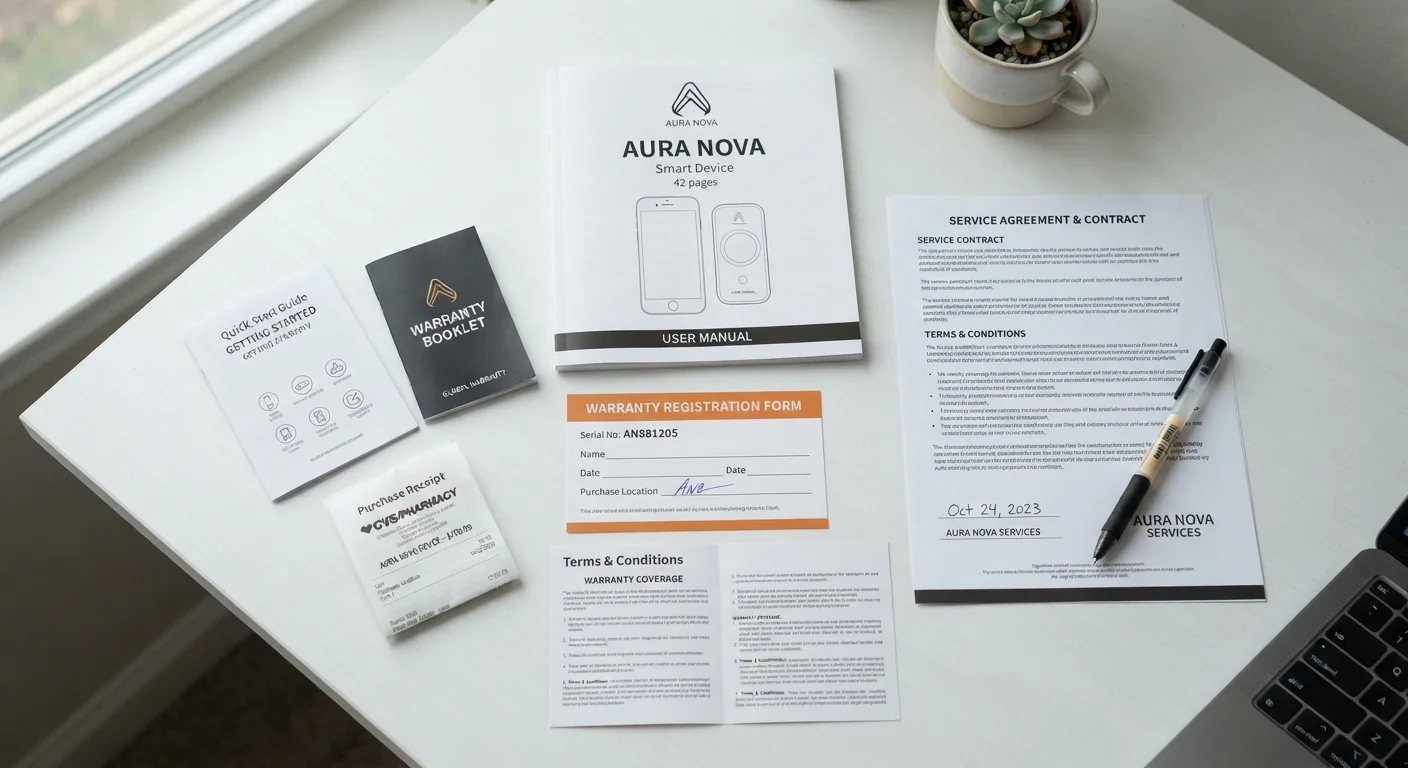
Key Takeaways
Purchase Protection Plans
Purchase protection plans is an umbrella term covering three distinct types of product coverage: manufacturer warranties, retailer or extended protection plans, and third-party service contracts. Each comes from a different source, carries different terms, and protects against different problems. Understanding which type you have - or are being offered - determines what you can actually claim.
Under the Magnuson-Moss Warranty Act, written warranties on consumer products must be designated as either 'full' or 'limited,' and their terms must be disclosed before purchase. Service contracts, by contrast, are governed separately and are not considered warranties under that Act.
Three Types of Coverage, Three Very Different Promises
When you buy a major appliance, piece of electronics, or household product, you're likely to encounter at least one - and sometimes all three - types of purchase protection. They sound similar, but they work in fundamentally different ways.
Manufacturer warranties are included in the purchase price. They represent the maker's promise that the product is free from defects in materials and workmanship for a defined period. If the product fails due to a manufacturing flaw, the company repairs or replaces it at no cost to you. For more on what's typically included and excluded, see what a warranty actually covers.
Extended protection plans are sold - usually at the point of sale - by the retailer. They often start when the manufacturer warranty ends and may cover some repairs beyond that original window. These plans are backed by the retailer or a partner insurer, not the product maker, which matters if either party later goes out of business.
Third-party service contracts are sold by independent companies, sometimes years after purchase, and can cover a range of products simultaneously. Quality and reliability vary significantly. The company issuing the contract is solely responsible for honoring it.
What Each Type Actually Covers
Coverage scope is where these three types diverge most sharply.
- Manufacturer warranties are narrowly focused on defects. They do not cover accidental damage, user error, cosmetic wear, or problems caused by improper installation. Coverage periods vary widely - from 90 days on some accessories to several years on major appliances.
- Extended plans vary by retailer. Some include accidental damage protection; others mirror the original manufacturer terms almost exactly. The key detail is whether the plan covers parts, labor, or both - and whether there are deductibles per claim.
- Service contracts may offer broader coverage on paper, but exclusions listed in the fine print can significantly narrow what's payable. Common exclusions include pre-existing conditions, cosmetic damage, and problems caused by power surges or environmental factors.
~$40B
U.S. extended warranty market size
Industry analysts have estimated the U.S. extended warranty and service contract market at approximately $40 billion annually, reflecting how widely these products are sold across consumer goods categories.
12-60 months
Typical manufacturer warranty length range
Manufacturer warranty periods commonly range from 90 days on accessories to 5 years or more on major mechanical components, depending on the product category and maker.
55%+
Consumers who don't read contract terms
Consumer research consistently finds that a majority of buyers do not read service contract or extended warranty terms before signing, leaving them unaware of exclusions and claim procedures.
Before purchasing any add-on plan, ask specifically: What is excluded? Is there a deductible? Who performs the repair? And what happens if the product cannot be fixed?
Who Stands Behind the Coverage
One of the most practical questions to ask is: who is actually responsible for honoring this agreement?
With a manufacturer warranty, the answer is clear - the company that made the product. With a retailer protection plan, it's usually the retailer or their insurance partner. With a third-party service contract, it could be a smaller company with limited financial backing.
This matters because if a provider closes or refuses a legitimate claim, your options narrow considerably. Some states require service contract sellers to be backed by licensed insurers for exactly this reason. Before signing any service contract, verify who underwrites the plan and whether that entity is solvent and regulated in your state.
Also worth noting: even when no written warranty exists, you may have protections under state law. Implied warranties are legal defaults that apply in most purchase situations and don't require paperwork to exist.
How to Evaluate Whether an Add-On Plan Makes Sense
Extended plans and service contracts are profitable for sellers, which is why they're pushed at checkout. That doesn't make them worthless - but it does mean you should evaluate them carefully rather than accepting them reflexively.
Consider the following before agreeing to any add-on coverage:
- What does the manufacturer warranty already cover? If the product has a strong multi-year warranty, paying extra for an extended plan that mirrors the same terms adds little value.
- What is the product's reliability track record? Products with strong reliability records may not justify the extra cost of a service contract.
- What are the actual contract terms? Get the written agreement - not a summary card - and read the exclusions section before purchasing.
- Who performs repairs? Some plans require you to ship a product to a central facility, which can mean weeks without a functioning item.
- Is there a cancellation policy? Many plans allow cancellation with a prorated refund. Knowing this upfront gives you an exit option.
For a detailed look at how manufacturer and extended warranties compare in scope and cost, see how manufacturer and extended warranties differ.
Your Rights When a Claim Is Disputed
If a warranty or service contract claim is denied, you are not without options. Start by requesting the denial in writing and asking the provider to cite the specific exclusion in the contract language. Compare that language against your agreement carefully.
If the denial appears unjustified, escalate through the company's formal dispute process. For manufacturer warranty disputes, the Federal Trade Commission and your state attorney general's consumer protection office can be useful resources. For service contracts, your state's department of insurance may have jurisdiction if the contract is backed by an insurer.
Keep all documentation: purchase receipts, service records, communications with the provider, and the full contract. This paper trail is your strongest tool in any dispute.
It's also worth understanding how your purchase channel affects your consumer protections. Consumer rights can differ depending on where you bought - online versus in-store purchases sometimes carry different return and warranty claim processes.
This article is for general informational purposes only and does not constitute legal or financial advice. Terms, coverage, and applicable laws vary by provider, product, and state. Consult a qualified professional or your state consumer protection office for guidance specific to your situation.