

Key Takeaways
Why Star Averages Can Mislead You
A 4.3-star rating feels reassuring - until you realize it could represent 10,000 genuine purchases or 200 suspiciously uniform five-star posts from the same week. Average star scores compress all that variation into a single number, hiding more than they reveal.
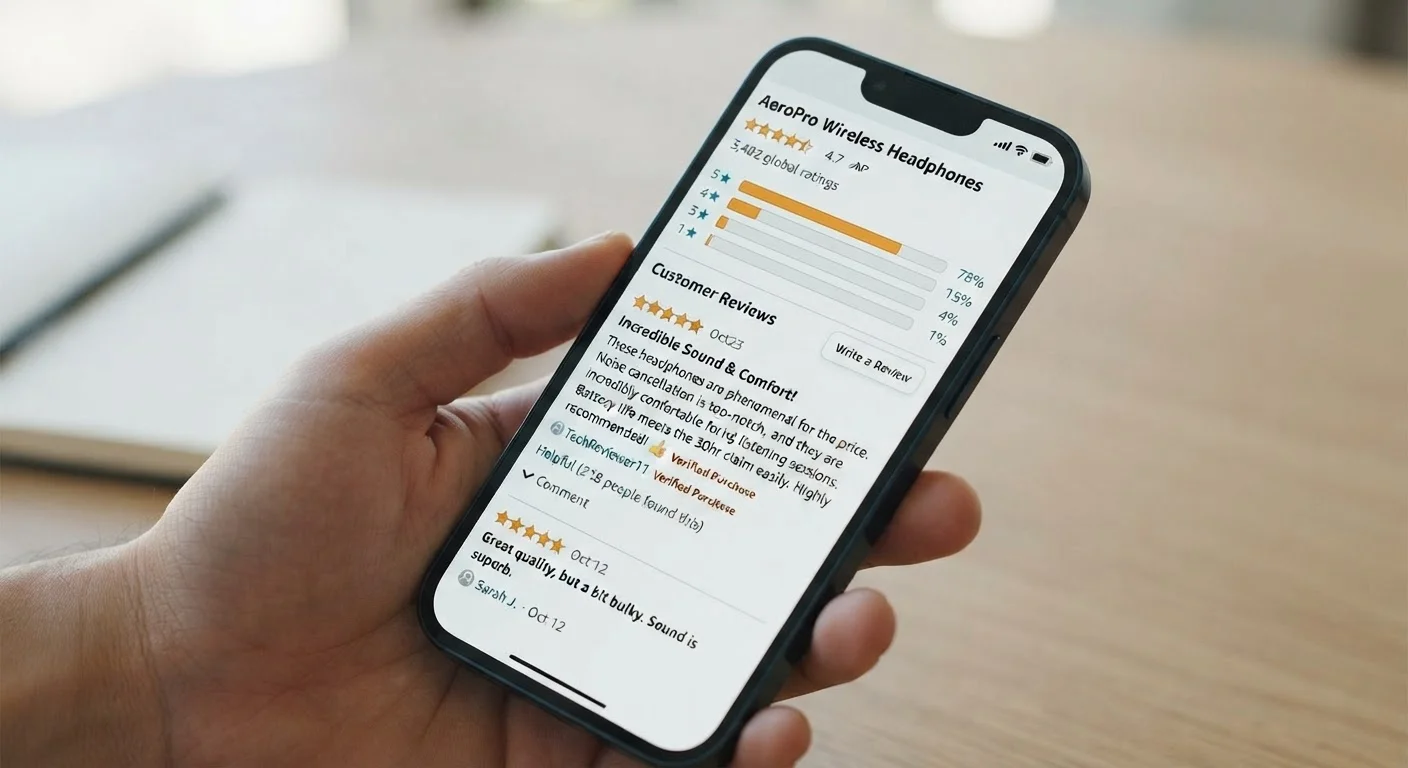
Before trusting any rating, look at the distribution histogram - the breakdown of how many reviewers gave 1, 2, 3, 4, or 5 stars. A healthy product typically shows a skewed-right curve with a noticeable tail of critical reviews. A suspicious pattern looks like a "J-curve": enormous five-star volume and almost nothing in between. That gap often signals rating manipulation, whether through incentivized campaigns or bulk fake submissions.
Also pay attention to total review count versus recency. A product with 4,000 reviews accumulated over three years is more credible than one with 400 reviews posted in a single month. Sudden review spikes - visible in timeline tools on some platforms - warrant skepticism, especially on recently listed products.
30-40%
Estimated share of online reviews that may be fake or incentivized
Various consumer advocacy organizations and academic studies have estimated that a substantial minority of product reviews on major platforms are not independent, though figures vary by category and platform.
4.2×
Higher likelihood of purchase when a product has recent reviews
Consumer behavior research consistently shows that review recency significantly influences purchase intent, as shoppers treat newer reviews as more relevant to current product quality.
Where to Find the Most Honest Feedback
Mid-range reviews - particularly two- and three-star ratings - tend to be the most balanced and specific. Reviewers who were mostly satisfied but had one real grievance are often more precise than enthusiastic five-star posters. Look for reviews that name specific product features, describe use cases, or mention how long they've owned the item.
One-star reviews deserve reading, not ignoring. Filter for recurring complaints. A single one-star review about shipping damage is noise; fifteen complaints about a zipper failing within a month is a quality signal. The pattern matters more than any individual post.
When possible, read reviews on multiple platforms. The same product might appear on a retailer's own site, a third-party marketplace, and a niche enthusiast forum. Each platform has different moderation standards and reviewer demographics. Consistent criticism across platforms is considerably more credible than criticism concentrated on one. See our pre-purchase checklist for online shopping for complementary verification steps.
Recognizing Fake and Incentivized Reviews
Fake reviews range from blatant (gibberish text, no purchase history) to sophisticated (natural-sounding language, plausible details). Several signals help distinguish them:
- Generic praise without specifics: "Great product! Very happy!" with no mention of what the product actually does.
- Reviewer profile patterns: Accounts with dozens of five-star reviews posted in a short window, often across unrelated product categories.
- Temporal clustering: A wave of reviews in a narrow date range, particularly near a product launch or after a seller complaint about low ratings.
- Missing verified purchase badges: While the absence of verification doesn't guarantee fakery, unverified reviews require more scrutiny.
Incentivized reviews - where sellers offer discounts or free products in exchange for feedback - are disclosed on some platforms but not consistently enforced. These reviews aren't automatically dishonest, but they do carry a measurable positivity bias. Research published by consumer behavior academics consistently finds incentivized reviewers rate products higher than unprompted purchasers, even when instructed to be objective.
For a parallel exercise in spotting patterns that aren't what they appear, our piece on spotting modern phishing messages applies similar critical-reading skills to digital communication.
Check the rating distribution histogram before trusting the average score.
Average scores hide the spread of opinions. A J-curve distribution - heavy five-stars, almost no middle ratings - is a common indicator of review manipulation and can lead you to overestimate product quality.
Read two- and three-star reviews first to find balanced, specific feedback.
Mid-range reviewers are often the most articulate because they had a nuanced experience. They tend to name specific features, describe real use, and explain trade-offs - information that's scarce in extreme ratings.
Look for recurring complaints rather than reacting to individual negative reviews.
Any product accumulates some outlier complaints. Patterns - the same defect mentioned across ten or more reviews - indicate a systemic issue rather than a single bad experience, making them far more predictive of your likely outcome.
Cross-reference reviews across at least two platforms before deciding.
Each platform has different review incentives, moderation rigor, and buyer demographics. Consistent criticism appearing independently on multiple sites is significantly more credible than concentrated criticism on a single platform.
Filter reviews by your specific use case using keyword search.
Review sections on most platforms support text search. Searching for terms relevant to your situation - "apartment," "outdoor," "kids," "travel size" - surfaces feedback from buyers with similar needs, making the information far more applicable.
Building a Review-Reading Habit That Serves You
Efficient review reading isn't about reading everything - it's about reading strategically. Sort by "most critical" or "lowest rated" first, then by "most recent" to catch any quality shifts. Search within reviews for specific terms relevant to your concern: "broke," "peeled," "loud," "size," or whatever matters most for that purchase category.
If you're evaluating a physical product, combine review research with hands-on inspection when possible. Our guide to evaluating build quality before you buy covers the physical cues that reviews can't fully convey.
Finally, weight reviews from buyers whose use case matches yours. A reviewer complaining that a hiking boot is too stiff may be describing exactly what a serious trail hiker needs. Context shapes every critique. Reading reviews well means reading them as evidence, not verdicts.
This article is for general informational purposes only. It does not constitute legal, financial, or consumer protection advice. Review platforms, policies, and regulations vary and are subject to change.