

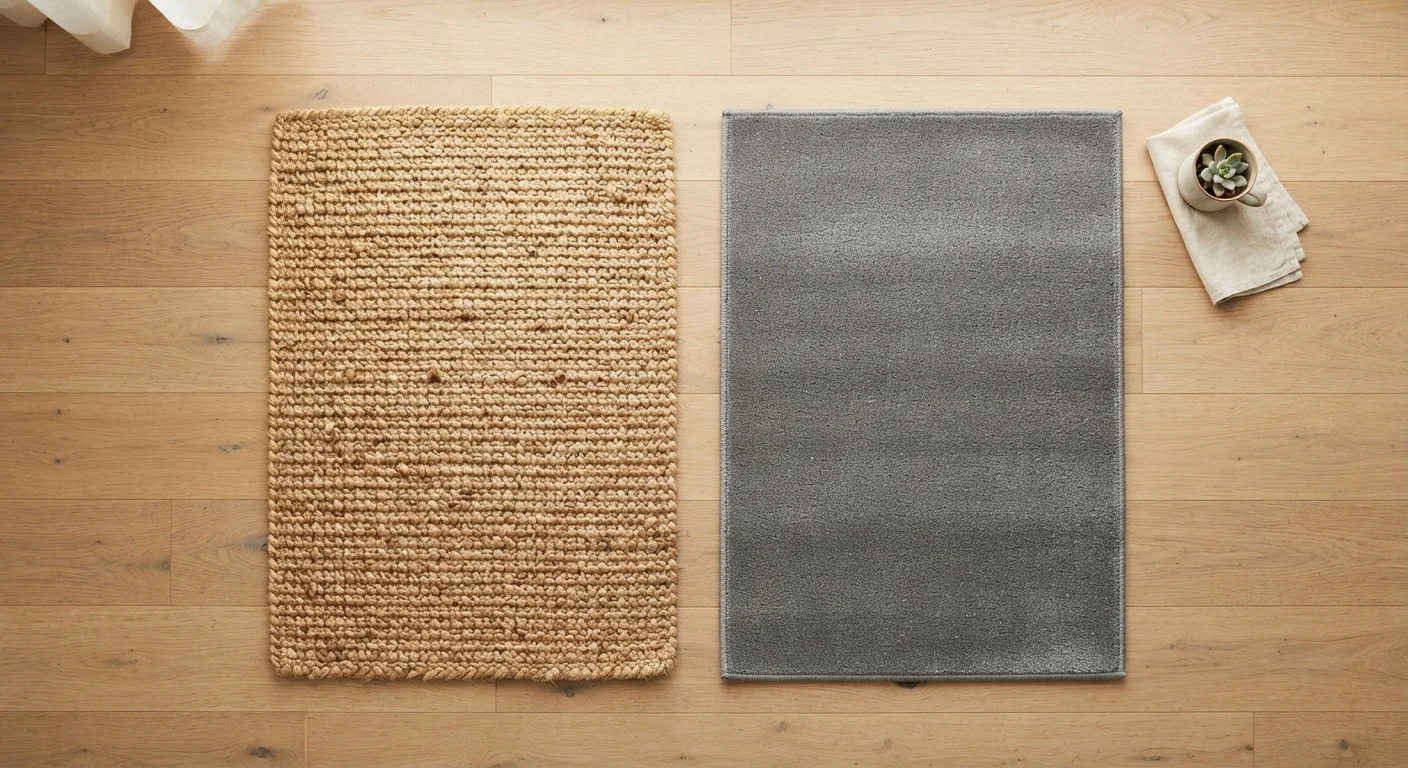
Key Takeaways
Option A
Natural Fiber Rugs
The classic, breathable choice with authentic texture.
Best for: Homeowners who prioritize feel, environmental footprint, and long-term investment in low-traffic or carefully managed spaces.
Option B
Synthetic Rugs
The practical, resilient option built for real-life households.
Best for: Busy households with kids, pets, or high-traffic areas that need easy-clean durability at a manageable cost.
If you have young children or pets in the home
Synthetic Rugs
Polypropylene and nylon resist staining, dry quickly, and can handle repeated cleaning without breaking down - a practical priority for messy households.
If you want a rug that ages beautifully over many years
Natural Fiber Rugs
Wool in particular develops a patina over time and can last decades when properly maintained, making it a genuine long-term investment.
If the rug will go in a bathroom, basement, or humid room
Synthetic Rugs
Natural fibers like jute and sisal absorb moisture readily and are prone to mold and mildew in damp environments; synthetics handle humidity far better.
If texture, comfort underfoot, and air quality matter most
Natural Fiber Rugs
Wool and cotton are breathable, naturally regulate humidity, and don't off-gas synthetic chemicals - making them a strong choice for bedrooms or living areas.
If you're furnishing a rental or transitional space on a budget
Synthetic Rugs
Synthetics deliver durability and easy care at a lower upfront cost, which makes sound practical sense when longevity isn't the primary goal.
What Natural Fiber Rugs Actually Include
"Natural fiber" covers a wider range of materials than most shoppers expect. The most common options in the US market are:
- Wool: The benchmark for premium rugs. Naturally resilient, soft, and flame-resistant. Wool fibers have a natural crimp that helps them spring back under foot traffic.
- Jute: A plant-based fiber with a coarse texture and warm golden color. Affordable, biodegradable, but highly moisture-sensitive.
- Sisal: Extracted from agave plants, sisal is stiffer and more durable than jute. Often used in entryways. Not comfortable for bare feet on extended contact.
- Cotton: Softer and more washable than other natural options. Less durable than wool and prone to flattening under heavy furniture.
These materials differ meaningfully from each other - a wool rug and a jute rug share a "natural" label but behave almost nothing alike in daily use. When evaluating natural fiber rugs, treat the specific fiber type as the defining factor, not the category name. For a broader look at how natural and synthetic fibers compare in other household textiles, see our guide on what bedding labels actually mean.
What Synthetic Rugs Are Made From
Synthetic rugs are manufactured from petroleum-derived fibers, each engineered with specific performance characteristics:
- Polypropylene (olefin): The most widely used synthetic rug fiber. Solution-dyed, meaning color is locked into the fiber itself rather than applied as a surface coating - this makes it highly stain-resistant and fade-resistant.
- Nylon: The most durable synthetic option. Resilient under heavy foot traffic and holds texture well over time. Generally more expensive than polypropylene.
- Polyester: Softer underfoot than polypropylene, good color vibrancy, but less resilient - it tends to mat and flatten more quickly in high-traffic zones.
Synthetic rugs are often machine-woven and designed with maintenance ease as a priority. Many are suitable for outdoor use. The trade-off is that they don't breathe like natural fibers, can generate static, and may feel less premium underfoot compared to quality wool. Understanding how construction quality affects durability across product categories is covered in our guide to material and construction labels.
Head-to-Head: Where Each Material Wins and Loses
Comparing these two categories directly reveals where each earns its place - and where it falls short.
| Criterion | Natural Fiber Rugs | Synthetic Rugs |
|---|---|---|
| Durability | Wool: excellent; jute/sisal: moderate | Nylon: excellent; polyester: moderate |
| Stain resistance | Low to moderate | High (especially polypropylene) |
| Moisture tolerance | Low - avoid in damp areas | High - many are outdoor-rated |
| Comfort underfoot | Wool: very soft; sisal: coarse | Polyester: soft; polypropylene: firm |
| Breathability | High - regulates humidity naturally | Low - traps heat and moisture |
| Typical lifespan | Wool: 20-50 years with care | 5-15 years depending on fiber |
| Ease of cleaning | Moderate to difficult | Easy to very easy |
| Environmental footprint | Biodegradable; renewable source | Petroleum-based; not biodegradable |
One underappreciated factor is allergens. Wool can harbor dust mites if not cleaned regularly, while synthetic rugs may off-gas volatile organic compounds (VOCs) when new. Both concerns diminish over time and with proper ventilation, but they're worth knowing about if anyone in the household has respiratory sensitivities.
Care Requirements: What You'll Actually Be Doing
Maintenance is where the real-world gap between these materials becomes most apparent.
Natural fiber care: Wool requires vacuuming with a brushless suction head to avoid pulling fibers. Liquid spills should be blotted immediately - wool resists some moisture but is not waterproof. Professional cleaning is recommended every one to two years for heavily used wool rugs. Jute and sisal should not be wet-cleaned at all; moisture causes shrinkage and fiber breakdown. Spot-treat only with a dry or barely damp cloth.
Synthetic fiber care: Most polypropylene and nylon rugs tolerate regular vacuuming, spot cleaning with mild detergent and water, and some can even be hosed down outdoors. Stain resistance is genuine - not just marketing language - because many are solution-dyed and inherently non-absorbent.
Rug Pad Matters for Both Types
Regardless of fiber type, a quality rug pad extends the life of any rug by reducing abrasion against the subfloor and preventing slipping. Natural fiber rugs - especially flat-woven cotton and jute - tend to creep on hard floors without one. Synthetic rugs may have a latex or rubber backing already built in, but a separate pad still adds cushion and protection. Always check that the pad material is compatible with your floor finish, as some rubber backings can stain certain hardwoods over time.
If low maintenance is a true priority, polypropylene is objectively easier to live with. If you're willing to follow care protocols, wool rewards that investment with longevity and a feel that synthetics don't fully replicate. The same instinct toward materials literacy applies when shopping for clothing - see our piece on what your clothing tags are actually telling you.