

Key Takeaways
Start here
Why the Scalp Matters More Than You Think
Next
Common Scalp Signals and What They Mean
Apply it
Building a Simple Scalp Care Routine
Know your limits
When to See a Dermatologist
Why the Scalp Matters More Than You Think
Most people treat hair care and scalp care as the same thing — they are not. Hair shafts are composed of dead protein cells; the living part of your hair is beneath the surface, at the follicle level, embedded in your scalp. That means the condition of your scalp directly influences the quality, strength, and growth of every strand.
The scalp is skin — specifically, one of the densest concentrations of hair follicles and sebaceous (oil-producing) glands on your body. Like the skin on your face, it can become unbalanced: too oily, too dry, inflamed, or disrupted by outside factors. Understanding this connection is the foundation of any effective hair care routine. For a broader look at how skin behaves across different areas, the Skincare Basics hub offers useful context.
Sebaceous glands
Small glands in the skin that produce sebum, the natural oil that lubricates and protects your scalp and hair. Overactive or underactive glands contribute to oily or dry scalp conditions.
Follicle
A small pocket in the scalp from which each individual hair strand grows. The health of the follicle directly affects the quality and growth of the hair it produces.
Dandruff
A common scalp condition caused by the overgrowth of a naturally occurring yeast, resulting in skin cell buildup, flaking, and often itching. It is not contagious or caused by poor hygiene.
Contact dermatitis
An inflammatory skin reaction triggered by direct contact with an irritating substance or allergen, such as a specific ingredient in a shampoo or styling product.
Sebum
The oily substance produced by sebaceous glands that naturally coats and protects the scalp and hair shaft. Too much causes greasiness; too little leads to dryness and brittleness.
Scalp psoriasis
A chronic autoimmune skin condition that causes raised, scaly patches on the scalp. It is distinct from dandruff and typically requires professional diagnosis and management.
Common Scalp Signals and What They Mean
Your scalp communicates through physical signs. Learning to read them accurately prevents the mistake of treating the wrong condition.
- Flaking with itchiness: White or yellowish flakes accompanied by persistent itching are hallmarks of dandruff, which is linked to Malassezia — a yeast naturally present on most scalps. When it overgrows, it triggers an inflammatory response and accelerated skin cell turnover.
- Fine, powdery flakes without itching: These typically indicate a dry scalp rather than dandruff. The cause is usually insufficient moisture or over-stripping from harsh shampoos or hot water.
- Greasiness between washes: Excess sebum production can be driven by hormonal fluctuations, stress, or — counterintuitively — over-washing, which signals the glands to compensate by producing more oil.
- Redness or tenderness: Localized irritation may stem from contact dermatitis (a reaction to an ingredient in a hair product), scalp psoriasis, or folliculitis (inflammation of follicles). These warrant closer attention.
- Noticeable hair shedding: Some daily shedding is normal (roughly 50–100 hairs per day is a commonly cited range). Shedding significantly above that baseline, particularly with scalp symptoms, merits professional evaluation.
If you suspect a product ingredient may be the culprit behind irritation, our guide to grooming ingredients worth knowing can help you decode what's actually in your formulas.
Building a Simple Scalp Care Routine
Effective scalp care does not require an elaborate multi-step system. A few consistent habits make a meaningful difference.
Cleanse Appropriately for Your Scalp Type
Choose a shampoo formulated for your scalp's specific needs — not just your hair type. Sulfate-free formulas tend to be gentler for dry or sensitive scalps. If flaking is present, look for active ingredients like zinc pyrithione or salicylic acid, which have established evidence behind them. For guidance on decoding product labels, see our article on reading a skincare label without getting lost in the jargon.
Don't Neglect the Rinse
Product residue and conditioner left on the scalp can accumulate and irritate follicles. When conditioning, apply to mid-lengths and ends rather than directly to the scalp, and rinse thoroughly with lukewarm — not hot — water.
Add a Weekly Scalp Check
Incorporate scalp observation into your routine — a quick check during or after washing takes seconds and can catch changes early. The weekly personal care audit framework is a helpful structure for building this habit alongside other grooming basics.
Warm Water, Not Hot
Hot water feels satisfying but strips the scalp of its natural oils and can worsen both dryness and irritation. Rinsing with lukewarm water helps preserve the scalp's moisture barrier without sacrificing cleanliness. This small adjustment is one of the easiest routine changes you can make.
Consider Gentle Scalp Massage
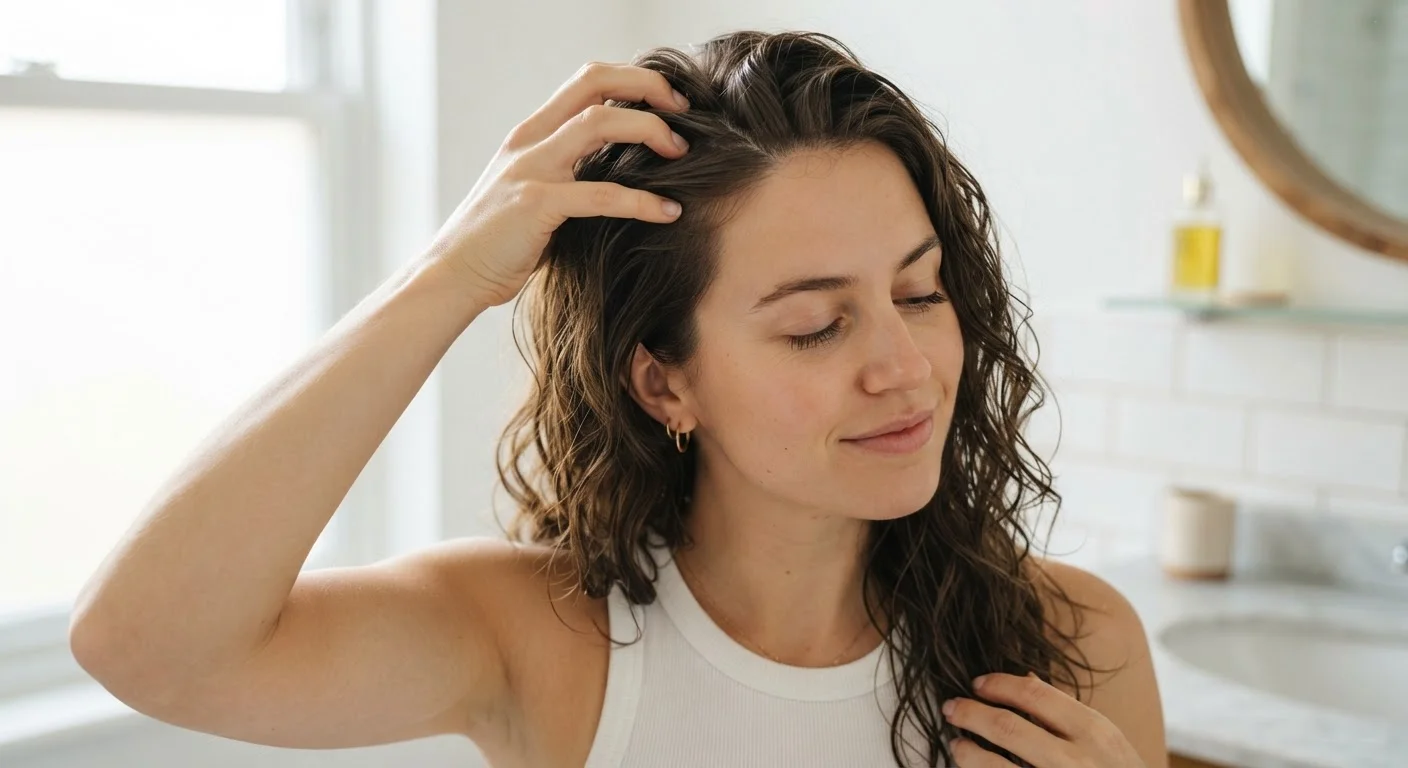
Using your fingertips (not nails) to gently massage the scalp during washing can help loosen buildup and may support circulation. It also gives you a chance to feel for any unusual texture, sensitivity, or tender spots.
When to See a Dermatologist
Routine scalp care handles a lot — but it has limits. Certain symptoms consistently signal that a healthcare professional should be involved rather than relying on over-the-counter adjustments.
Seek evaluation if you experience: persistent, treatment-resistant dandruff; significant or sudden increases in hair shedding; visible sores, crusting, or open lesions on the scalp; scalp psoriasis flare-ups; or any symptom causing significant discomfort or distress. A board-certified dermatologist can distinguish between conditions that look similar and recommend appropriate treatment.
It is also worth revisiting assumptions about your routine. Many grooming habits people treat as universal truths do not hold up under scrutiny — our piece on personal care myths dermatologists push back on covers several scalp-related ones specifically.
This article is for general informational purposes only and is not a substitute for professional medical advice. If you have concerns about scalp conditions or hair loss, consult a qualified dermatologist or healthcare provider.