

Key Takeaways
Age-Related Nail Changes
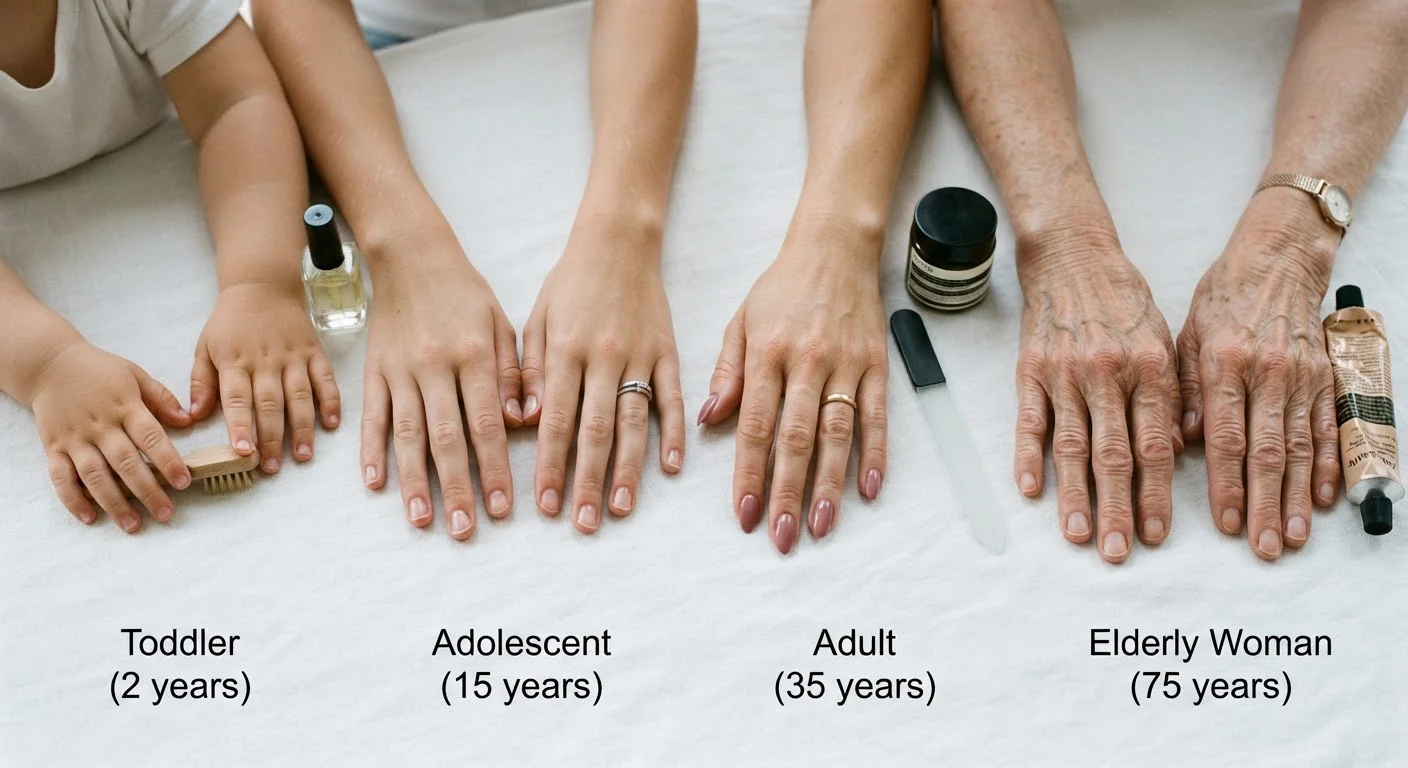
As the body ages, nails undergo gradual structural and chemical shifts — growing more slowly, becoming thicker or more brittle, and responding differently to moisture and nutrients. These changes are normal biological processes influenced by hormones, circulation, diet, and cumulative environmental exposure. Understanding them allows you to adjust your nail care routine to stay ahead of common problems at each life stage.
Nail growth rate peaks in early adulthood and declines with age, while changes in keratin cross-linking can contribute to increased brittleness and longitudinal ridging in later decades.
Your 20s: Building Habits That Pay Off Later
Nails in your 20s are typically at their structural peak — growing quickly and recovering well from minor damage. But this decade is also when habits form that either protect or erode nail health over the long term.
Common concerns at this stage include peeling from over-filing, brittleness from frequent gel or acrylic overlays, and dryness from hand-washing, sanitizers, and nail polish remover. The most impactful habit you can build now is consistent moisture: applying a nourishing hand cream and cuticle oil regularly prevents the micro-cracks that accumulate into bigger problems by your 30s and 40s.
Diet also matters from the start. Protein and B vitamins — particularly biotin — support keratin production, and shortfalls show up in nails before many other tissues. A varied, balanced diet lays a foundation that supplements cannot fully replicate. See our weekly personal care audit for a simple way to keep nail care from slipping through the cracks of a busy routine.
Your 30s and 40s: Hormones, Stress, and Slower Recovery
Through your 30s and into your 40s, nails begin to reflect the cumulative effects of lifestyle and early hormonal shifts. Growth slows slightly, and nails may become more reactive to nutritional dips, chronic stress, and dehydration.
Pregnancy is a significant variable during this window: elevated estrogen often produces stronger, faster-growing nails, while the postpartum period can trigger brittleness and shedding as hormone levels normalize. This is general biology, not a sign of illness, but it does call for extra care and patience during recovery.
For those not experiencing pregnancy, the 40s often bring the first noticeable signs of perimenopause, which can affect nail hydration and strength. This is a good time to switch to acetone-free removers, limit harsh cleaning chemicals without gloves, and take nail filing more gently. Our guide to hand and nail care together covers how to treat nails as part of broader hand health rather than in isolation.
Protect Nails During Chemical Exposure
In your 30s and 40s, hands often take on more household and occupational wear. Wearing rubber or nitrile gloves when cleaning, gardening, or handling chemicals preserves moisture and prevents physical damage to nails and cuticles. Even brief exposure to harsh detergents repeatedly strips the natural oils that keep nails flexible.
Your 50s, 60s, and Beyond: Normal Changes and What to Watch
After 50, several nail changes become noticeable and are largely a normal part of aging. Nails grow more slowly, may develop longitudinal ridges, and can become either thicker — particularly toenails — or more brittle. Discoloration toward a slightly yellow or dull tone is common. Cuticles tend to dry out more easily and may thicken if not regularly conditioned.
The most important shift at this stage is distinguishing normal aging from changes that signal something requiring medical attention. A sudden change in nail shape, a new dark streak, significant nail separation, or persistent thickening of fingernails should be evaluated by a healthcare provider, as these can occasionally indicate fungal infection, circulation issues, or skin conditions like psoriasis.
~3mm/month
Average fingernail growth in young adults
Dermatology literature consistently reports fingernails grow roughly 3 millimeters per month in young adults, slowing by approximately 50% by later decades.
50%
Estimated slowdown in nail growth with age
Research published in dermatology references suggests nail growth rate can slow by approximately half between peak young-adult years and older age.
20%
Adults reporting brittle nail problems
Onychoschizia (brittle, soft, or splitting nails) is estimated to affect around 20% of the general population, with prevalence increasing significantly after midlife.
Practical adjustments for this decade include using a finer-grit file to reduce splintering, applying cuticle oil daily rather than weekly, and wearing gloves for household tasks involving water or chemicals. Toenail care also becomes more important as flexibility decreases — if trimming becomes difficult or painful, a podiatrist can help safely. Just as clothing priorities evolve thoughtfully with age — as explored in our piece on everyday style at every age — nail routines deserve the same deliberate adaptation.
This article is for general informational and educational purposes only. It is not a substitute for professional medical advice, diagnosis, or treatment. If you have concerns about changes in your nails or overall health, please consult a qualified healthcare provider.