

Key Takeaways
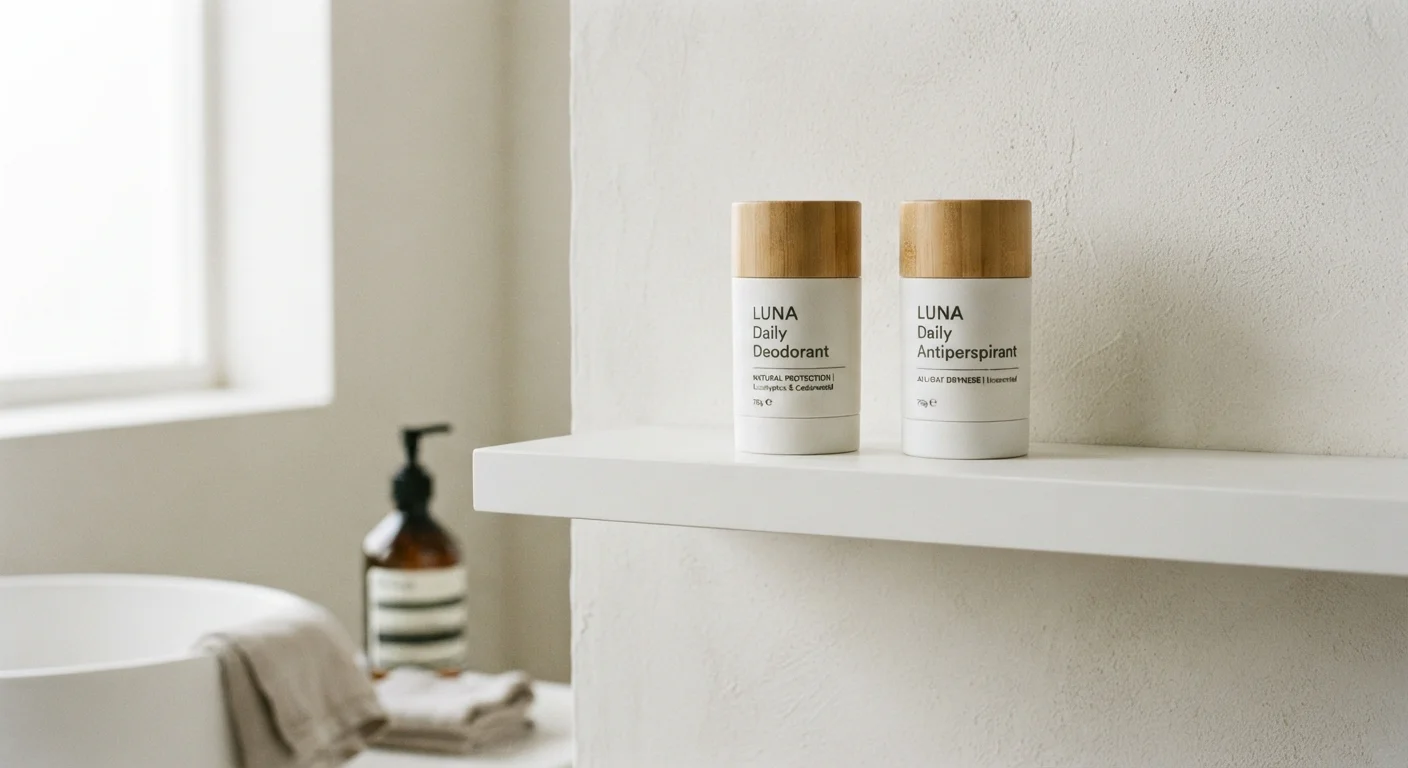
Option A
Deodorant
The odor-neutralizing option that lets you sweat naturally.
Best for: People who want to control body odor without blocking perspiration, or those with sensitivity to aluminum-based compounds.
Option B
Antiperspirant
The sweat-blocking formula for those who need dryness.
Best for: People who experience significant underarm wetness that affects comfort, clothing, or confidence throughout the day.
If you sweat heavily and need clothing to stay dry
Antiperspirant
Aluminum compounds temporarily reduce sweat gland output, providing a meaningful reduction in underarm moisture throughout the day.
If odor is your primary concern but you prefer to sweat freely
Deodorant
Deodorant targets the bacteria that cause odor without interfering with the body's natural perspiration process.
If you have sensitive or reactive underarm skin
Deodorant
Aluminum-free deodorant formulas are generally gentler and less likely to cause irritation or occlusion-related reactions.
If you want one product that addresses both sweat and odor
Antiperspirant
Most modern antiperspirants include fragrance or odor-neutralizing agents alongside their sweat-blocking active ingredient.
How Each Product Actually Works
The confusion between deodorant and antiperspirant is understandable — they're often shelved together, marketed similarly, and sometimes blended into a single product. But their mechanisms are meaningfully different.
Deodorant works on odor, not sweat. Underarm odor is caused by bacteria breaking down compounds in sweat, not by sweat itself. Deodorant addresses this by either killing or inhibiting odor-causing bacteria, masking the smell with fragrance, or neutralizing odor through pH adjustment. Alcohol is a common active component; some formulas also use baking soda or plant-derived antimicrobials. The result: less odor, but no change in how much you perspire.
Antiperspirant targets sweat directly. It contains aluminum-based compounds — such as aluminum chlorohydrate or aluminum zirconium — that dissolve into sweat and temporarily plug the openings of sweat ducts in the underarm area. This reduces the volume of moisture that reaches the skin's surface. Because less sweat is produced at the surface, odor is also reduced indirectly, which is why antiperspirants typically double as deodorants.
| Criterion | Deodorant | Antiperspirant |
|---|---|---|
| Primary function | Reduces or masks odor | Reduces sweat output |
| Active ingredient | Alcohol, baking soda, antimicrobials | Aluminum-based compounds |
| Affects sweat glands | No | Yes, temporarily blocks ducts |
| Also controls odor | Yes — directly | Yes — indirectly via less sweat |
| Sensitive skin suitability | Generally gentler | May cause irritation in some |
| Best application time | Morning, to clean skin | Evening, to completely dry skin |
It's worth noting that sweating is a normal and necessary physiological process that helps regulate body temperature. Antiperspirants affect only a small fraction of total sweat glands — primarily in the underarms — so they do not meaningfully impair the body's overall ability to cool itself.
Choosing the Right Option for Your Needs
Neither product is inherently superior. The right choice depends on your physiology, skin type, and daily demands.
If you're prone to significant underarm wetness — visible dampness on clothing, discomfort during meetings or physical activity — an antiperspirant is likely the more functional choice. Clinical-strength antiperspirants, which contain higher concentrations of aluminum compounds, are available over the counter for people whose sweating is particularly pronounced. A dermatologist can advise on prescription options for a condition called hyperhidrosis, which involves excessive, uncontrolled sweating beyond normal variation.
If your primary concern is odor without heavy sweating, deodorant is a logical fit. It's also typically the preferred option for those with sensitive skin, since aluminum compounds can occasionally cause localized irritation or contact dermatitis in some individuals. Aluminum-free and fragrance-free formulas may suit those with reactive skin best — similar to how ingredient awareness matters in other personal care contexts like choosing between chemical exfoliants and physical scrubs.
What "Natural" Deodorants Actually Do
Many products marketed as "natural" deodorants are aluminum-free and rely on ingredients like baking soda, magnesium, or plant-derived antimicrobials to neutralize odor. They do not function as antiperspirants. Some people find them highly effective; others, particularly those with more active sweat glands, may find odor control less reliable compared to conventional formulas. Skin sensitivity to baking soda is also not uncommon, so patch testing is a reasonable step before committing to a new formula.
Combination products labeled as "deodorant/antiperspirant" are widely available and aim to cover both concerns. Check the active ingredients panel — if aluminum compounds appear, the product is functioning as an antiperspirant regardless of how it's labeled on the front.
Application timing can also affect performance. Antiperspirants are often most effective when applied to dry skin in the evening, which allows the aluminum compounds to form plugs overnight while sweat gland activity is lower.
This article is for general informational purposes only and is not a substitute for personalized medical or dermatological advice. Consult a qualified healthcare professional if you have concerns about skin reactions, excessive sweating, or any medical condition.