

Key Takeaways
Why Basics Outperform Everything Else
Trend pieces have a shelf life. Basics, when chosen thoughtfully, do not. A garment earns foundational status not because it's boring, but because it solves real dressing problems — it bridges occasions, pairs with everything already in your closet, and holds up through regular wear without looking tired.
The challenge is that the word "basic" gets overused. Not every plain item qualifies. What separates a genuine wardrobe workhorse from filler is fit, fabric, and function. A poorly cut white tee in thin fabric isn't a basic — it's a placeholder. Understanding what makes a garment truly foundational changes how you shop and, more practically, how you get dressed each morning.
If you're starting a wardrobe from the ground up, the pieces below are the ones worth prioritizing first. And as clothing priorities shift over time, these items tend to remain relevant across decades — the details of how you wear them change, but the garments themselves stay useful.
The Well-Fitted White or Neutral Tee
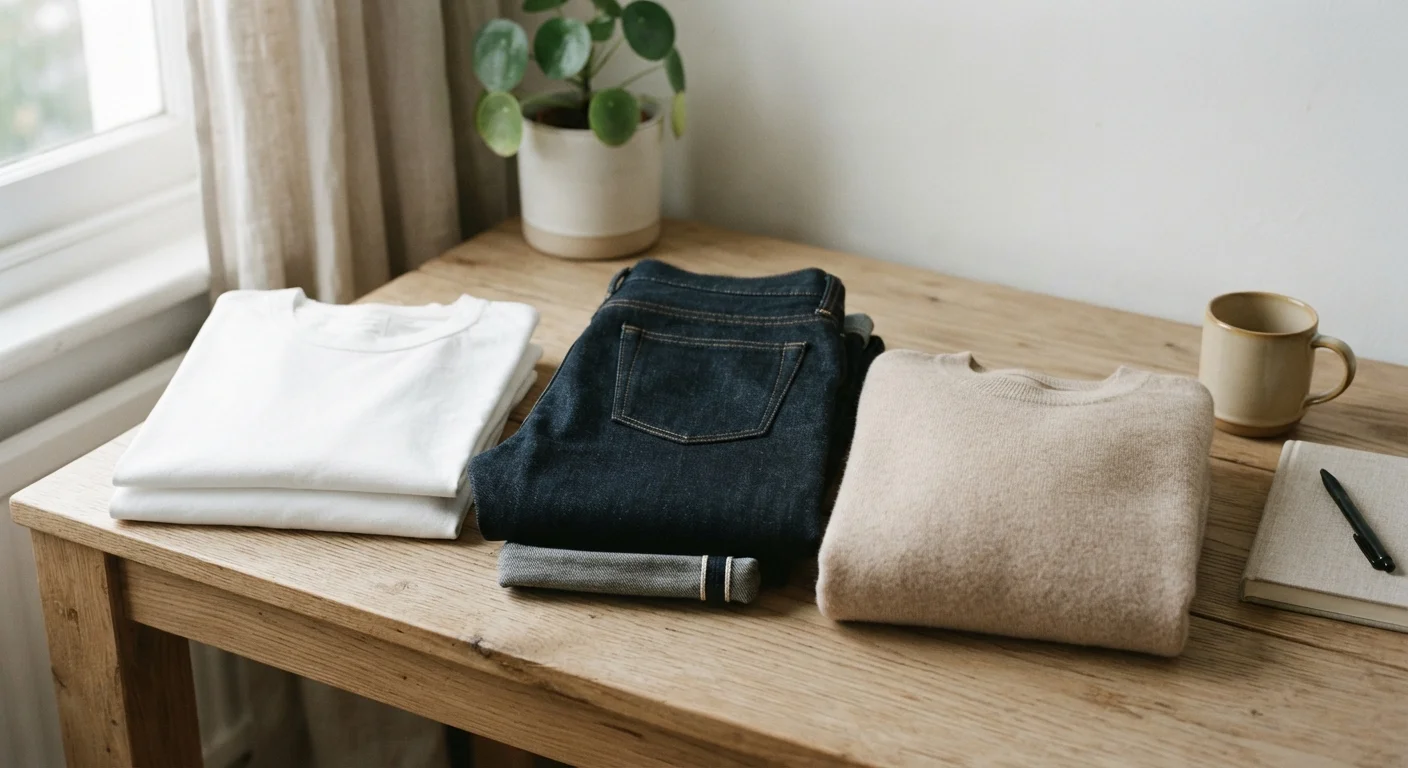
No single garment logs more daily wear than a well-fitted tee in a neutral tone. White, off-white, grey, and black all qualify. What matters is the cut: it should skim without clinging, hit at a flattering point on the hip, and have a neckline that sits naturally without gaping or pulling. Fabric weight is critical — midweight cotton holds its shape through washing and doesn't turn sheer under light.
This piece works under blazers, inside open button-downs, beneath overalls, and entirely on its own. Its versatility isn't theoretical — it's demonstrated every time you reach for it when nothing else is coming together.
A midweight cotton tee in a true neutral is the closest thing to a guaranteed outfit-solver.
Dark Straight-Leg or Slim Denim
Dark-wash denim in a straight or slim cut occupies a rare zone where casual and polished overlap. It reads dressed-up next to a blazer and relaxed next to a hoodie, without feeling out of place in either context. The lack of heavy distressing or aggressive fading keeps it adaptable — it doesn't announce a mood the way statement denim does.
Fit at the waist, thigh, and length matters more than the specific rise or silhouette. Denim that fits well requires fewer mental gymnastics when getting dressed and, crucially, doesn't need to be replaced as quickly as a trend-driven cut.
Dark denim that fits correctly is one of the most cross-context garments in everyday American wardrobes.
A Crewneck or V-Neck Sweater in a Solid Color
A medium-weight sweater in wool, cotton, or a quality blend addresses the gap between seasons and between formalities. It layers over tees, under coats, and on its own with equal ease. Solid colors — navy, camel, charcoal, burgundy — coordinate without effort and don't compete with the rest of an outfit.
Knitwear quality varies significantly. Look for tighter knit structures that resist pilling and hold their shape after washing. A sweater that pills heavily after a few wears stops looking foundational quickly, regardless of how versatile it was on day one.
A solid-color sweater in a quality knit bridges more occasions than almost any other single garment.
A Tailored Trouser or Chino in Neutral
Denim is irreplaceable, but it has limits. A tailored trouser or chino in khaki, navy, olive, or grey opens up occasions where denim reads too casual — workplaces with dress codes, formal social events, or simply days when a sharper silhouette is the goal. The cut should be clean without being stiff, and the fabric should hold a crease without needing constant pressing.
These pants anchor outfits that need to look considered rather than assembled. Paired with the neutral tee or a button-down shirt, they cover an enormous range of situations with minimal effort.
A well-cut trouser signals intention in a way that denim, no matter how dark, rarely can.
A Structured Button-Down Shirt
A button-down shirt — whether in Oxford cotton, chambray, or a poplin weave — is among the most format-flexible garments available. It can be worn fully buttoned as a standalone top, left open over a tee as a light layer, or tucked into trousers for a polished finish. White and light blue are the most versatile; chambray and subtle stripes extend wearability without sacrificing adaptability.
Structure matters here. A shirt that wrinkles severely or loses its collar shape quickly degrades in usefulness. Fabric blends that include a small percentage of synthetic fiber for wrinkle resistance are worth considering if low-maintenance wear is a priority.
Few garments offer as many wearing configurations as a well-constructed button-down shirt.
A Versatile Outer Layer
A single well-chosen outer layer — a trench coat, a wool-blend overcoat, or a clean bomber — completes outfits rather than simply covering them. The outer layer is often the first and last thing seen, which gives it disproportionate visual weight. A coat that works across multiple outfit types saves the wardrobe from needing several specialized pieces.
Neutral tones (camel, navy, charcoal, black) function across all seasons where a coat is needed and don't require coordination effort. Fit at the shoulders and chest is non-negotiable — a coat that doesn't fit in those areas cannot be made to work with styling alone.
Your outer layer shapes the entire impression of an outfit — it deserves as much attention as what's beneath it.
Getting the Most from What You Already Own
Basics only work as hard as you allow them to. A quality crewneck sweater sitting unworn at the back of a shelf delivers nothing. Once you've identified your true core pieces, the next step is understanding how fit shapes the way clothing actually reads on your body. A well-fitted basic consistently looks more polished than a trend piece that doesn't sit correctly.
Care also matters. Basics get worn often, and frequent washing takes a toll on fabric. Following care instructions — especially for natural fibers like cotton, wool, and linen — extends the life of each piece considerably. Washing in cold water, air drying when possible, and storing knits folded rather than hung are small habits with a real cumulative effect.
Evaluate Basics by Cost-Per-Wear
Rather than focusing on the upfront price of a garment, consider how often you'll realistically wear it. A piece worn twice a week for two years delivers far more value than an inexpensive trend item worn three times. This framing — sometimes called cost-per-wear — isn't about spending more; it's about directing attention toward pieces that genuinely earn their place. Basics, by nature, are the strongest candidates for favorable cost-per-wear outcomes.
Finally, resist the instinct to keep adding. A closet full of basics that only partially work creates the same overwhelm as one full of trends. Edit periodically. The goal is a smaller number of pieces that see regular rotation, not a comprehensive archive of garments that might someday prove useful.