

Key Takeaways
Fast Fashion vs. Slow Fashion
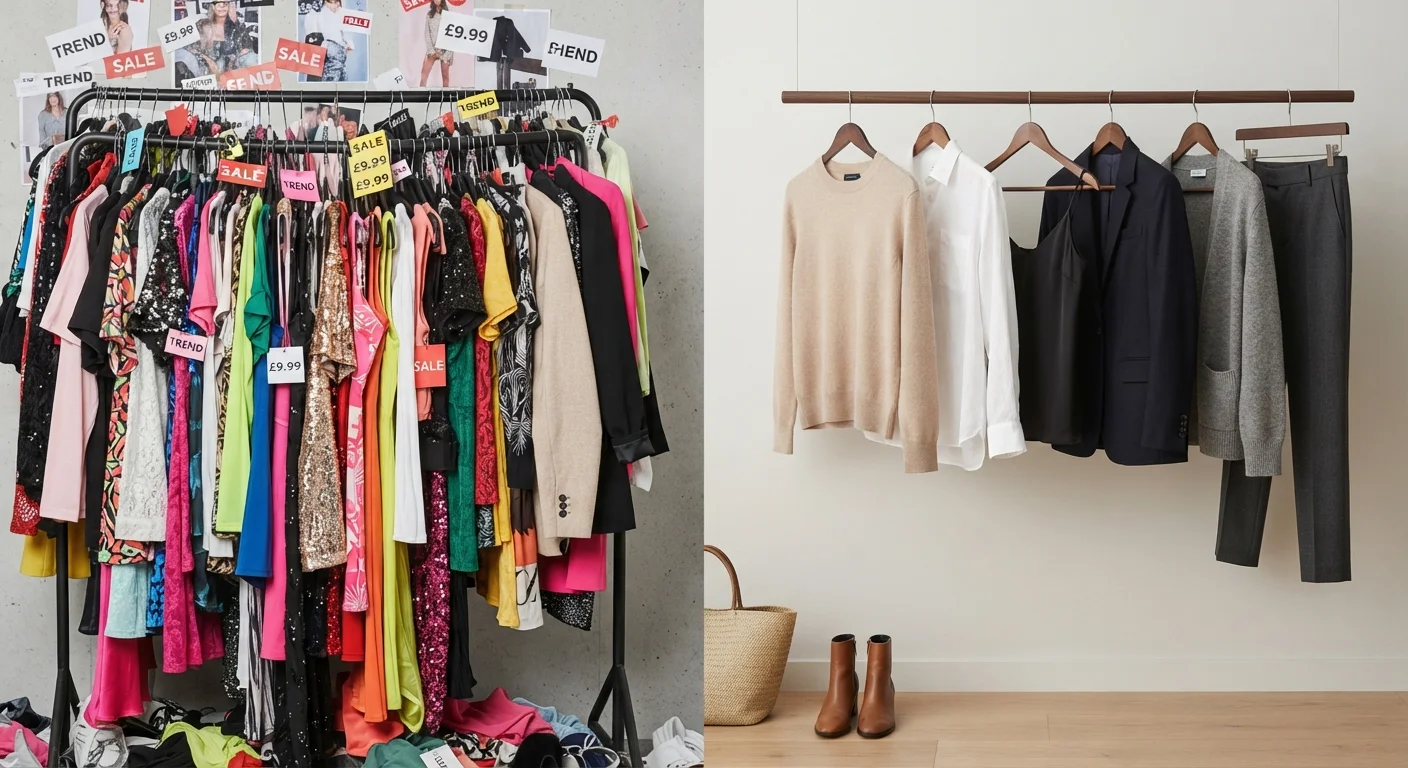
Fast fashion describes a production model that rapidly turns out large volumes of inexpensive, trend-driven clothing designed for short-term use. Slow fashion is the opposing approach — prioritizing fewer, higher-quality garments made with greater attention to materials, labor, and longevity. The terms describe not just price points but fundamentally different relationships between clothing producers and consumers.
The slow fashion concept emerged as a counter-movement to the acceleration of fashion cycles, drawing on broader frameworks of sustainable consumption and supply chain transparency.
What Each Model Actually Means
The phrase fast fashion refers to a retail and manufacturing system built around speed: translating runway looks and social media trends into inexpensive clothing within weeks, delivered to stores in enormous volume, and replaced with new styles before the previous ones wear out. The business model depends on low production costs and high turnover. Garments are priced to be easily purchased and easily discarded.
Slow fashion is a broader philosophy more than a strict label. It describes clothing designed and produced with durability in mind — using better construction techniques, longer-lasting materials, and often more transparent supply chains. Slow fashion pieces are intended to be worn repeatedly across seasons, repaired when damaged, and eventually passed on or responsibly discarded.
Neither term maps perfectly onto price alone. A garment can be expensive and poorly made. Conversely, some modest-priced items are built to last. The real distinction is in the underlying priorities — what a manufacturer optimizes for when decisions about fabric, stitching, and construction are made.
The Real Cost Calculation
A $12 shirt that falls apart after eight washes costs more per wearing than a $60 shirt worn regularly for three years. This is the cost-per-wear concept — and it reframes how shoppers might evaluate a purchase. It doesn't mean expensive clothing is always worth the premium. It means the math of clothing value isn't as simple as the price tag suggests.
~60%
Garments discarded within a year of purchase
Industry estimates cited by the Ellen MacArthur Foundation suggest the majority of clothing produced globally is discarded within one year.
2x
Increase in global clothing production since 2000
The Ellen MacArthur Foundation's A New Textiles Economy report documented that global clothing production roughly doubled in the first fifteen years of the 2000s.
$0.17–$2+
Cost-per-wear range: fast vs. durable garments
Consumer analysis consistently shows that durable garments worn frequently cost a fraction of a cent to a few cents per wear, while discarded fast fashion items often cost far more per actual use.
For shoppers working with limited clothing budgets — which is most people — this calculation matters. A few well-chosen, durable basics can outlast a much larger quantity of trend-driven pieces. At the same time, budget is a genuine constraint, and slow fashion's higher upfront prices aren't accessible to every household. Understanding the trade-offs is more useful than applying a blanket rule.
For guidance on how clothing decisions fit into broader personal finance goals, the Saving & Debt hub covers practical frameworks for managing everyday spending.
What to Look for When Shopping
Evaluating clothing quality doesn't require industry expertise. A few observable signals help:
- Fabric weight and hand feel: Heavier, denser fabrics in natural or quality blended fibers typically wear longer than very thin, slippery synthetics. See what clothing fabric labels actually mean for a deeper breakdown.
- Seam construction: Well-finished seams — particularly flat-felled or serged seams — resist fraying and stress better than simple single-stitched seams.
- Stitching density: More stitches per inch generally means a stronger seam. Loose, sparse stitching is a warning sign.
- Pattern matching: On plaid or striped fabrics, patterns aligned at seams signal more careful cutting — a detail cut-cost producers typically skip.
Fit is also part of the equation. A well-fitting garment you actually wear consistently delivers more value than a bargain that sits ignored. The relationship between fit and style is worth understanding before prioritizing either price or trend.
Making the Distinction Work for Your Wardrobe
Adopting a slow fashion mindset doesn't require discarding everything you own or committing to only high-price purchases. Practically, it means shifting a few habits:
- Buy with specific use in mind rather than abstract potential. If you can't name at least three occasions where you'd wear something, that's a signal worth heeding.
- Treat secondhand options as a middle path. Thrift and resale clothing can extend garment life cycles regardless of where those pieces originated. The trade-offs between thrift shopping and buying new are worth thinking through before defaulting to either.
- Recognize that clothing needs genuinely change over time. What made sense in one life stage may not suit another, which affects what "worth buying" actually means. Clothing priorities shift meaningfully across life stages — building a wardrobe with that awareness reduces wasted purchases.
A Simple Rule Before You Buy
Before purchasing any garment, ask yourself how many times you'll realistically wear it in the next twelve months. If the honest answer is fewer than five, it may not be worth the spend — regardless of price. This one question filters out a significant share of low-value purchases without requiring a complete wardrobe philosophy shift.
For shoppers navigating the broader question of when a higher price tag is actually justified — in clothing or elsewhere — the Smart Shopping hub offers practical frameworks for everyday product decisions.
This article is for general informational purposes only and does not constitute financial or purchasing advice tailored to your individual circumstances.