

Key Takeaways
Summary
22 items · 30–60 minutes to prepare; introductions unfold over days to weeks
Why Preparation Makes or Breaks the Introduction
Bringing a second pet home is one of the most exciting — and most frequently mishandled — moments in a pet owner's journey. The instinct to let animals "work it out" on their own is understandable, but behavioral science consistently shows that unmanaged first encounters create fear memories that are difficult to undo. A structured, patient approach dramatically improves the odds that both animals will eventually coexist, or even bond.
This checklist is organized around the phases that animal behavior professionals recommend: preparing the environment, introducing scent before sight, managing visual contact, and finally allowing supervised physical access. Work through each group in order. If either animal shows sustained stress at any stage, pause and hold at that step longer before moving on.
This checklist applies broadly to dogs and cats, the most common multi-pet household combination, but the core principles transfer to other species as well. For a deeper look at what the first week home looks like from your new pet's perspective, see what to expect during your new pet's first week.
Before the New Pet Arrives
Scent Introduction (Days 1–3)
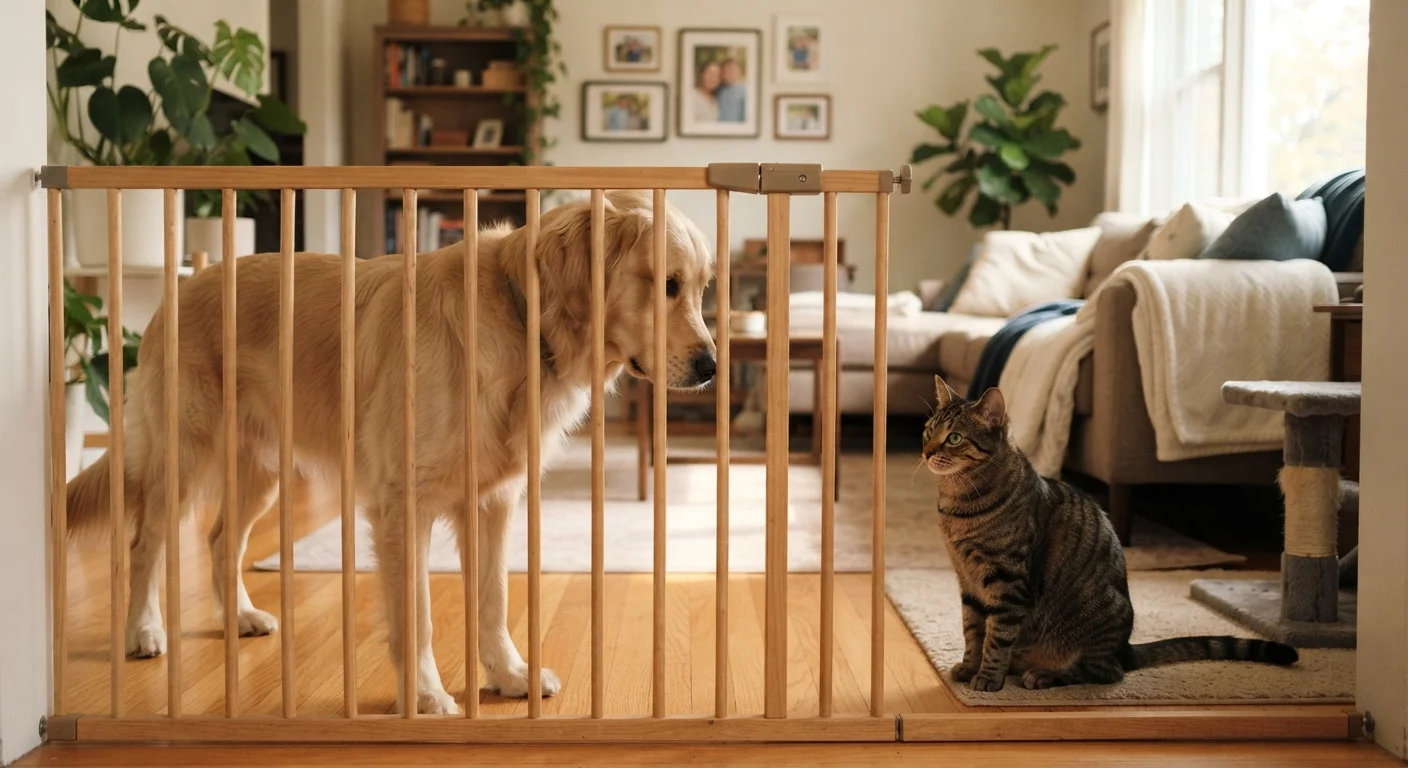
Visual Introduction Through a Barrier
Supervised Face-to-Face Contact
Tools and Resources You'll Need
Before you begin, gather the physical items that make controlled introductions possible. Improvising in the moment — when one animal is stressed and the other is overexcited — leads to mistakes. Having everything in place beforehand keeps you calm and in control.
Baby gate or exercise pen
Creates a physical barrier for visual introductions while preventing direct physical contact.
Separate food and water bowls
Ensures the new pet has dedicated feeding stations so mealtimes never trigger resource competition.
Extra litter box (cat households)
Provides the new cat a private elimination space; the general rule is one box per cat plus one extra.
High-value treats
Used during scent swaps and visual sessions to create positive associations with the other animal's presence.
Leash and flat collar or harness
Keeps a dog safely managed during barrier and early face-to-face sessions.
Calming pheromone diffuser
Species-specific synthetic pheromone products may help reduce environmental stress for cats or dogs during the adjustment period.
Never Punish Fear or Stress Responses
Hissing, growling, or retreat are normal communication signals, not misbehavior. Punishing these responses suppresses the visible warning without resolving the underlying emotion — and can escalate to biting or fighting without warning. If either animal is consistently distressed, the correct step is to slow the introduction process, not to correct the animal.
Introductions are also a good moment to confirm that all animals in the household are current on vaccinations and parasite prevention. A new pet entering the home can bring pathogens that affect existing animals, and vice versa. Your veterinarian can advise on any health checks needed before the two animals share space. This is part of the broader picture of responsible pet ownership that sets every animal up for long-term wellbeing.
This article provides general behavior and preparation guidance only. It is not a substitute for advice from a qualified veterinary behaviorist or certified animal behavior consultant, particularly if either animal has a history of aggression or fear-based behavior.