

Key Takeaways
Body Condition Score (BCS)
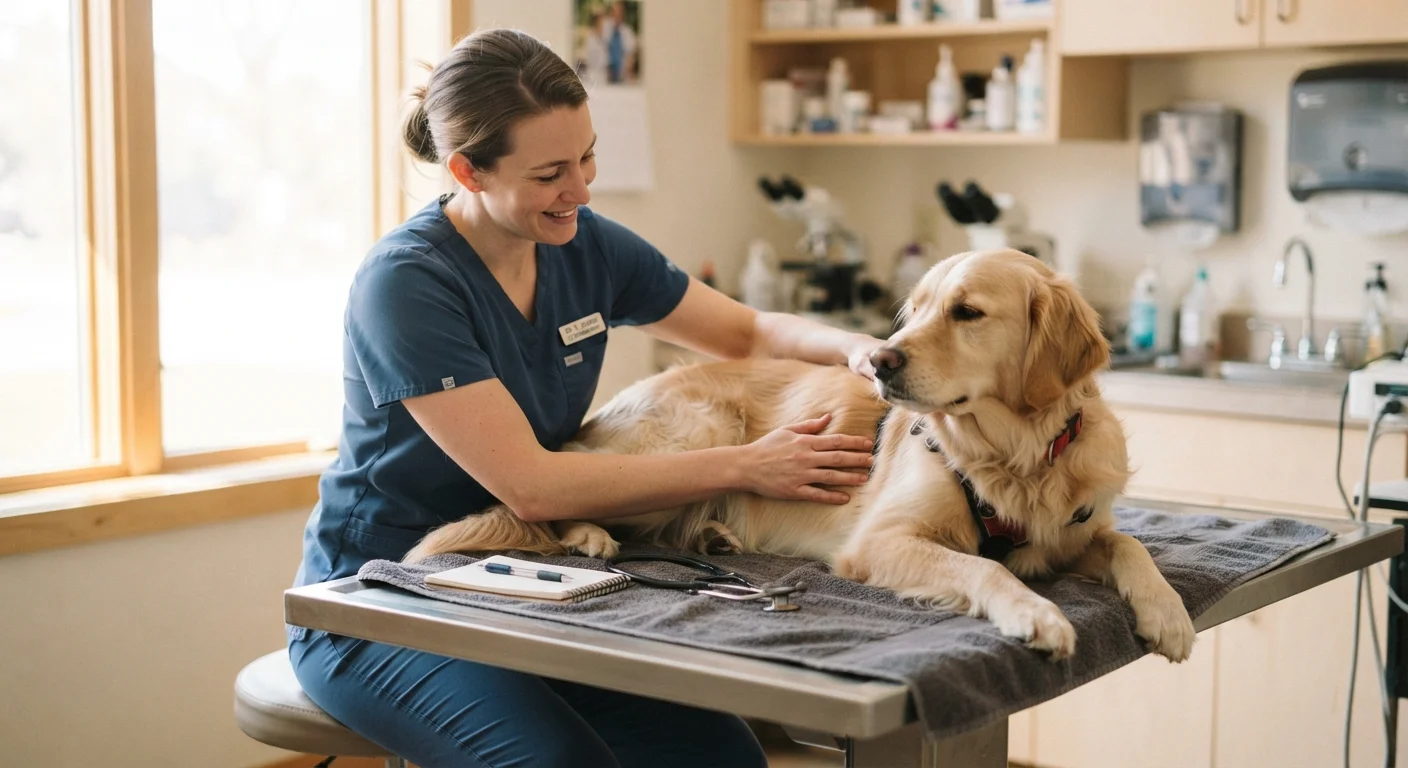
A body condition score is a standardized, hands-on assessment vets use to evaluate whether a dog or cat is underweight, at a healthy weight, or overweight. Most veterinary practices use a nine-point scale, where 1 is severely emaciated and 9 is severely obese — with 4 to 5 considered ideal for most pets. The score is based on what you can see and feel, not just what the scale reads.
The nine-point BCS system was developed and validated by researchers at Purina and has since been widely adopted across veterinary medicine as a reproducible, species-specific tool for assessing adiposity independent of breed-based weight norms.
Why a Number Tells You More Than a Weight Chart
Most pet owners rely on breed weight charts to judge whether their animal is at a healthy size. While those charts offer a rough reference, they miss a critical variable: body composition. Two dogs of identical weight can have very different levels of body fat and muscle. That's precisely why veterinarians use the body condition score.
Rather than comparing your pet to a breed average, BCS evaluates fat coverage over specific anatomical landmarks — mainly the ribs, spine, hip bones, and waistline. This makes it applicable across mixed breeds, individual body frames, and varying muscle mass. For a deeper look at how weight connects to long-term health, see why the scale matters more than you think.
How the Nine-Point Scale Works
The nine-point BCS scale divides body condition into three broad zones:
- Scores 1–3 (Underweight): Ribs, spine, and hip bones are highly visible and easily felt with no resistance. Muscle wasting may be present. A score of 1 indicates severe emaciation.
- Scores 4–5 (Ideal): Ribs are palpable with slight fat covering — you can feel each rib without pressing hard, but they're not protruding visually. A clear waist is visible from above, and the abdomen tucks upward when viewed from the side.
- Scores 6–9 (Overweight to Obese): Ribs become increasingly difficult to feel as fat coverage thickens. The waist disappears, the abdomen sags, and fat deposits may form around the neck, limbs, and base of the tail at higher scores.
A score of 4 or 5 is the target for most healthy adult dogs and cats. Each point on the scale represents roughly 10–15% above or below ideal body weight, giving the score real clinical meaning.
~59%
U.S. dogs classified as overweight or obese
According to Association for Pet Obesity Prevention survey data, a majority of American dogs are assessed as above ideal body condition by veterinary professionals.
10–15%
Body weight change per BCS point
Each point on the nine-point BCS scale corresponds to approximately 10–15% above or below ideal body weight, giving the scoring system direct clinical relevance.
~61%
U.S. cats classified as overweight or obese
The Association for Pet Obesity Prevention estimates that more than half of domestic cats in the United States exceed their ideal body condition score.
Performing a Basic Assessment at Home
You don't need medical training to do a useful BCS check. Follow these steps between vet visits:
- Rib check: Place both thumbs on your pet's spine and spread your fingers across the ribcage. Apply gentle pressure. You should feel individual ribs without digging in. If you can't feel them at all, that suggests excess fat coverage. If they're sharp and immediately obvious, your pet may be underweight.
- Waist check (top view): Look down at your pet from above. Behind the ribcage, there should be a visible narrowing — a waist. A straight or barrel-shaped outline suggests excess weight.
- Tuck check (side view): Observe from the side. The abdomen should slope upward from the ribcage toward the hind legs. A flat or pendulous belly is a sign of excess fat.
For heavily coated breeds, always rely more on touch than visual inspection. Thick fur can easily disguise both ribs and fat deposits. If you're uncertain about what you're feeling, bring your observations to your next vet appointment — knowing the right vocabulary can help you communicate what you noticed more clearly.
What a Concerning Score Should Prompt
If your at-home assessment suggests your pet is outside the ideal 4–5 range, the appropriate next step is a conversation with your veterinarian — not an immediate change to feeding amounts on your own. Both underweight and overweight conditions can have underlying medical causes: thyroid disorders, parasites, organ disease, or metabolic conditions can all affect body composition independent of how much a pet eats.
Your vet can assign an official BCS, rule out medical causes, and recommend appropriate adjustments to diet or activity. Understanding what's in your pet's food becomes especially relevant here, since calorie density and nutrient balance directly influence weight management outcomes.
For senior animals, tracking BCS takes on added importance. Weight loss in older pets can be a subtle early indicator of illness, and muscle loss (sarcopenia) can make a senior pet appear lean even when fat coverage is adequate. Learn more about how health needs change over time in our guide to senior pet care.
This article provides general educational information about body condition scoring and is not a substitute for personalized veterinary advice. Always consult a licensed veterinarian for guidance specific to your pet's health and needs.