

Key Takeaways
Option A
Emergency Fund
Your financial safety net for life's unexpected moments.
Best for: Covering sudden, unavoidable expenses like job loss, medical bills, or urgent car repairs.
Option B
Savings Account
A flexible account for planned goals and everyday saving.
Best for: Building toward specific financial goals such as a vacation, home down payment, or new appliance.
If you have no financial cushion for unexpected expenses
Emergency Fund
Building an emergency fund first protects you from debt when a crisis hits. Without it, even a modest car repair can derail your finances.
If you have a solid emergency fund and are working toward a specific goal
Savings Account
Once your safety net is in place, a dedicated savings account helps you build toward planned goals without touching your emergency cushion.
If you want to grow your money while keeping it accessible
Savings Account
A savings account - especially a high-yield option - is designed for flexibility and growth toward goals you choose.
If you've recently experienced job loss or a major unexpected expense
Emergency Fund
This is exactly what an emergency fund exists for. Using it as intended prevents you from taking on high-interest debt in a crisis.
What Each One Actually Is
People often use "emergency fund" and "savings account" interchangeably, but they describe two different things - one is a purpose, and the other is a place.
A savings account is a type of bank account that holds money separately from your checking account, typically earning some interest. It can be used for virtually any goal: a holiday trip, a new laptop, a wedding, or simply a growing balance. There are no rules about what the money is for.
An emergency fund, by contrast, is defined entirely by its intent. It's money you set aside and commit to using only when a genuine, unforeseen financial emergency arises - think a sudden layoff, an unexpected medical bill, or an urgent home repair. It could technically sit in a savings account, a money market account, or even a separate checking account. The account type matters less than the discipline around how and when you use it.
This distinction matters because treating your emergency fund like a general savings pool - dipping into it for a sale or a spontaneous trip - defeats its entire purpose. See our Saving & Debt guidance for a broader look at how these tools fit into your overall financial picture.
| Criterion | Emergency Fund | Savings Account |
|---|---|---|
| Primary purpose | Cover unexpected financial crises | Save toward planned goals |
| When you access it | Only during genuine emergencies | When your savings goal is reached |
| Recommended size | 3-6 months of essential expenses | Whatever your goal requires |
| Account type | Any accessible, liquid account | Dedicated savings or money market account |
| Flexibility of use | Intentionally restricted | Flexible, goal-driven |
| Priority in financial plan | Build first, before other goals | Build alongside or after emergency fund |
How They Work Together (Not Against Each Other)
A common misconception is that you have to choose between the two. In reality, a healthy financial plan typically includes both - running simultaneously, in clearly defined buckets.
Think of it this way: your emergency fund is a fire extinguisher. You hope you never need it, but it must always be fully charged and never borrowed from. Your savings account is more like a piggy bank with a purpose - it grows with intention and can be tapped when the goal you saved for arrives.
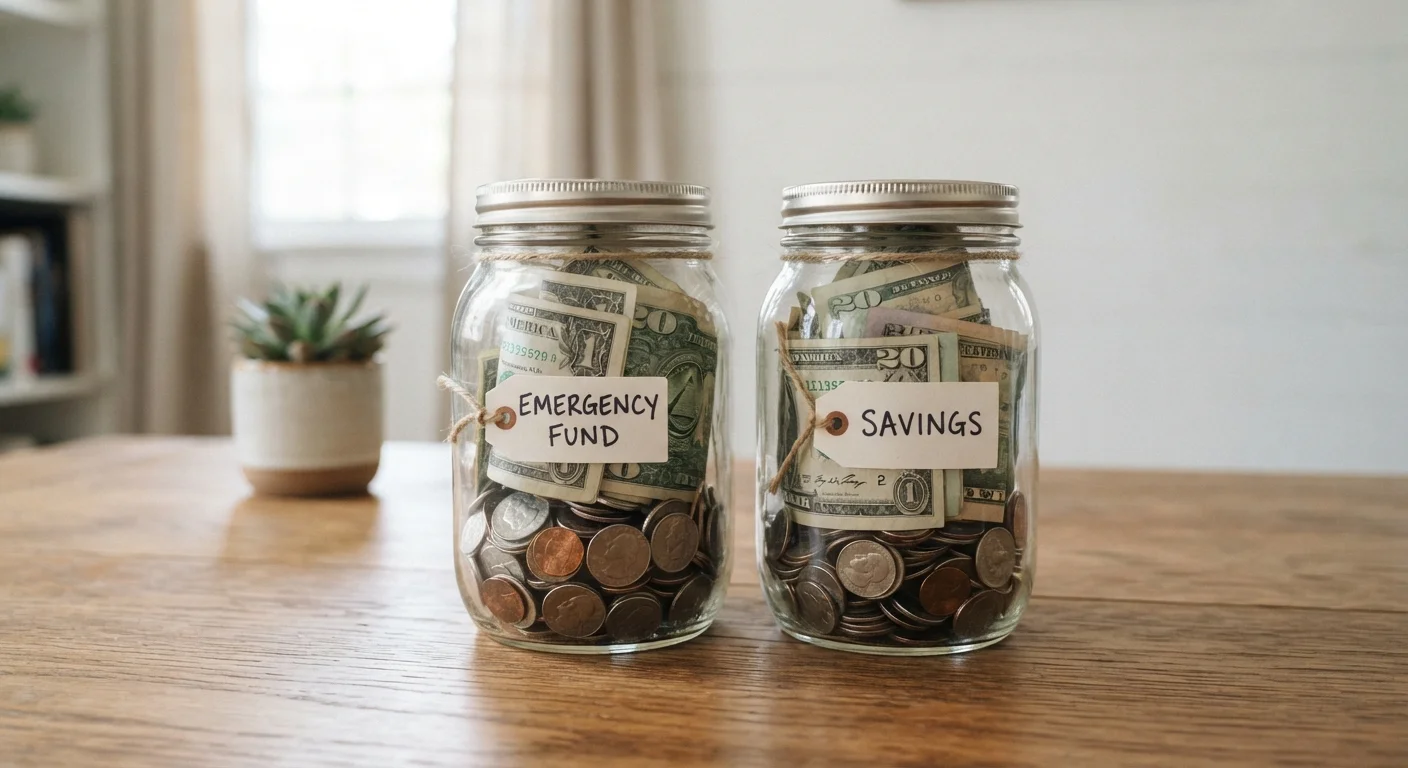
The practical challenge for many households is knowing where one ends and the other begins. A straightforward approach is to open two separate accounts - even at the same bank - and label them clearly. Many banks allow you to nickname accounts, making it easy to distinguish "Emergency Fund" from "Vacation 2025" at a glance.
How much should sit in your emergency fund? A widely cited guideline is three to six months of essential living expenses, though the right amount depends on your income stability, household size, and existing obligations. If your income is variable or your job feels less secure, leaning toward the higher end of that range is generally prudent. For those just getting started, even a small buffer - a few hundred dollars - is meaningfully better than nothing. Building an emergency fund on a tight budget offers a step-by-step approach for households where every dollar is already spoken for.
For a deeper dive into how savings and debt management intersect, the complete guide to building financial stability covers the full landscape from interest basics to payoff strategies.
And if you're deciding where to keep your savings, it's worth understanding account options. The differences between high-yield and traditional savings accounts can affect how much your money grows over time.
This article is for general informational and educational purposes only and does not constitute personalized financial advice. Consult a licensed financial professional for guidance tailored to your specific situation.