

Key Takeaways
Disability Insurance
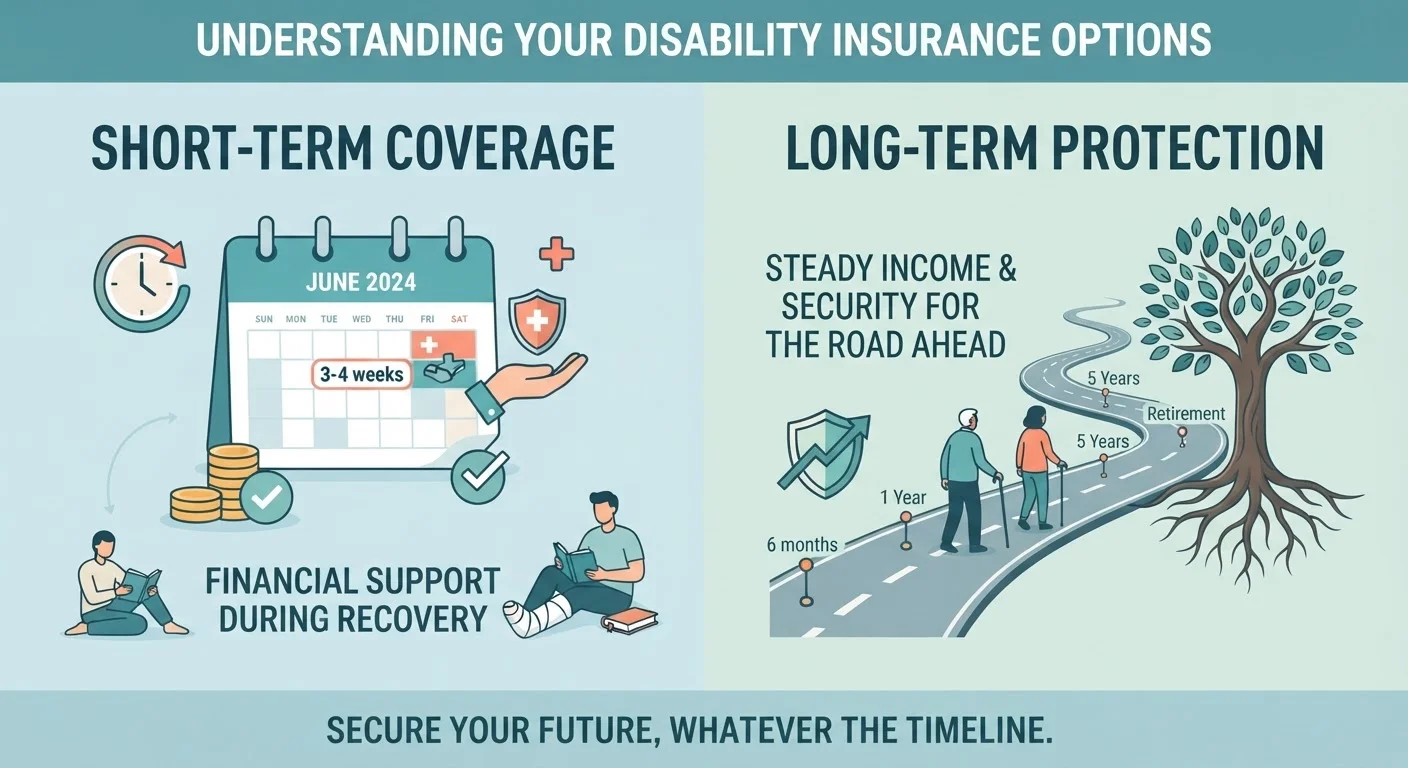
Disability insurance replaces a portion of your income if an illness or injury prevents you from working. Rather than covering medical bills (that's health insurance's job), it covers the paycheck you'd otherwise lose. It comes in two main varieties - short-term and long-term - each designed for a different phase of recovery.
Policies typically replace 50-70% of pre-disability earnings; the exact benefit amount, waiting period, and definition of 'disability' vary significantly by policy and provider.
The Income Gap Nobody Talks About
Most people think about insurance in terms of medical bills or property damage. Far fewer think about what happens to their paycheck when a health problem keeps them off the job. That's the gap disability insurance is built to address.
According to the Social Security Administration, roughly one in four workers entering the workforce today will experience a disability lasting 90 days or longer before they reach retirement age. The cause is more often illness - cancer, cardiovascular disease, musculoskeletal disorders - than a dramatic workplace accident. Yet disability coverage remains one of the most overlooked pieces of a personal financial plan.
Understanding what's available, and how the two main types differ, is the first step toward knowing whether you're protected. For broader context on how coverage types fit together, see The Insurance Policy Landscape.
1 in 4
Workers who will face a disability before retirement
According to the Social Security Administration, about one in four today's 20-year-olds will experience a disability lasting 90+ days before reaching retirement age.
~60%
Typical income replacement rate
Most disability policies are designed to replace approximately 60% of pre-disability gross income, not the full salary.
90-180 days
Common long-term disability elimination period
Long-term disability policies typically require you to be disabled for 90 to 180 days before benefits begin, making short-term coverage or savings essential during that window.
Short-Term Disability Insurance: The First Line of Defense
Short-term disability (STD) insurance is designed to replace income during a relatively brief inability to work. Benefit periods typically run from a few weeks up to six months, though some policies extend to a year. Benefits usually begin after a short elimination period - often seven to fourteen days after the disabling event.
Many employers offer STD coverage as part of a benefits package, and some states require employers to provide it. When it's employer-sponsored, premiums are often deducted from payroll and the coverage is relatively affordable. The trade-off is that group plans may offer limited customization and are tied to your employment - if you leave your job, the coverage typically ends.
Short-term policies tend to replace a higher percentage of income for a shorter window. If you sprain your back and need six weeks off, or recover from surgery over a few months, this is the coverage that keeps bills paid during that stretch.
Long-Term Disability Insurance: When Recovery Takes Years
Long-term disability (LTD) insurance takes over when a condition extends well beyond what short-term coverage addresses. Benefit periods on LTD policies range widely - some pay for two to five years; others continue until age 65 or the standard retirement age, depending on the policy terms.
The elimination period for LTD is longer, typically 90 to 180 days. This means there's often a deliberate design sequence: short-term benefits carry you through the elimination period, and long-term benefits pick up afterward. If you only have one type of coverage, that handoff gap becomes a financial vulnerability - the kind of surprise described in Gaps People Discover in Their Coverage.
LTD policies also differ in how they define disability. An own-occupation definition means you're considered disabled if you can't perform your specific job - important for people in specialized professions. An any-occupation definition is stricter: you're only considered disabled if you can't perform any job you're reasonably suited for. Reading this language carefully matters, because it determines when and whether benefits will actually pay out.
Check Your Policy's Disability Definition
Before you assume your disability coverage will pay, find the exact definition of 'disability' in your policy documents. Own-occupation coverage is more generous; any-occupation coverage sets a much higher bar for benefits. This single clause can determine whether your claim is approved or denied.
What Disability Insurance Doesn't Cover - and What to Do About It
Disability insurance replaces income; it doesn't cover medical costs, rehabilitation, or property expenses. For those, health insurance and other policies carry the weight. It's also worth noting that most policies won't cover pre-existing conditions immediately, and some exclude certain categories of disability altogether.
Because policy terms vary so significantly, comparing the benefit amount, elimination period, definition of disability, and benefit duration is essential before relying on any plan. Coverage limits work the same way across most insurance products - the number on the policy is not always the full protection story.
Disability coverage also fits into a wider financial safety net. Building an emergency fund that can span your elimination period, for instance, is a foundational complement to any disability policy. For guidance on that side of the equation, Saving & Debt resources can be a useful starting point.
This article is for general informational purposes only and does not constitute financial, legal, or insurance advice. Coverage terms, benefit amounts, and eligibility vary by insurer, policy, and state. Consult a licensed insurance professional to evaluate your specific situation.