

Key Takeaways
What a Declarations Page Actually Is
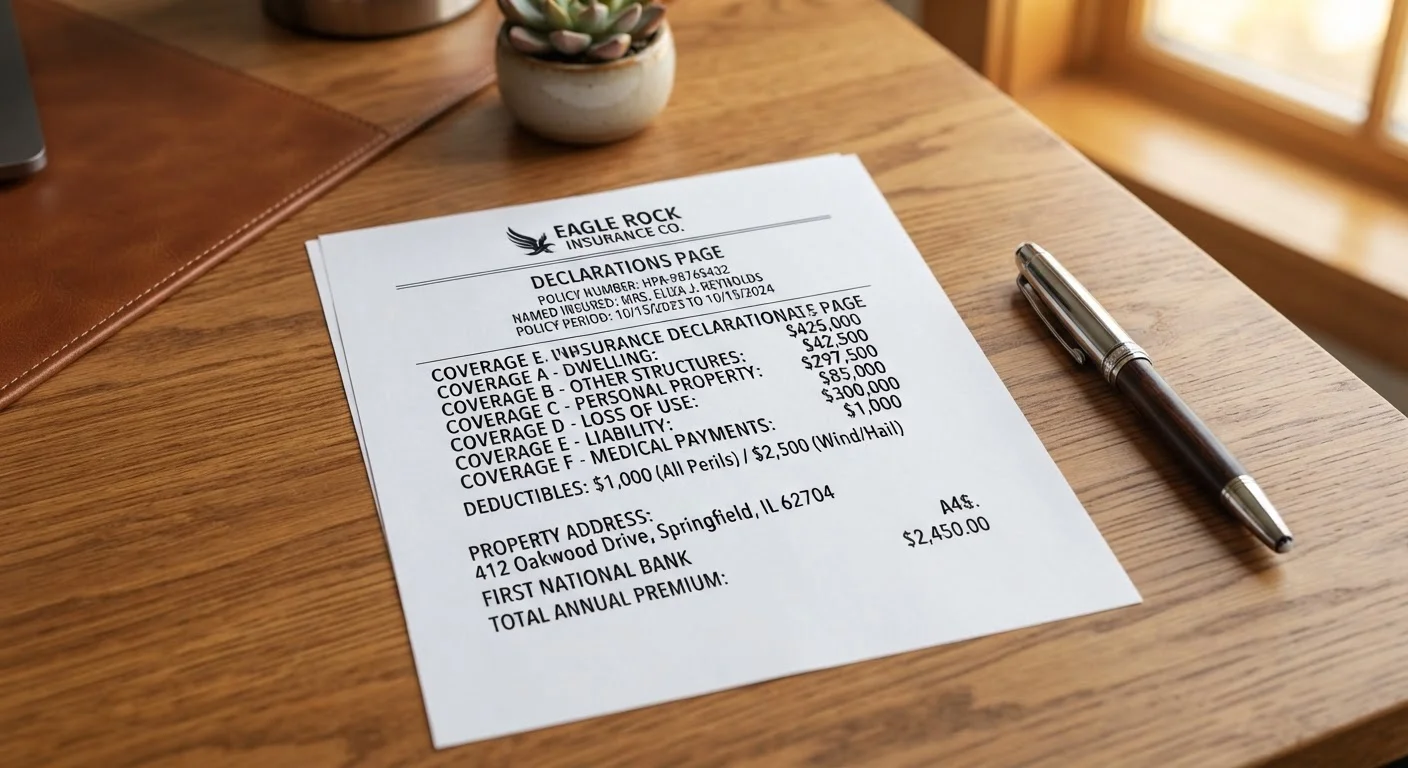
Every insurance policy - whether it covers your health, car, home, or life - comes with a declarations page (often called the "dec page" in industry shorthand). Think of it as the cover sheet of your contract. It distills the most important facts about your coverage onto one or two pages so you don't have to read an entire policy document just to answer a basic question like "what's my deductible?"
The dec page is not a separate contract. It works alongside the full policy, which contains the detailed terms, conditions, and exclusions that govern exactly how your coverage works. If you want a deeper look at how those pieces fit together, our overview of what you're actually buying is a good place to start.
Insurers are required to provide a declarations page at the start of each policy period and whenever you make a significant change to your coverage. Treat every new copy as a document worth reviewing - not filing away unread.
The Core Sections and What They Mean
Despite some variation by insurer and policy type, most declarations pages share the same building blocks. Here's what you'll typically find and what each field is actually telling you.
Named Insured and Additional Insureds
This is the person (or entity) the policy is written for. On a home policy, both spouses are often listed. On an auto policy, every licensed driver in the household may appear. Check spelling and confirm all intended parties are included - an omission here can complicate a claim.
Policy Number and Contact Information
Your policy number is your reference for any call to your insurer or agent. Store it somewhere accessible, separate from the policy document itself.
Policy Period
This is the coverage window - a start date and an end date, usually listed with an effective time (commonly 12:01 a.m.). Coverage outside this window generally doesn't exist, so lapses matter.
Coverage Types and Limits
This is the core of the dec page. Each type of coverage - liability, collision, dwelling, bodily injury, and so on - is listed alongside its limit, which is the maximum dollar amount your insurer will pay for a covered loss. Limits are often shown in split formats (e.g., 100/300/100 on an auto policy, meaning $100,000 per person / $300,000 per occurrence / $100,000 property damage). For a plain-language reference of these terms, see our insurance policy glossary.
Deductible
The deductible is the amount you pay out of pocket before your insurer pays. A higher deductible typically lowers your premium; a lower deductible means less exposure when you file. Make sure the amount shown matches what you agreed to when you bought or renewed the policy.
Premium
Your total cost for the policy period, sometimes broken out by coverage category. If you pay in installments, the dec page may show both the annual total and the installment amount.
Endorsements and Riders
If you've added extra coverage - a scheduled jewelry endorsement on a home policy, for example, or a waiver of premium rider on life insurance - these modifications are usually listed here or attached as separate pages. Review them to confirm any add-ons you requested are actually reflected.
Scan Your Dec Page Every Renewal
Your insurer sends a new declarations page at every renewal, and the numbers can change - limits, deductibles, and premiums may all be adjusted. Taking five minutes to compare the new dec page against the previous one helps you catch changes you didn't request and confirm that changes you did request are reflected. This habit takes very little time and can prevent genuine surprises.
Common Mistakes to Catch Before You File a Claim
A declarations page with an error is a problem best caught now, not at claim time. Here are the issues that catch policyholders off guard most often.
- Wrong address or vehicle information. On home and auto policies, an incorrect address or VIN can give an insurer grounds to dispute a claim.
- Missing lienholder. If you have a mortgage or auto loan, your lender typically must be listed as an additional interest or loss payee. A missing entry can delay claim payments.
- Outdated coverage limits. If your home has been renovated or you've purchased a new vehicle, older limits may no longer reflect your actual exposure. Your dec page won't flag this for you - you have to compare the numbers yourself.
- Incorrect policy period. A start date later than expected, or an end date earlier than you assumed, can mean you're uninsured during a gap you didn't know existed.
If you spot anything that doesn't match what you agreed to, contact your agent or insurer promptly to request a corrected endorsement. For context on how coverage terms and exclusions affect what the policy actually pays, see our guide to reading a full insurance policy.
Once you're comfortable with your dec page, your next logical step is understanding what happens when you actually need to use your coverage. Our guide to filing an insurance claim walks through the process from first notice to final settlement.
This article is for general informational and educational purposes only and does not constitute insurance, financial, or legal advice. Coverage terms, limits, and requirements vary by insurer and by state. Always read your actual policy documents and consult a licensed insurance agent or adviser for guidance specific to your situation.