

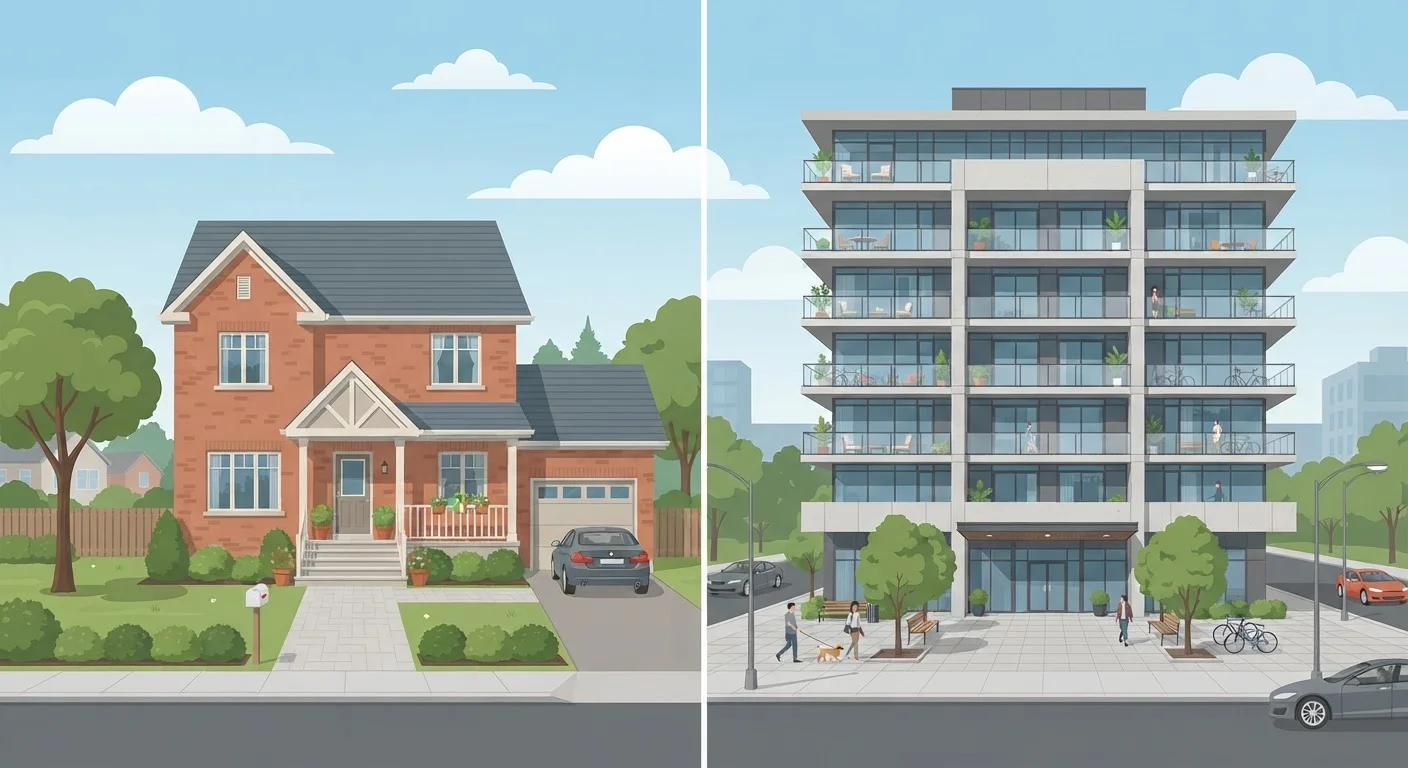
Key Takeaways
Option A
Homeowners Insurance
The all-in-one coverage for people who own their home.
Best for: Anyone who owns a house, condo, or other dwelling and needs protection for both the structure and their personal belongings.
Option B
Renters Insurance
The targeted, affordable coverage for people who lease their home.
Best for: Tenants who want to protect their personal property and liability without covering a building they don't own.
If you own your home outright or have a mortgage
Homeowners Insurance
Lenders typically require homeowners insurance as a condition of the mortgage. Even without a mortgage, owning a home means owning the structure, so you need coverage for it.
If you rent an apartment, house, or condo
Renters Insurance
Your landlord's policy protects the building but not your furniture, electronics, or clothing. Renters insurance fills that gap at a relatively low cost.
If you own a condo unit
Homeowners Insurance (HO-6 condo policy)
Condo owners need a specialized form of homeowners insurance that covers the interior of the unit and personal belongings, since the building's exterior is typically covered by the condo association.
The Core Difference: What Each Policy Is Actually Protecting
Homeowners insurance and renters insurance both fall under the umbrella of residential property coverage, but they protect fundamentally different assets. Understanding that difference is the fastest way to figure out which one you need.
Homeowners insurance bundles two major categories of coverage into a single policy. First, it covers the dwelling - the physical structure of the home, including walls, roof, foundation, and built-in systems like plumbing and electrical. Second, it covers your personal property inside that dwelling. If a fire damages the roof and destroys your furniture, one policy addresses both losses.
Renters insurance skips the dwelling coverage entirely - and for good reason. When you rent, you don't own the building. Your landlord carries a separate policy that protects the structure. What your landlord's policy does not protect is anything that belongs to you: your laptop, your clothes, your sofa. Renters insurance exists specifically to fill that gap.
For a fuller picture of what goes into any residential insurance policy, see The Insurance Policy Landscape: What You're Actually Buying.
| Criterion | Homeowners Insurance | Renters Insurance |
|---|---|---|
| Who it's for | Home owners | Tenants / renters |
| Covers the building structure | Yes | No |
| Covers personal belongings | Yes | Yes |
| Personal liability coverage | Yes | Yes |
| Additional living expenses | Yes | Yes |
| Flood coverage included | No (separate policy needed) | No (separate policy needed) |
| Typically required by | Mortgage lender | Some landlords |
| Relative premium cost | Higher | Lower |
Shared Ground: What Both Policies Include
Despite their differences, homeowners and renters policies share several key coverage components.
Personal Property Coverage
Both policies reimburse you when your belongings - furniture, electronics, clothing, and similar items - are damaged or stolen. Coverage is typically subject to a deductible (the amount you pay out of pocket before the insurer pays) and policy limits.
Personal Liability Coverage
If a guest slips and falls in your home and sues you, personal liability coverage helps pay for legal costs and any judgment against you. This protection travels with you, so it can also apply in situations outside your home, depending on the policy.
Additional Living Expenses (ALE)
If a covered event - like a fire - makes your home temporarily uninhabitable, both policy types can help pay for a hotel, meals, or a short-term rental while repairs are underway. ALE coverage is sometimes called loss of use.
One thing neither policy covers by default is flood damage. For that, you'd need a separate flood insurance policy. This is one of the coverage gaps that catches policyholders off guard - you can read more in our article on gaps people discover in their coverage only after a claim.
Cost and Requirements: What to Expect
Renters insurance premiums are typically much lower than homeowners premiums. Because renters policies don't include dwelling coverage, insurers are taking on less risk, and that savings gets passed to the policyholder. Actual premiums vary based on location, coverage limits, and personal factors - consult a licensed insurance agent for quotes relevant to your situation.
Homeowners insurance, by contrast, tends to cost significantly more, partly because covering the structure of a home represents a much larger potential payout for the insurer. Factors like the home's age, construction type, local weather risks, and your claims history all influence your premium. To understand how insurers arrive at these numbers, see how insurers assess risk and what that means for your policy options.
For homeowners with a mortgage, coverage is typically required by the lender - it's not optional. Renters insurance is generally optional unless a landlord makes it a lease requirement, which is increasingly common.
~57%
U.S. renters with renters insurance
According to the Insurance Information Institute, only about 57% of renters carry renters insurance, leaving many tenants' belongings unprotected.
93%
U.S. homeowners with homeowners insurance
The Insurance Information Institute reports that roughly 93% of homeowners carry homeowners insurance, largely driven by mortgage lender requirements.
Your specific housing situation may also fall somewhere between a straightforward rental and traditional homeownership - a condo, a lease-to-own arrangement, or a shared living situation. Our guide on choosing insurance as a renter, homeowner, or somewhere in between maps out those nuances.
This article provides general insurance information for educational purposes only and is not personalized insurance, financial, or legal advice. Coverage terms, exclusions, and costs vary by provider and state. Always read your policy documents carefully and consult a licensed insurance agent or adviser for guidance specific to your situation.