

Key Takeaways
Summary
22 items · 30-90 minutes
Why Your Paper Trail Is the Claim
When you file an insurance claim, you're essentially making a request that your insurer can verify or challenge. What tips that balance in your favor is evidence - the records, photos, receipts, and correspondence that let an adjuster confirm your loss is real, covered, and accurately valued.
Insurers aren't obligated to take your word for it. They operate under policy language that specifies what you need to prove and how. Missing a single required document - say, a police report for a theft claim or an itemized repair estimate - can slow payment by weeks or prompt an outright denial. The checklist below is built around that reality.
This is general educational information, not legal or insurance advice. Coverage requirements vary by policy and provider, so always verify what your specific insurer requires before you file. When in doubt, consult a licensed insurance agent or attorney. For a broader look at how claims move from start to finish, see how the claims process works.
Tools and Resources You Will Need
Before working through the checklist, make sure you have access to the following. Having them ready saves time and keeps everything in one place.
Smartphone camera or dedicated camera
Capture dated photographic and video evidence of all damage or loss before anything is altered.
Cloud storage or secure file folder
Store digital copies of all documents, photos, and receipts in one accessible location.
Your insurance policy documents
Confirm coverage terms, exclusions, deductible amounts, and claims reporting requirements.
Notebook or claims log spreadsheet
Track every phone call, email, and conversation with your insurer and any third parties.
Home inventory record
Provides pre-existing evidence of ownership and value for personal property claims.
Licensed contractor or appraiser
Provides written, itemized repair or replacement estimates your insurer can evaluate.
The Documentation Checklist
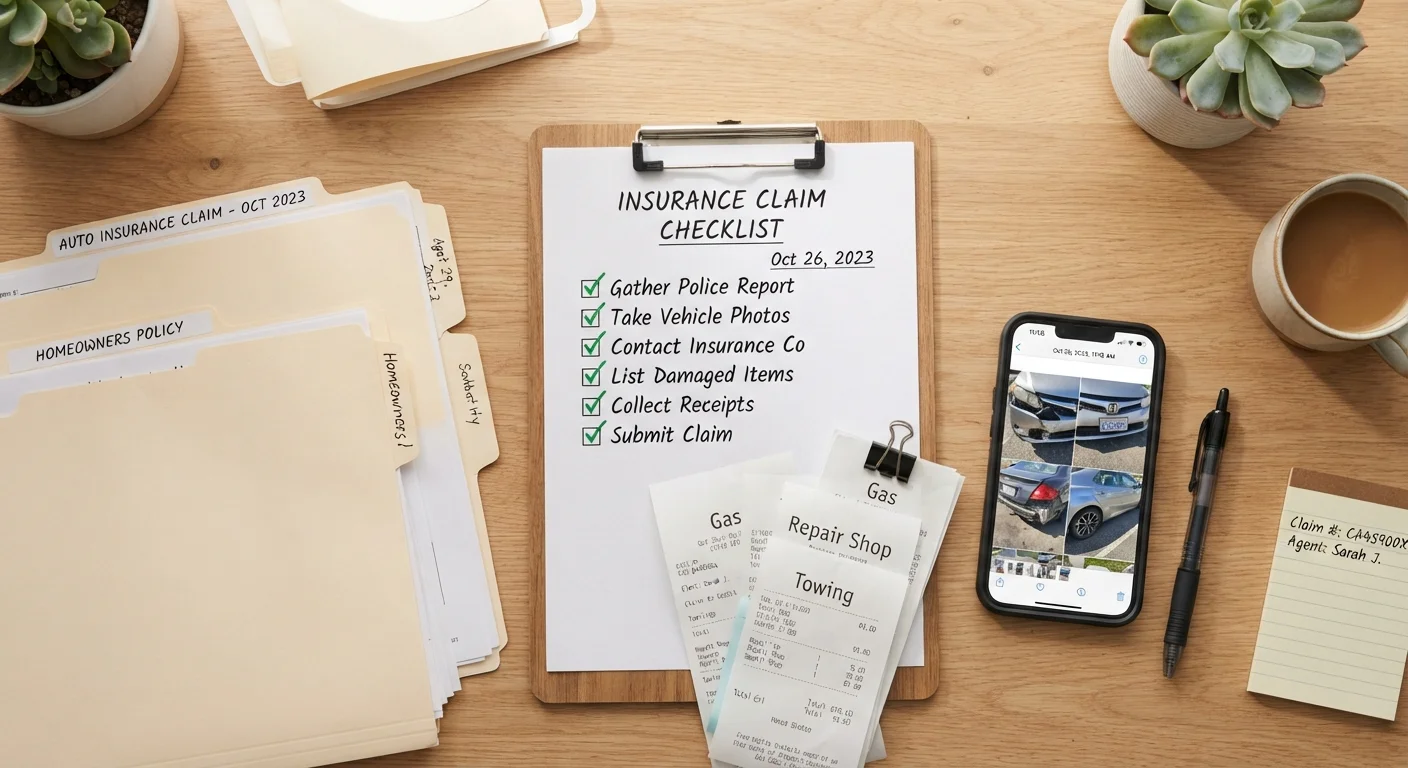
Work through each group in order. Items marked must are typically required by insurers; should items are strongly recommended; nice to have items strengthen your case without being standard requirements. Exact requirements depend on your policy - always confirm with your insurer.
Policy and Coverage Confirmation
Evidence of the Loss or Incident
Proof of Ownership and Value
Repair and Cost Documentation
Communications Log
Don't Make Permanent Repairs Before Inspection
Completing full repairs before your insurer's adjuster has inspected the damage can jeopardize your claim. Most policies require you to give the insurer a reasonable opportunity to examine the loss in its original state. Take photos immediately, make only emergency temporary repairs to prevent further damage, and save every receipt. Always check your policy's specific requirements before acting.
Once you have everything assembled, see our step-by-step filing walkthrough for what to do next. And if a claim is denied, a practical roadmap for appeals can help you understand your options.
Staying Ready Before Anything Goes Wrong
The best time to organize claim-related records is before you ever need them. A short annual habit - photographing valuables, saving receipts to a cloud folder, and storing your policy declarations page somewhere accessible - can cut this checklist's completion time from hours to minutes.
The same discipline that helps with insurance claims also applies to purchase disputes. Our related guide on keeping records that help in purchase disputes covers what to save and for how long. If you're still in the process of selecting a policy rather than filing a claim, this pre-decision checklist walks through what to evaluate before you commit.
This article is for general informational purposes only and does not constitute insurance, legal, or financial advice. Coverage terms, documentation requirements, and claims procedures vary by insurer, policy type, and state. Always read your policy documents carefully and consult a licensed insurance professional for guidance specific to your situation.