

Key Takeaways
Start here
Why Most Houseplants Struggle Indoors
Next
Understanding Light: More Than Just a Sunny Spot
Then
Watering Right: Frequency Is the Wrong Focus
Build on it
Soil, Pots, and Drainage
Finish strong
Humidity, Temperature, and Seasonal Shifts
Why Most Houseplants Struggle Indoors
The majority of houseplants sold at garden centers are tropical or subtropical species that evolved under specific conditions - filtered canopy light, well-draining soil, and relatively stable humidity. A typical American home replicates almost none of that naturally. The result: plants that look fine for a few weeks before slowly declining.
The good news is that failure usually comes down to a handful of correctable variables: light, water, soil, and environmental conditions. Get those reasonably right and most common houseplants are quite forgiving. The trick is diagnosing your home honestly rather than assuming your setup matches the generic care tag on the pot.
Indirect light
Light that reaches a plant without direct sun rays hitting the leaves - typically found a few feet from a window or behind a sheer curtain.
Root rot
A condition where roots decay due to prolonged exposure to waterlogged soil, cutting off the plant's ability to absorb nutrients and water.
Perlite
A lightweight, porous volcanic mineral added to potting mixes to improve drainage and prevent compaction.
Transpiration
The process by which plants release water vapor through their leaves - similar to how humans perspire, it's a normal part of plant function.
Cachepot
A decorative outer container used to conceal a functional nursery pot; cachepots often lack drainage holes and are not meant to hold soil directly.
Dormancy
A natural period of slowed or halted growth, typically in winter, during which plants require less water, light, and nutrients than during active growing seasons.
Understanding Light: More Than Just a Sunny Spot
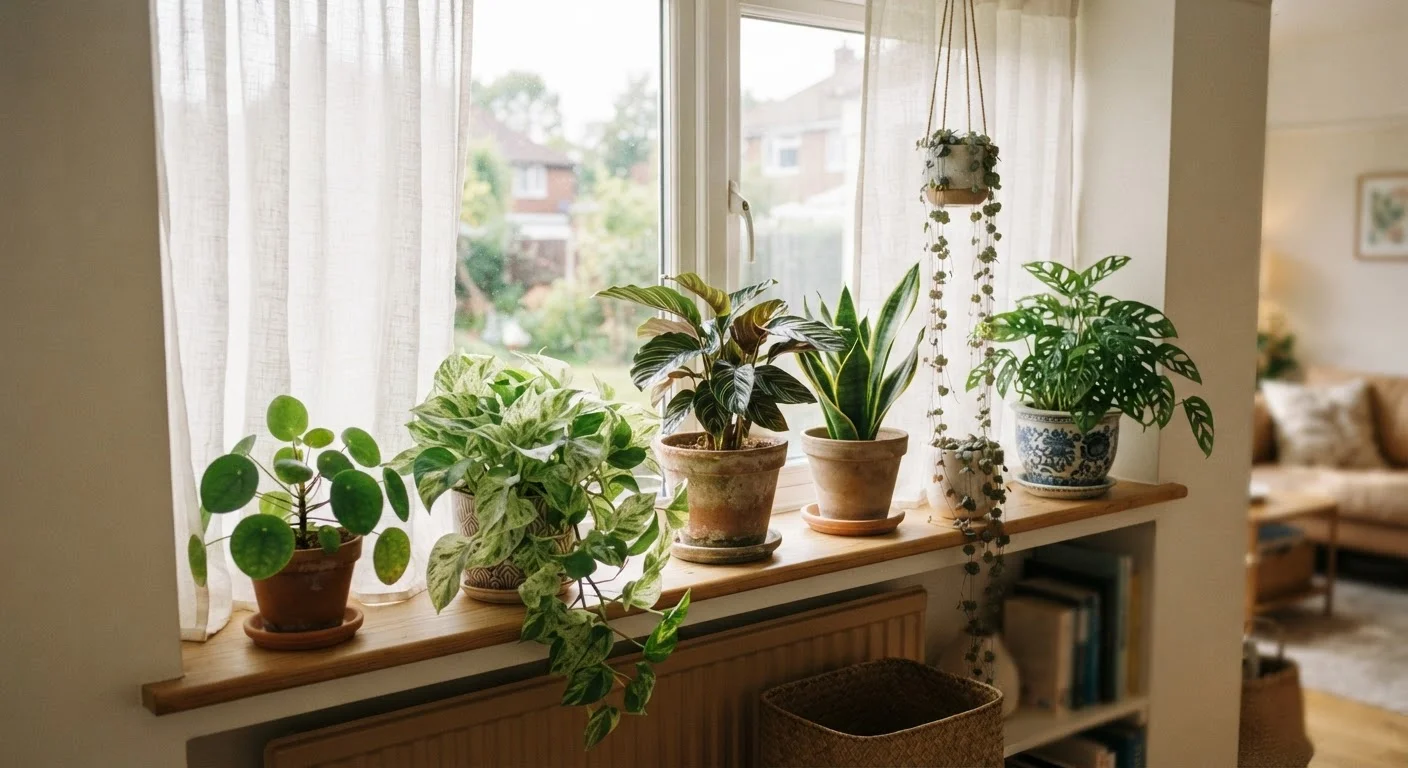
Light is the single factor most beginners underestimate. A room that feels bright to human eyes may deliver far less usable light than a plant needs. Light intensity drops off quickly - a plant placed six feet from a window receives a fraction of what it would on the sill itself.
Window direction matters significantly in the US:
- South-facing windows provide the most consistent, intense light year-round - ideal for succulents, cacti, and most fruiting herbs.
- East-facing windows deliver gentle morning sun, suitable for most tropical foliage plants.
- West-facing windows give afternoon sun that can run hot but supports many medium-light species.
- North-facing windows offer the least light and work only for low-light tolerant species like snake plants or ZZ plants.
When natural light is insufficient, grow lights can supplement effectively. Look for full-spectrum LED fixtures and check lumen output rather than marketing claims - the same critical label-reading skill that applies to products like skincare applies here: see reading past the marketing language on product labels.
Watering Right: Frequency Is the Wrong Focus
"Water once a week" is the advice that kills the most houseplants. A snake plant in a clay pot in a dry Arizona home needs water far more frequently than the same plant in a glazed ceramic pot in a humid Florida apartment. The only reliable watering cue is the soil itself.
For most tropical foliage plants, the general approach is: water thoroughly when the top inch of soil is dry, allow excess to drain completely, then don't water again until that dryness threshold is reached. Succulents and cacti prefer the soil to dry out almost entirely between waterings.
The Finger Test Is Reliable
Before reaching for the watering can, press your index finger an inch into the soil. Moist soil that clumps slightly means the plant doesn't need water yet. Only if it feels dry and loose at that depth should you water. This check takes five seconds and prevents the most common plant care mistake.
Signs of overwatering include yellowing lower leaves, mushy stems near the soil line, and a consistently soggy growing medium. Signs of underwatering are more dramatic - wilting, dry and crispy leaf edges, and soil pulling away from the pot sides. Both are recoverable if caught early.
Soil, Pots, and Drainage
Generic potting mix works adequately for many houseplants, but specific species benefit from amendments. Succulents and cacti need a gritty, fast-draining mix - adding perlite or coarse sand to standard potting soil at roughly a 1:1 ratio improves drainage noticeably. Aroids like monsteras and pothos prefer a mix with some bark or coconut coir to retain slight moisture without becoming waterlogged.
Pot material affects how quickly soil dries. Unglazed terracotta is breathable and pulls moisture from the soil faster - good for plants prone to overwatering. Glazed ceramic and plastic retain moisture longer, benefiting plants that prefer consistent dampness.
Drainage holes are non-negotiable for almost every houseplant. Decorative cachepots without holes can work if a nursery pot with drainage sits inside and you empty collected water promptly. Never let a plant sit in standing water for more than an hour after watering.
Humidity, Temperature, and Seasonal Shifts
Most tropical houseplants prefer humidity levels between 40% and 60%. Central heating in winter routinely drops indoor humidity well below that, causing brown leaf tips, curling foliage, and increased pest vulnerability. Grouping plants together raises local humidity slightly through transpiration. A small humidifier near plant clusters is a more reliable solution if your home runs dry.
Temperature stability matters more than the exact number. Drafts from exterior doors, heating vents blowing directly on leaves, and cold windowpanes in winter can stress plants even when the room thermostat reads a comfortable temperature. Most common houseplants are happiest between 60°F and 75°F with no sudden swings.
Seasonal adjustment is often overlooked. Plants slow their growth in winter regardless of indoor conditions, meaning they need less water and no fertilizer during that period. Resuming a heavier care routine too early in spring can cause as many problems as neglect. Watch the plant's actual growth activity as your guide, not the calendar.
This article provides general home care information for educational purposes. Specific plant care may vary - consult a local horticulturist or extension service for guidance tailored to your region and plant species.