

Key Takeaways
Why Non-Pharmacological Sleep Strategies Matter
For the millions of Americans who struggle with poor sleep, the instinct to reach for a sleep aid is understandable. Yet both the American Academy of Sleep Medicine and the American College of Physicians recommend Cognitive Behavioral Therapy for Insomnia (CBT-I) as a first-line treatment - ahead of medication - for chronic insomnia in adults. Unlike sleep medications, behavioral approaches address the underlying patterns that disrupt sleep rather than temporarily suppressing symptoms.
Sleep is not a passive state. It is a biologically active process essential to immune function, memory consolidation, emotional regulation, and metabolic health. Chronic sleep deprivation is linked to elevated risks for cardiovascular disease, mood disorders, and impaired cognitive performance. Improving sleep through evidence-based behavioral strategies offers durable benefits without the dependency concerns associated with some pharmacological options.
For shift workers or anyone with irregular schedules, these principles require thoughtful adaptation - see our guide on how shift work affects sleep and what helps for targeted strategies.
This article is general health information and education, not medical advice. If you are experiencing persistent sleep difficulties, consult a qualified healthcare professional.
Evidence-Based Practices for Better Sleep
The following practices are drawn from peer-reviewed research and clinical guidelines. Together they form the backbone of CBT-I and related behavioral sleep medicine approaches.
Maintain a consistent sleep-wake schedule, including on weekends.
The body's circadian clock - governed by the suprachiasmatic nucleus - regulates sleep timing based on predictable light and behavioral cues. Irregular sleep timing fragments this rhythm, reducing sleep efficiency and daytime alertness. Consistency is one of the most robustly supported behavioral levers for improving sleep.
Use your bed only for sleep and intimacy - not for work, scrolling, or watching television.
Stimulus control therapy is a cornerstone of CBT-I. When the bed becomes associated with wakefulness and arousal, the brain stops linking it with sleepiness. Restricting bed use rebuilds that conditioned association, making it easier to fall and stay asleep.
Practice sleep restriction to consolidate fragmented sleep.
Sleep restriction therapy temporarily limits time in bed to match actual sleep time, building homeostatic sleep pressure and improving sleep continuity. Research consistently shows it reduces the time spent lying awake, though it should be undertaken carefully and ideally with professional guidance.
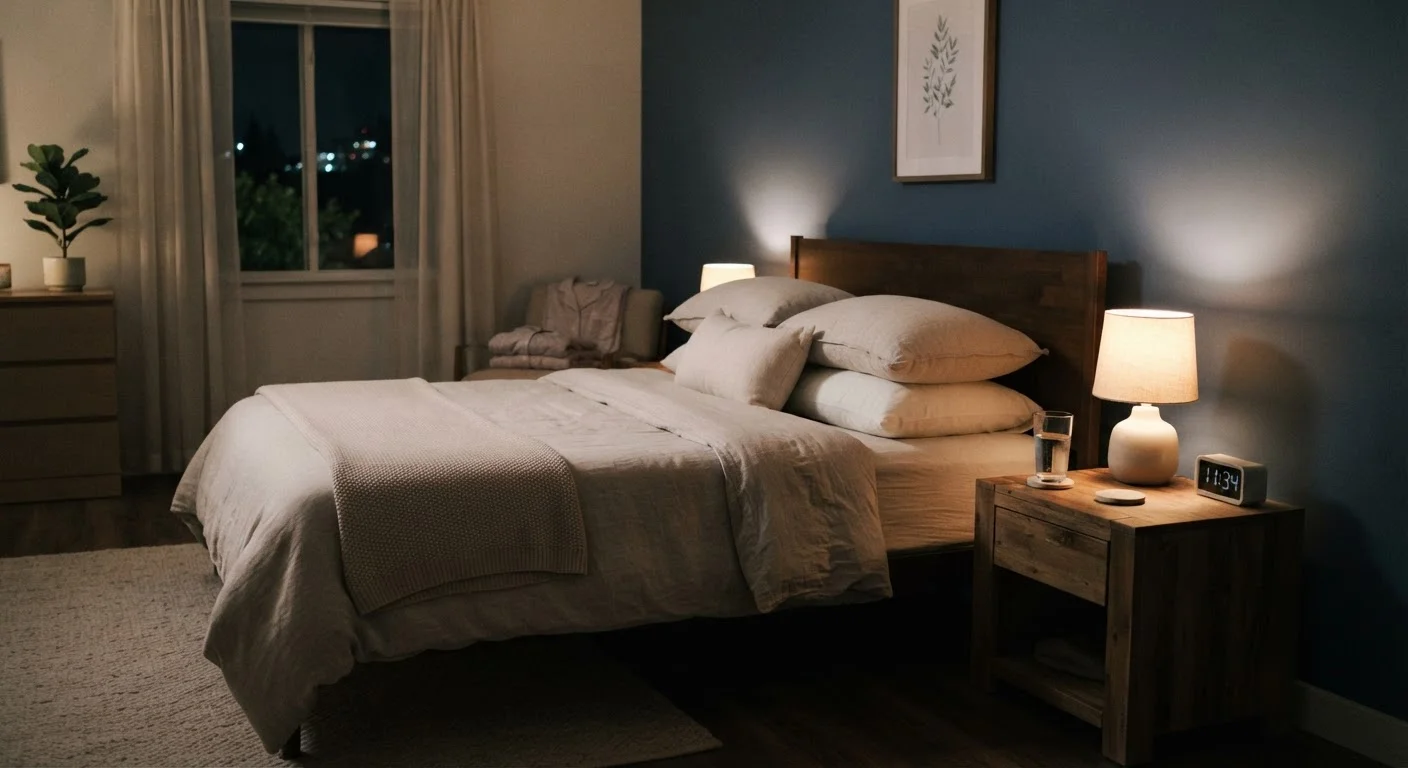
Optimize your bedroom environment for darkness, cool temperature, and low noise.
Light suppresses melatonin secretion, even at low intensities. Core body temperature drops naturally during sleep onset, so a cool room (generally between 65-68°F is often cited in sleep research, though individual comfort varies) supports this process. Noise disruptions fragment sleep stages, reducing restorative slow-wave sleep.
Incorporate structured relaxation techniques before bed.
Physiological arousal - elevated heart rate, muscle tension, anxious thought patterns - is a primary driver of sleep-onset difficulties. Progressive muscle relaxation (PMR), diaphragmatic breathing, and guided imagery have demonstrated efficacy in controlled trials for reducing pre-sleep arousal.
Address unhelpful beliefs about sleep using cognitive restructuring.
Catastrophic thinking about poor sleep - believing one bad night will ruin the next day or that sleep must be perfect - heightens anxiety and perpetuates insomnia. Cognitive restructuring, a key CBT-I component, helps identify and reframe these beliefs with more accurate, balanced perspectives.
Quick Wins You Can Start Tonight
While the practices above deliver the strongest long-term results, certain changes can produce noticeable improvements relatively quickly. These actions don't require any equipment or professional guidance to begin.
For a comprehensive look at the full range of daily habits that shape sleep quality, our sleep hygiene guide covers the evidence behind each behavior in detail. And if you suspect your sleep environment itself is a barrier, it's worth reading about evening habits that quietly undermine sleep quality - many culprits are less obvious than screen time alone.