

Key Takeaways
Core Strength
Core strength refers to the ability of the muscles surrounding your trunk - including your abdomen, back, hips, and pelvis - to work together to stabilize and move your spine and body. It is far broader than simply having visible abdominal muscles. A strong core provides the foundation for virtually all human movement, from bending over to pick something up to maintaining good posture at a desk.
Clinically, the core is often described as a muscular cylinder: the diaphragm at the top, the pelvic floor at the base, the abdominal muscles at the front and sides, and the spinal extensors at the back - all working in coordinated intra-abdominal pressure management.
The Core Is a System, Not a Single Muscle
When most people hear "core," they picture a flat stomach or a six-pack. In reality, the core is an interconnected system of more than a dozen muscles spanning your trunk - front, back, sides, top, and bottom. This system includes:
- Transverse abdominis: The deepest abdominal layer, acting like an internal weight belt around your spine.
- Multifidus: Small, deep muscles along the spine critical for vertebral stability.
- Erector spinae: The long muscles that run parallel to your spine and help you stand upright.
- Obliques (internal and external): The muscles on your sides that enable rotation and lateral flexion.
- Pelvic floor: A hammock of muscles at the base of your pelvis that supports organs and coordinates with abdominal pressure.
- Diaphragm: Not just a breathing muscle - it plays a direct role in managing intra-abdominal pressure and spinal load.
These muscles do not work in isolation. They co-contract in precise sequences to protect the spine, transfer force between your upper and lower body, and allow controlled movement in every direction.
Six-Pack Abs Are Not the Goal
Visible rectus abdominis definition is primarily a function of low body fat, not core strength or stability. A person with a visible six-pack may have undertrained deep stabilizers, while someone without visible abs can have exceptional functional core strength. Training for health and function produces far more lasting benefits than training purely for appearance.
Why Core Strength Matters Beyond the Gym
Core strength is not a fitness metric - it is a functional necessity. Every time you reach for something on a high shelf, carry groceries, or even sit at your desk for hours, your core muscles are working to keep your spine aligned and your body balanced.
80%
Americans who experience low back pain in their lifetime
According to the National Institute of Neurological Disorders and Stroke, low back pain is one of the most prevalent and costly conditions in the U.S.
29%
Adults reporting low back pain in any given 3-month period
Data from the CDC's National Health Interview Survey consistently identifies back pain as a leading cause of activity limitation and missed work days among American adults.
Low back pain is one of the most common and costly musculoskeletal complaints in the United States, affecting an estimated 8 in 10 Americans at some point in their lives, according to the National Institute of Neurological Disorders and Stroke. Research points to core muscle endurance - particularly of the deep stabilizers - as a protective factor. A well-trained core reduces the mechanical load placed on spinal discs and surrounding ligaments during daily tasks.
Core strength also directly supports athletic performance. Whether you run, swim, cycle, or play recreational sports, power generated by your legs and arms must transfer efficiently through your trunk. A weak or poorly coordinated core acts as an energy leak, reducing force output and increasing injury risk. For more on how different training modalities shape your body, see how strength training and cardio differ in their effects.
How to Actually Train Your Core
Effective core training looks different from a set of crunches. The goal is to build endurance, coordination, and the ability to resist unwanted movement - not just generate force. Evidence-based approaches include:
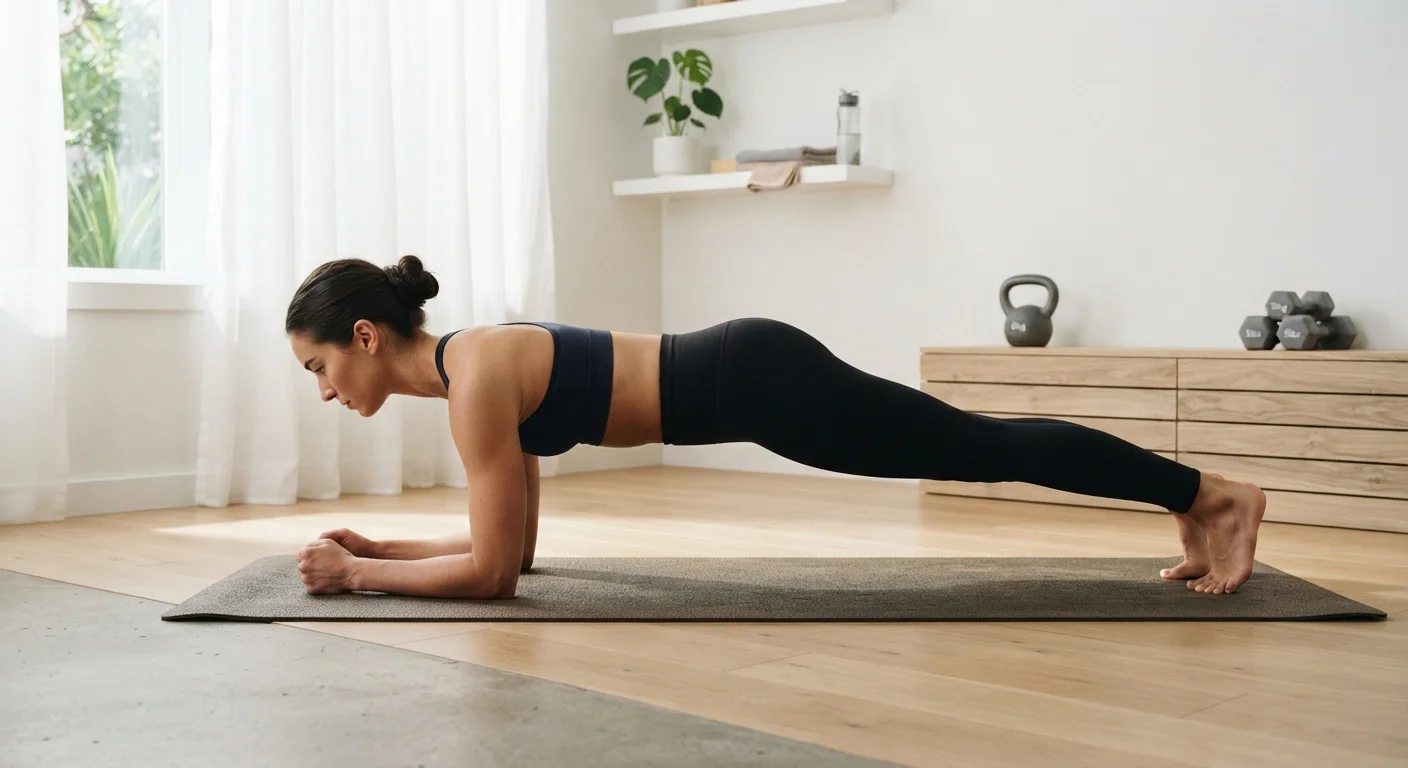
- Plank variations: Forearm planks, side planks, and RKC planks challenge the entire muscular cylinder to maintain a neutral spine against gravity.
- Dead bug: Lying on your back and extending opposite arm and leg trains the deep stabilizers while the spine remains neutral - a foundational movement recommended in many clinical rehabilitation programs.
- Bird dog: On hands and knees, extending one arm and the opposite leg trains anti-rotation stability and challenges the multifidus directly.
- Pallof press: A cable or band exercise that teaches the core to resist rotation, training real-world functional stability.
- Compound lifts: Exercises like Romanian deadlifts and goblet squats demand significant core bracing throughout the movement, providing functional strength benefits that transfer directly to daily life.
Spine researcher Dr. Stuart McGill's work at the University of Waterloo has been widely cited in advocating for spine-sparing core training that prioritizes endurance and stability over maximum spinal flexion exercises. His research supports building core endurance through positions like the plank rather than repeated flexion movements.
This article is for general informational purposes only and does not constitute medical or fitness advice. Consult a qualified healthcare provider or certified fitness professional before beginning a new exercise program, especially if you have existing back or pelvic conditions.