

Key Takeaways
Available anytime, anywhere without an appointment
Apps provide on-demand support during moments of stress or anxiety - including nights, weekends, and situations where immediate professional access isn't realistic.
Far lower cost than professional therapy
Many apps are free or available for a modest monthly subscription, making structured mental wellness support accessible to people who cannot afford or access regular therapy.
Grounded in established therapeutic techniques
Higher-quality apps incorporate clinically recognized methods such as cognitive behavioral therapy, mindfulness-based stress reduction, and behavioral activation - frameworks with substantial research support.
Reduces stigma and lowers the barrier to starting
For individuals who feel hesitant about seeking professional help, an app offers a private, low-stakes first step toward engaging with mental wellness practices.
Supports habit tracking and self-awareness
Mood logs, streak tracking, and journaling prompts help users identify patterns in their emotional states over time, which can be genuinely informative for self-understanding.
Not appropriate for moderate-to-severe mental health conditions
Apps are not designed to treat clinical depression, PTSD, bipolar disorder, or other conditions requiring professional diagnosis and structured care. Relying on one in these situations can delay necessary treatment.
Significant privacy and data security concerns
Mental health apps collect sensitive personal data, and many share or sell this information to third parties. Privacy policies are often dense and not easily understood by typical users.
Highly variable quality with limited regulatory oversight
Most mental wellness apps are not subject to FDA review or clinical validation requirements, meaning low-quality products can reach large audiences with little accountability.
No clinical judgment or human relationship
Apps cannot assess risk, recognize clinical nuance, or provide the therapeutic relationship that research consistently identifies as central to effective mental health treatment.
Engagement drops sharply after initial use
Studies on digital health interventions consistently find that user engagement declines rapidly - many people stop using apps within the first two weeks, limiting long-term benefit.
May create a false sense of adequacy
Regular app use can feel productive while masking the need for more substantial care, particularly for individuals whose symptoms require clinical-level intervention.
Our Verdict
Self-help mental wellness apps occupy a genuinely useful - but limited - space in the broader landscape of mental health support. They work well as low-barrier entry points, habit reinforcement tools, or supplements to professional care. They are not designed, validated, or appropriate replacements for clinical treatment when that treatment is needed.
Best suited to adults seeking structured support for everyday stress, mild anxiety, or general emotional well-being who have no current acute mental health needs.
What Self-Help Mental Wellness Apps Actually Do
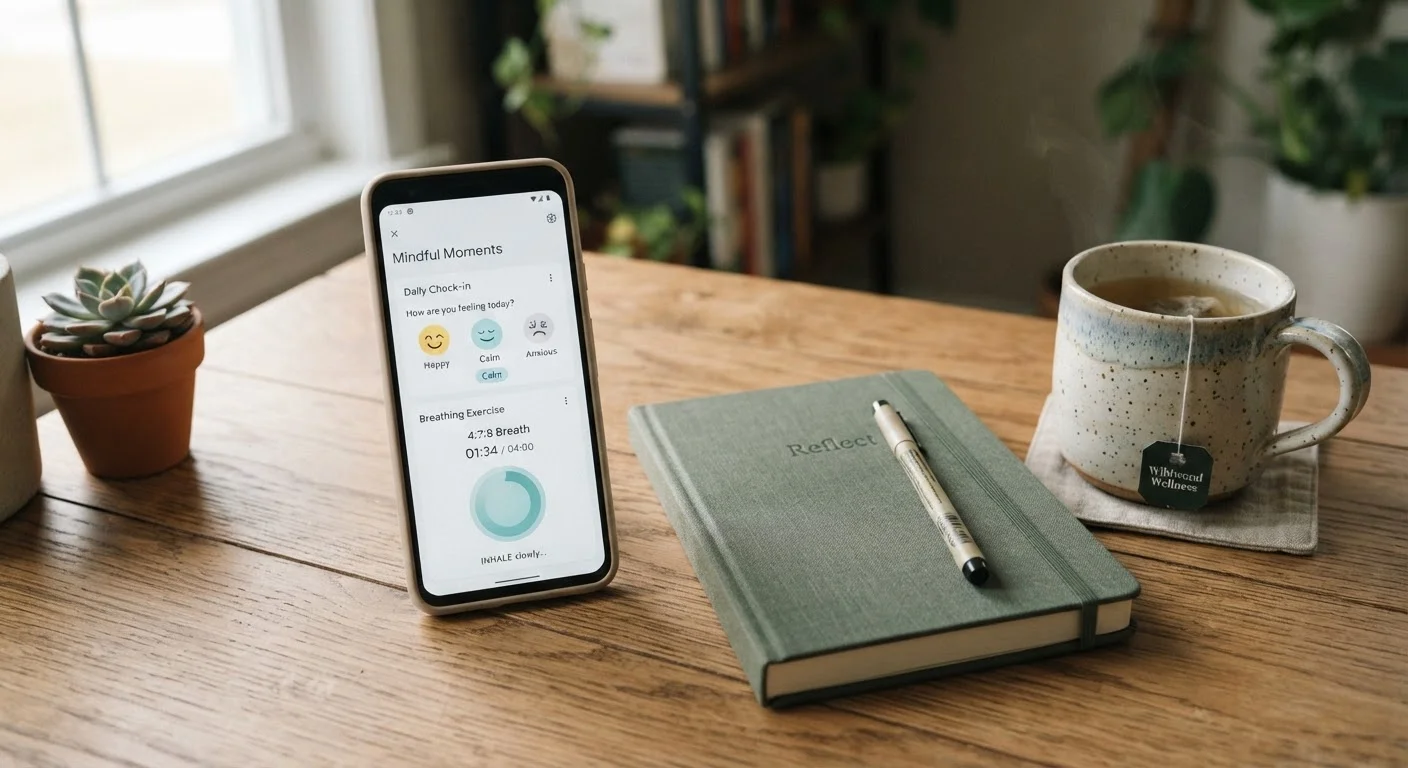
Mental wellness apps are smartphone-based tools designed to support emotional health outside of clinical settings. They typically offer features such as guided meditation, cognitive behavioral therapy (CBT) exercises, mood tracking, journaling prompts, sleep support, and breathing techniques. Some are built around specific therapeutic frameworks; others offer a broader library of wellness content.
The category spans a wide range - from apps built with input from clinical psychologists and backed by published research, to products with little more than motivational quotes and ambient audio. That variation matters enormously when evaluating whether any given app is genuinely useful. Understanding both what these tools offer and where they fall short is essential for anyone considering them as part of a mental wellness routine. For a broader look at how different mental health support formats compare, see how individual, group, and online therapy differ.
The Real Advantages
For many Americans, self-help apps address a genuine access gap. Professional therapy remains expensive, geographically uneven, and - due to clinician shortages - difficult to schedule promptly in many parts of the country. Apps eliminate those friction points entirely.
Available anytime, anywhere without an appointment
Apps provide on-demand support during moments of stress or anxiety - including nights, weekends, and situations where immediate professional access isn't realistic.
Far lower cost than professional therapy
Many apps are free or available for a modest monthly subscription, making structured mental wellness support accessible to people who cannot afford or access regular therapy.
Grounded in established therapeutic techniques
Higher-quality apps incorporate clinically recognized methods such as cognitive behavioral therapy, mindfulness-based stress reduction, and behavioral activation - frameworks with substantial research support.
Reduces stigma and lowers the barrier to starting
For individuals who feel hesitant about seeking professional help, an app offers a private, low-stakes first step toward engaging with mental wellness practices.
Supports habit tracking and self-awareness
Mood logs, streak tracking, and journaling prompts help users identify patterns in their emotional states over time, which can be genuinely informative for self-understanding.
Research does support the effectiveness of app-based interventions for mild-to-moderate symptoms in some populations. A growing body of peer-reviewed studies has found that app-delivered CBT and mindfulness exercises can meaningfully reduce self-reported anxiety and depressive symptoms under specific conditions. Apps also serve as a practical bridge: they can help users build awareness of their emotional patterns, which may make building lasting mental wellness habits easier over time. For those on a long-term path to emotional resilience, an app can serve as one consistent touchpoint among several.
The Limitations You Should Know
The downsides of mental wellness apps are real and worth understanding before downloading one with high expectations.
Not appropriate for moderate-to-severe mental health conditions
Apps are not designed to treat clinical depression, PTSD, bipolar disorder, or other conditions requiring professional diagnosis and structured care. Relying on one in these situations can delay necessary treatment.
Significant privacy and data security concerns
Mental health apps collect sensitive personal data, and many share or sell this information to third parties. Privacy policies are often dense and not easily understood by typical users.
Highly variable quality with limited regulatory oversight
Most mental wellness apps are not subject to FDA review or clinical validation requirements, meaning low-quality products can reach large audiences with little accountability.
No clinical judgment or human relationship
Apps cannot assess risk, recognize clinical nuance, or provide the therapeutic relationship that research consistently identifies as central to effective mental health treatment.
Engagement drops sharply after initial use
Studies on digital health interventions consistently find that user engagement declines rapidly - many people stop using apps within the first two weeks, limiting long-term benefit.
May create a false sense of adequacy
Regular app use can feel productive while masking the need for more substantial care, particularly for individuals whose symptoms require clinical-level intervention.
Data Privacy Is a Genuine Concern
Mental wellness apps often collect detailed personal information - including mood logs, journal entries, and usage patterns - that may be shared with advertisers or data brokers. A 2021 analysis by the Mozilla Foundation found that many popular mental health apps had weak or unclear data privacy practices. Before using any app, review its privacy policy carefully and consider what data you are comfortable sharing. This is especially important for employer-sponsored wellness programs, where data handling policies can differ from consumer apps.
Apps also risk creating a false sense of adequacy. Someone experiencing depression, trauma, or an anxiety disorder may use an app in place of seeking clinical care - a substitution that can delay effective treatment. The research base, while growing, is also uneven: many studies are small, short-term, and industry-funded, making independent claims about efficacy hard to evaluate with confidence.
Finally, the human element that clinical care provides - relational attunement, clinical judgment, and the therapeutic alliance itself - is absent from any app. Research consistently shows that the quality of the relationship between a therapist and client is among the strongest predictors of treatment outcomes. No algorithm currently replicates that.
How to Use Apps Wisely
If you decide to explore a mental wellness app, a few principles can help you get more value from the experience while managing its risks.
- Check for clinical foundations. Look for apps that publicly describe the evidence-based frameworks they use (e.g., CBT, Acceptance and Commitment Therapy) and whether mental health professionals were involved in their development.
- Read the privacy policy. Understand specifically what data is collected, how it is stored, and whether it is shared with or sold to third parties. Mood and mental health data is sensitive.
- Treat it as a complement, not a replacement. Apps work best alongside other supports - professional care, social connection, physical activity, and healthy sleep habits. They are rarely sufficient on their own.
- Know when to step up care. If your symptoms are persistent, worsening, or significantly affecting daily functioning, consult a licensed mental health professional. Apps are not designed for crisis intervention or clinical-level treatment.
Mental wellness needs also shift across life stages, and what an app offers a 25-year-old managing work stress may not meet the needs of someone in midlife or later adulthood. See how mental wellness needs change across the lifespan for more context. It's also worth separating the practices these apps deliver - particularly mindfulness - from the app itself. Mindfulness and meditation are distinct practices that can be pursued without a subscription.
This article is for general informational purposes only and does not constitute medical or mental health advice. If you are experiencing mental health symptoms, please consult a qualified healthcare professional.